Forecast for the Ogden Area Mountains

Brooke Maushund
Issued by Brooke Maushund on
Tuesday morning, February 10, 2026

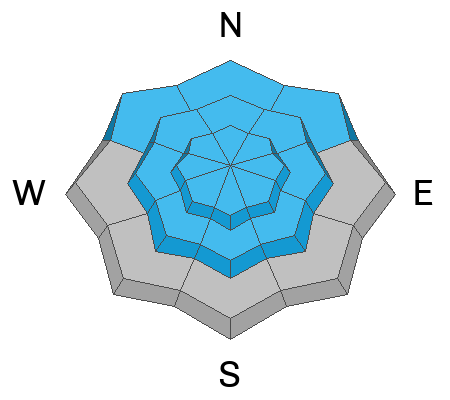
While the avalanche danger is LOW this morning, the beginnings of a storm will drop 1-3 inches of new snow on top of a very weak snowpack. Northerly slopes at mid and upper elevations will be where you are most likely to find quite reactive, but quite small pockets of wind-drifted snow. These will increase in size and reactivity, and will be easier to find throughout the day.

Avalanche danger will rise through LOW into the evening. If the storm overproduces, we could reach MODERATE danger by sunset.

Low
Moderate
Considerable
High
Extreme
Learn how to read the forecast here
Special Announcements

Greatest Rain on Earth?!?: Forecaster Drew Hardesty penned a new essay about high-elevation rain and the warm-snow drought HERE.

Weak Snow: Today's Surface, Tomorrow's Avalanche Problem: Essay by UAC Director Paige Pagnucco HERE.

Weather and Snow

Yesterday, favored areas of the Northern Wasatch saw around 3 inches of new snow, as I saw with Corey Kruse at Snowbasin, with mountain temperatures in the 20s F. Winds blew from the west in the teens to 20s mph, with gusts into the 40s mph transporting snow.

Today, a landfalling atmospheric makes its way into Northern Utah. Expect cloudy skies, light to moderate winds out of the SSW, mountain temps in the 20s F, and our long-awaited snow. Freezing levels will be around 7k feet. While the bulk of the precip from this first pulse will arrive late tonight into tomorrow, we can expect the following by 5pm today:

  • Favored areas (Powder Mountain, mountains East of Eden): 1-2 inches of snow // 0.1-0.2 inches H2O
  • Less-favored areas (Ogden Skyline, Snowbasin): Trace-1 inch of snow // 0-0.1 inches H2O

Tonight into tomorrow, precipitation rates and wind pick up. Check back then for more details.

Pattern shifts as mindset shifts: We have largely been in an open season mindset for much of January into February. Our last large storm ended on 1/9, leaving us with far-flung travel, and a mostly LOW avalanche danger. While the danger remains at LOW as we start the day, as snow starts to stack up modestly, I'm using the moment for an intentional pause to shift my mindset. There are two things certain this week: more snow (of some amount) and increased avalanche activity (of some amount as well). We will not be getting one without the other with the current weak snowpack structure. Reining in my status quo notions of where and how to travel is at the forefront of my mind, as is dialing back terrain choices as more snow falls later this week into the weekend. (Roger Atkins has some more for you to chew on HERE).

Recent Avalanches

No avalanche activity was reported in the Ogden Zone this week.

I visited Snowbasin yesterday, and Greg was on Cutler Ridge on Saturday, looking at the current snow surface ahead of what will - hopefully - be a period of snowfall, beginning this week. You can view all recent observations here.


Avalanche Problem #1
Normal Caution
Type
Location
Likelihood
Size
Description

The avalanche danger is LOW this morning, however: as more snow falls throughout the day, expect the danger to rise. While we likely will not reach MODERATE danger by sunset, as new snow falls, it IS falling atop a very, very weak old surface. It won’t take much of a new load to start seeing small slabs of new snow releasing atop the old facets.

Wind-drifted snow: Today, you’re most likely to run into issues on high and mid elevation polars —what we like to call northerly slopes where the most old, weak snow has been harbored—and near ridgelines where the winds have transported snow. Winds from the south will be able to load these especially weak slopes throughout the day. Expect quite reactive, but also quite small pockets of new snow that will be able to run far and fast atop the old facets in these areas. These pockets will increase in size, and reactivity throughout the day, as will your ability to find them in terrain as more snow falls.

It is also still possible to trigger loose sluffs of dry, faceted snow on steep northerly-facing slopes. The wind-drifted pockets above can gouge down into these sluffs as well.

General Announcements

This information does not apply to developed ski areas or highways where avalanche control is normally done. This forecast is from the U.S.D.A. Forest Service, which is solely responsible for its content. This forecast describes general avalanche conditions and local variations always occur.