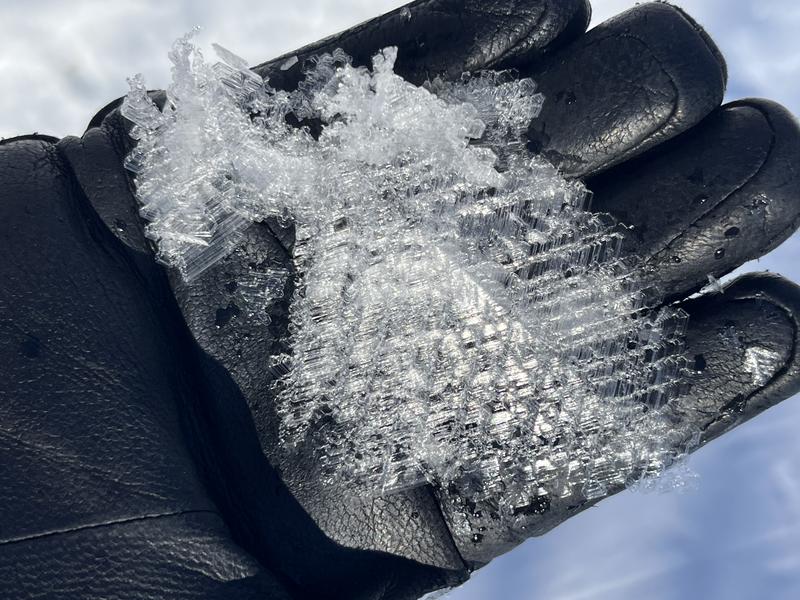
Sunny skies and calm weather have a way of making the mountains feel quiet…as if nothing is going on. We can be lulled into thinking the snowpack is gaining strength and becoming more benign. But some of the most dangerous weak layers we deal with in Utah are born during these calm stretches — right at the snow surface.
There are three common types of weak snow that form during periods of calm, cold, and clear weather: diurnally-formed near-surface facets, radiation recrystallized near-surface facets, and surface hoar. On their own, they don’t pose an immediate avalanche problem. The concern comes later, when they get buried under a slab of new snow.
Understanding how these layers form—and more importantly, how they behave once loaded—helps explain why avalanche forecasters get nervous long before snowstorms arrive.
Near-Surface Facets: Weak Snow that Sticks Around
Diurnally-formed near-surface facets (NSFs) are weak, angular snow grains that form at or very near the snow surface under strong temperature gradients. NSFs most commonly form during dry spells when there is no snow or rain. The snow surface experiences large temperature swings between warm, sunny days and cold, clear nights. These daily cycles drive vapor movement through the snow, transforming freshly fallen snow or small, rounded grains into angular, faceted crystals that bond poorly to themselves as well as surrounding layers. In plain terms, this is the snow many riders refer to as “recycled powder.”
Compared to basal facets, near-surface facets are typically smaller and less well developed, which can shorten their lifespan. However, their smaller grain size also makes them harder to identify in snow pits once buried, and they often produce subtle or inconsistent test results. When associated with a crust, NSFs can persist for weeks or even months after burial.
What makes NSFs so hard to clue into is that they do not form uniformly across the landscape. Sun, wind, and rain can destroy them, and dense wind-packed surface snow can inhibit their growth. As a result, buried NSF layers are often spatially variable, creating conditions where some slopes are stable while others avalanche. When a cohesive slab forms on top of near-surface facets, even relatively thin slabs can propagate easily, shifting the snowpack from benign to dangerous with little warning.
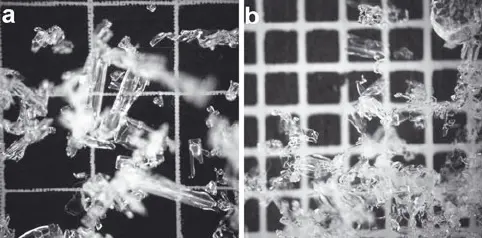
Near-surface facers under magnification. Credit: Research Gate/ Ed Adams
Radiation Recrystallization: When Solar Gain Drives the Pain
Radiation recrystallization (RR) is one of the processes by which near-surface facets form on solar aspects. RR develops when cold air temperatures pair with just enough sun to warm a thin layer below the surface, while the snow surface itself remains cold and dry. Then, when the snow goes into the shade, the damp or wet layer immediately freezes. The energy associated with the phase change rapidly metamorphoses the adjacent cold, dry snow. The result is a thin melt-freeze crust topped by RR facets. If preserved and capped by a new slab of snow, then voila!—slab over weak layer over bed surface = tricky persistent weak layer avalanche conditions.
RR is especially common during extended high-pressure periods and is most pronounced on south-facing, wind-protected slopes, which can catch people off guard. It occurs on top of a thin sun crust, which can form during the day on solar aspects and then act as a platform for faceting overnight. That crust can help preserve the weak layer once it is buried and act as a slick bed surface for slabs.
Snow affected by radiation recrystallization often feels supportive and skis well, making it easy to underestimate. Once buried, RR-formed facets can act as a thin, continuous weak layer, often producing clean shears in snow pit tests and allowing for rapid fracture propagation once the first storm delivers a cohesive slab.
Because RR layers rarely produce obvious “red flag” warning signs, they are easy to overlook. Yet once loading begins, they can quickly become the weak link in the snowpack, contributing to tricky, often dangerous avalanche conditions. These layers, however, are often not as prolonged or widespread as NSF layers and tend to remain localized concerns.
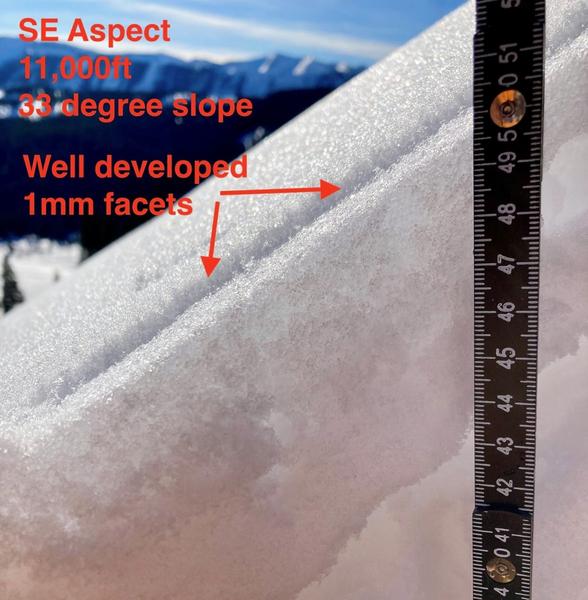
Facets developing above a sun crust. This process is called radiation recrystallization. Credit: Crested Butte Avalanche Center
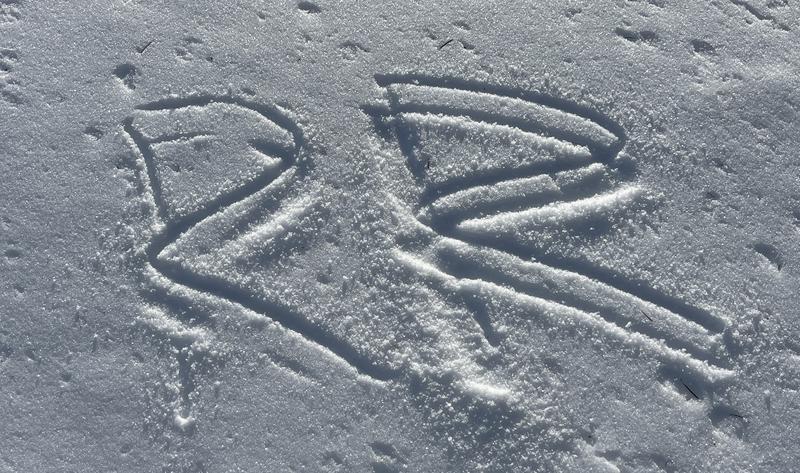
To learn more about the faceting process, visit here.
Surface Hoar: The Classic Persistent Weak Layer
When you see sparkly, “loud powder” or feather-like crystals standing upright on the snow surface, that’s surface hoar. It’s fragile, beautiful — and notorious. Indeed, all that glitters is not gold, especially when buried.
Surface hoar forms when water vapor deposits directly onto the snow surface, growing feathery frost crystals during calm, clear, and often slightly humid nights. In Utah, surface hoar commonly develops in sheltered terrain, valley bottoms, and mid-elevation shady slopes, but it can also form at upper elevations in calm conditions.
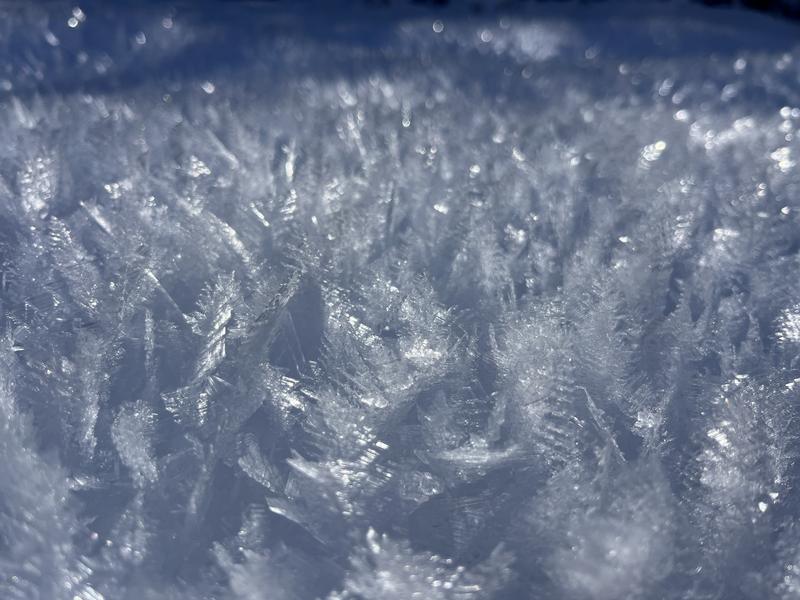
Once buried, surface hoar is one of the most reactive and dangerous weak layers we deal with. It bonds poorly to new snow, fractures easily, and often propagates across large areas of terrain. Many widely propagating avalanches in Utah have failed on buried surface hoar days or even weeks after the last storm.
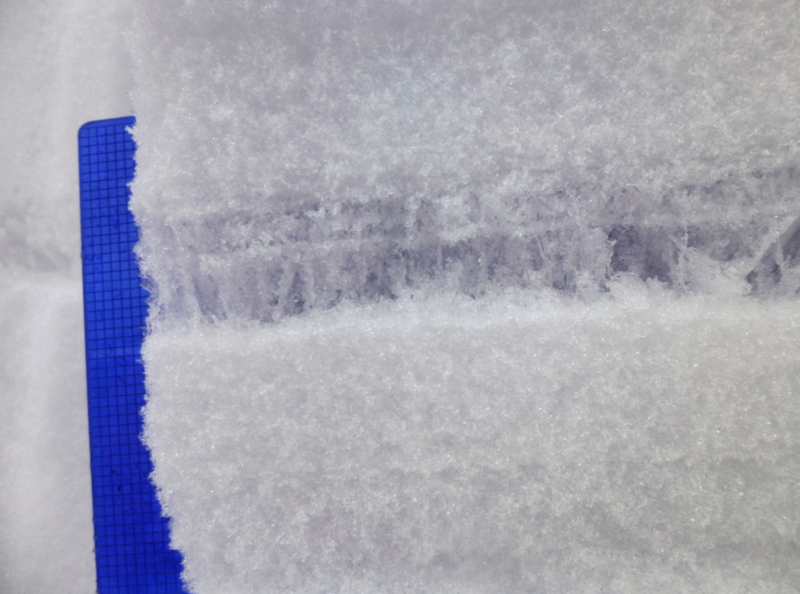
The challenge is that surface hoar is often spatially variable but regionally widespread. It may survive on one slope but be destroyed by wind or sun on another, making it difficult to know where it exists without detailed observations.
When Weak Snow Gets Buried: Why the Risk Changes
Avalanches associated with a buried persistent weak layer (PWL) account for 70% of Utah’s avalanche fatalities. Why is this?
Weak snow becomes a problem once it’s loaded by a slab. Slabs concentrate stress and allow fractures to propagate. The thicker, denser, and stiffer the slab, the more likely it is to activate these weak layers. PWLs are highly collapsible with poor internal strength, making remote triggering and wide fracture propagation possible.
The tricky part is that avalanches failing on buried surface weak layers don’t always come with obvious warning signs. You might not see cracking or feel collapsing. In fact, these problems often become more dangerous after things feel quiet. That’s why forecasters track surface conditions so closely during high pressure. Today’s cold, dry surface snow can easily become tomorrow’s persistent weak layer.
What This Means for Travel in Utah’s Backcountry
These surface weak layers are not a problem right now. On their own, they pose little hazard and often make for good riding conditions. We’re talking about them now so people understand what’s already in place—and what to expect—when snowfall returns.
While these weak layers form at the snow surface, once they’re buried by new snow, they can persist at any depth in the snowpack. That’s why they’re responsible for many persistent weak layer avalanches. When surface weak layers exist before a storm, we shift toward more conservative terrain choices as the snow starts piling up. Steep, shaded slopes, wind-loaded features, and thinner snowpack areas deserve extra caution. In these setups, it’s also possible to trigger an avalanche from an adjacent slope or from lower-angle terrain below, pulling the avalanche down on top of you.
Note - A lack of recent avalanches doesn’t mean there isn’t a problem—it may simply mean the snowpack hasn’t been stressed enough yet.
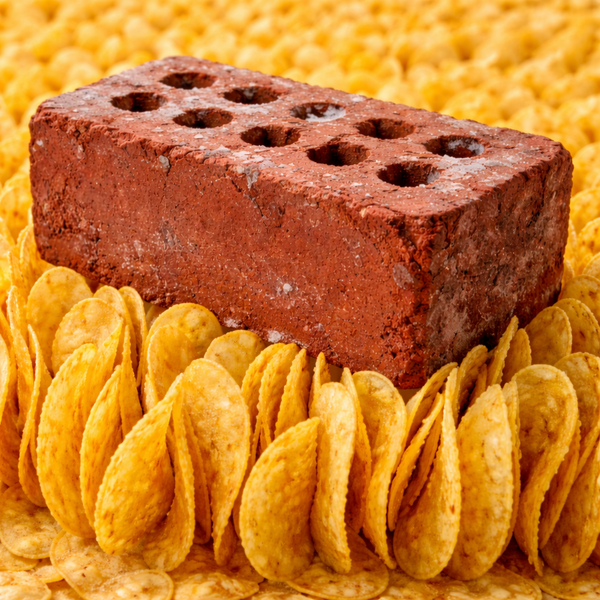
The classic brick (snow slab) over potato chips (pwls like surface hoar) visual metaphor. Credit: chatgpt
Bottom Line
Near-surface facets, radiation recrystallization, and surface hoar are all products of calm weather, not storms. They form quietly, sit patiently, and can remain dangerous long after they’re buried.
Paying attention to how the snow surface changes during high pressure helps explain why forecasters sometimes sound cautious before the first flakes even fall. Weak snow doesn’t need much — just the right slab — to become a serious problem. So what can we do? Keep up with the avalanche forecast, dig pits, and pay attention to slope angles. Once it starts snowing, we will certainly need to shift to a more conservative mindset.
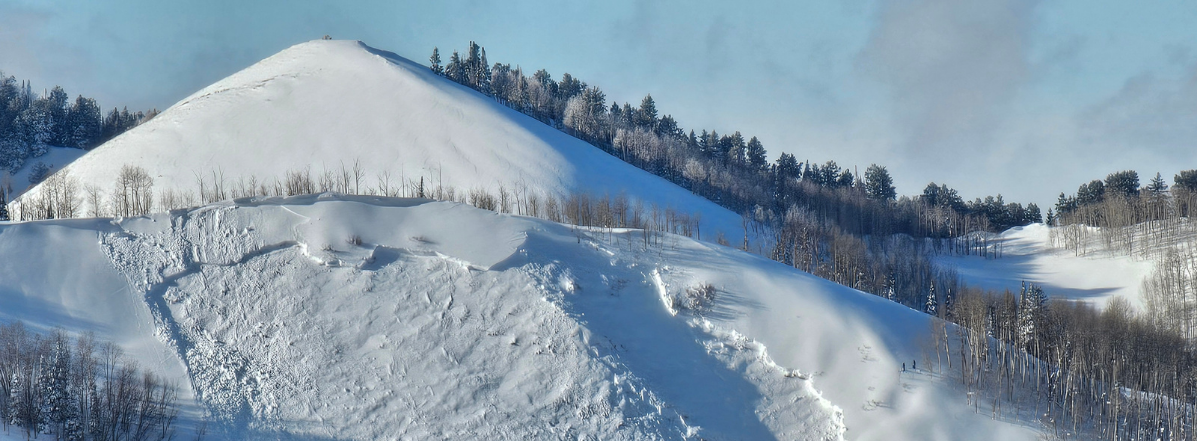
Case Study: January - February 2022, it didn’t snow for weeks in Utah. When snow returned towards the middle to end of February, the snow surface was faceted, and avalanche danger increased dramatically. Between February 22, 2022, and March 27, 2022, 105 PWL avalanches were reported to the UAC across the state, of which 70 were human-triggered.
If you want to read more about the science behind NSF development, check out this article from TAR Autumn 1998 by Karl Birkeland.
- reply