Forecast for the Salt Lake Area Mountains

Drew Hardesty
Issued by Drew Hardesty on
Friday morning, February 13, 2026

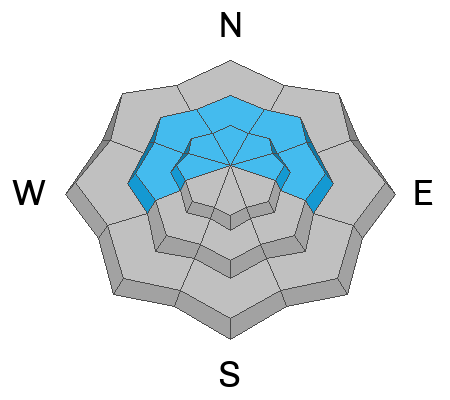
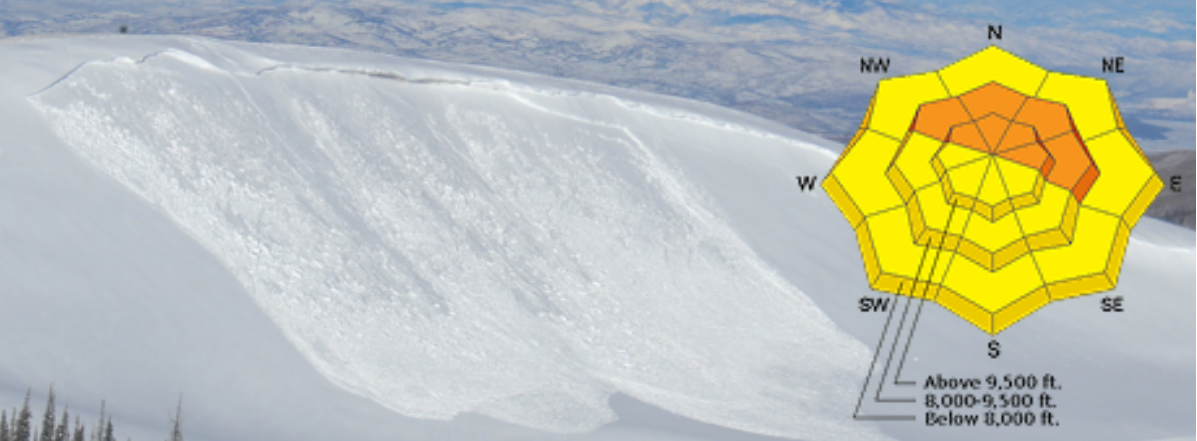
A tricky MODERATE avalanche danger exists in the mid and upper elevations, and primarily on slopes with recent deposits of wind drifted snow. You can trigger soft slabs 8-18" thick and up to 150' wide and you can trigger them at a distance. These are classic conditions for avalanche accidents - avalanches on persistent weak layers (PWLs) are notoriously tricky.

Keep an eye on the sun and warming temperatures today for any wet avalanche activity.

Low
Moderate
Considerable
High
Extreme
Learn how to read the forecast here
Weather and Snow

Skies are partly cloudy. Mountain temperatures are in the upper teens up high, the mid-20s down low. Winds are hardly a whisper.

Sun and greenhousing severely impacted the riding conditions yesterday, even on some polar aspects, so it may be hunt and peck for today. Skies will be mostly to partly cloudy, with calm wind and temps rising to mid-20s up high, the mid-30s down low. Some instability showers may bubble up in the afternoon. The weekend looks clear with Old Man Winter on tap for next week.

Storm totals from Wednesday/Thursday were a fairly even 8-12" of heavy dense snow with a rain-snow line of 7-7500'. Snow depths are 60-70" in the upper Cottonwoods and 40-50" along the Park City ridgeline. Trailheads and low elevation exits are thin and threadbare, if snow exists at all.

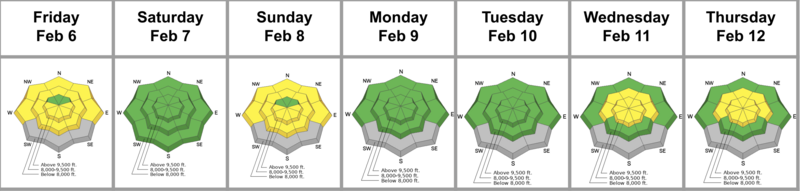
The Week in Review for Friday, February 6th - Thursday, February 12th, 2026 is hot off the press.
Recent Avalanches

Avalanche control work at the ski areas produced sizeable (almost large enough to destroy a car) avalanches with explosives in the high alpine terrain. In the backcountry, skiers and riders continued to find fairly sensitive avalanche conditions with many reports of intentional, unintentional, and remotely triggered soft slabs failing about a foot deep and up to 60' wide. All of these soft slabs failed at the new/old interface where exceptionally weak faceted snow exists from the January drought. Most of the avalanches over the past two days have released on north to northeast facing slopes in the mid and upper elevations, but as low as 8350'. See heat map below.
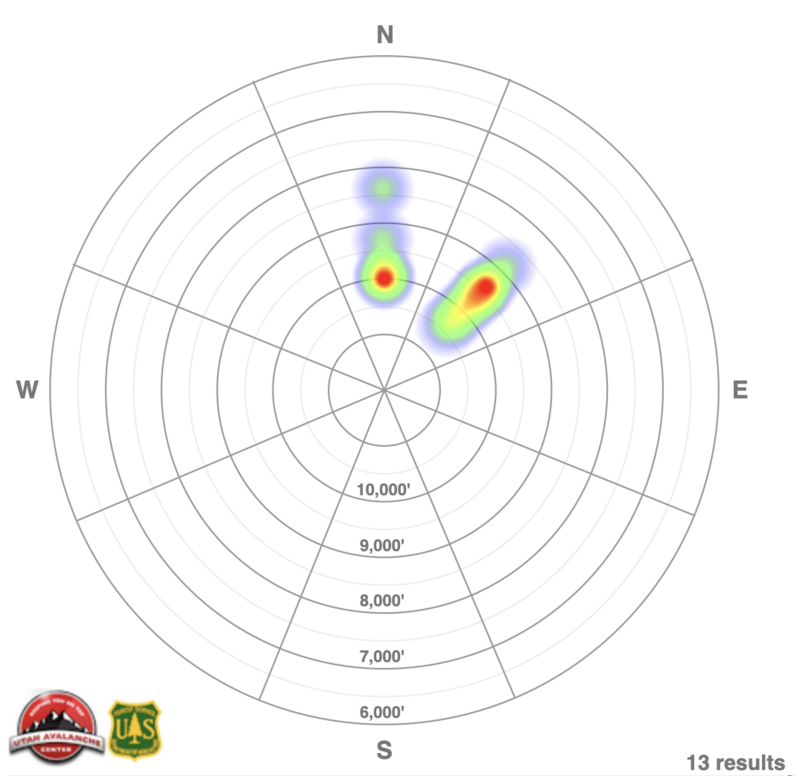
You can view all recent observations here.


Avalanche Problem #1
Persistent Weak Layer
Type
Location
Likelihood
Size
Description

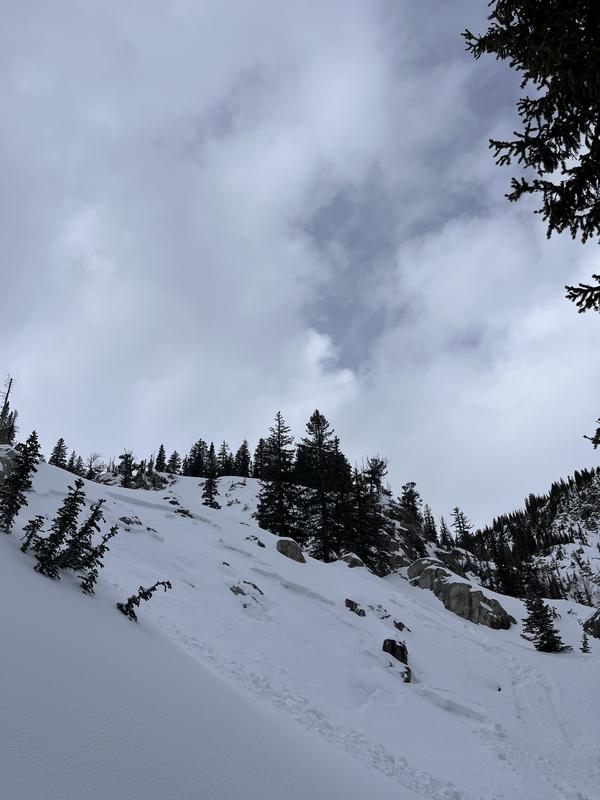
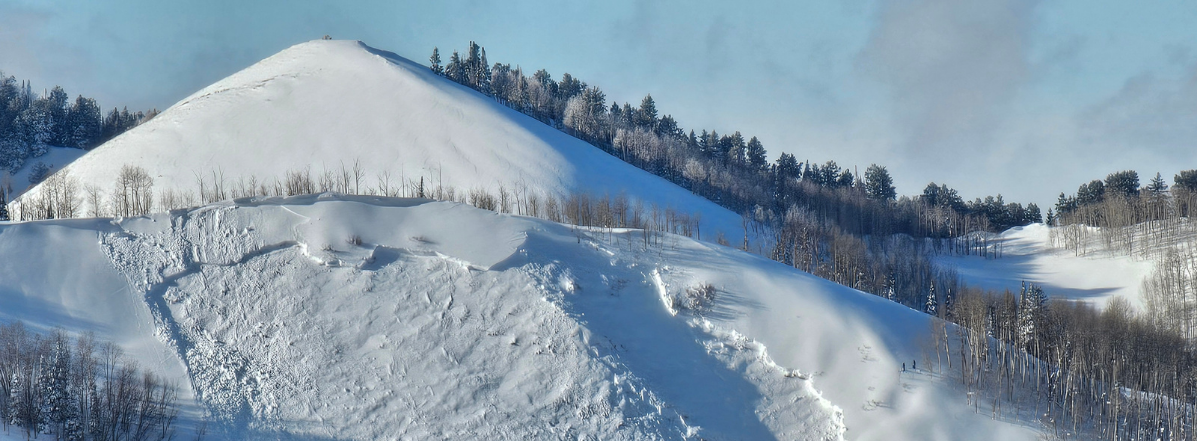
Human triggered avalanche in the Brighton periphery on Thursday

A cohesive soft slab 8-18" thick rests uneasily over the weak sugary facets formed during the January drought. With a quick hand pit, it's easy to see the dense new snow and/or wind blown snow over this persistent weak layer (PWL) of grey, crystalline sugary facets. This unstable structure will still be prone to triggering today in steep northerly (west-north-east) facing terrain at the mid and upper elevations. Conditions may seem to be slooooowly stabilizing, but this may make things a bit trickier for the unwary traveler: cracking and collapsing will be less common today, and yet this limited or inconsistent feedback will provide a severe false sense of security. Know that you can - and probably will - trigger one of these soft slabs failing on our PWL, and you may trigger it from a distance.

I would consider ALL steep slopes facing the north side of the compass suspect, particularly those that have seen recent wind loading.

Additional Information

Learn more about Persistent Weak Layers in the video above -

General Announcements

This information does not apply to developed ski areas or highways where avalanche control is normally done. This forecast is from the U.S.D.A. Forest Service, which is solely responsible for its content. This forecast describes general avalanche conditions and local variations always occur.