Forecast for the Salt Lake Area Mountains

Brooke Maushund
Issued by Brooke Maushund on
Wednesday morning, February 11, 2026

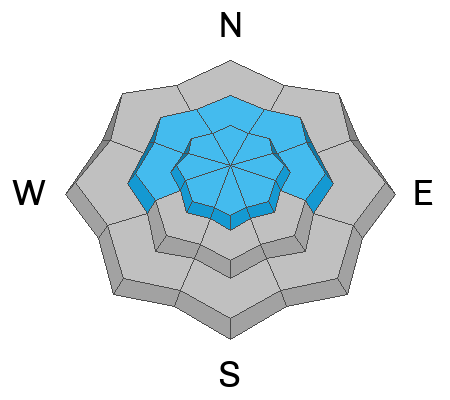
An atmospheric river continues to bring us snow, wind, and a MODERATE avalanche danger at upper and W-N-E-facing mid-elevation slopes. Here, strong winds from the south will continue to drift the new snowfall into reactive wind slabs atop weak, old snow. These will increase in size and reactivity, and will be easier to find, throughout the day.

Avalanche danger will rise through MODERATE into the evening. If the storm overproduces, we could reach CONSIDERABLE danger at upper elevations by sunset.

Low
Moderate
Considerable
High
Extreme
Learn how to read the forecast here
Special Announcements

Greatest Rain on Earth?!?: Forecaster Drew Hardesty penned a new essay about high-elevation rain and the warm-snow drought HERE.

Weak Snow: Today's Surface, Tomorrow's Avalanche Problem: Essay by UAC Director Paige Pagnucco HERE.

Weather and Snow

Yesterday evening, the storm finally arrived a bit late. Favored areas picked up 2-3 inches snow // 0.1-0.3 inches H20 by 5am, while sustained winds blew out of the SSW in the mid to high 20s mph, gusting into the 60s mph along the highest ridgelines.

Today, the warm atmospheric river continues with freezing levels rising near 8k feet. Mountain temps will be in the 20s to low 30s F, with sustained moderate winds from the SSW gusting strong. These winds are as much a part of the story as the snowfall is. There is a potential for thunderstorms during snowfall, so hold onto your hat (and get your kite + key). As the storm carries on today into tomorrow, we can expect:

  • Favored areas (Upper LCC, BCC): 3-6 inches of snow // 0.3-0.6 inches H2O by 5pm
  • Less-favored areas (PC Ridgeline): 1-3 inches of snow // 0.1-0.3 inches H2O by 5pm

Tonight into tomorrow, freezing levels will drop back to near 7k feet as temps gradually cool off. Precipitation will continue, with the potential for up to an additional 4-6 inches snow // 0.3-0.5" H2O to fall by tomorrow morning in favored areas. Winds out of the SSW will continue to blow moderate to strong, transporting snow with them. This round of precip will taper into Thursday.

Pattern shifts as mindset shifts: We have been in an open season mindset for ~a month. Our last large storm ended on 1/9, leaving us with far-flung travel, and a mostly LOW avalanche danger. I'm using the pattern shift for an intentional pause to shift my mindset. There are two things certain this week: more snow (of some amount) and increased avalanche activity (of some amount as well). We will not be getting one without the other. Reining in my status quo notions of where and how to travel is at the forefront of my mind, as is dialing back terrain choices as more snow falls. (Roger Atkins has some more for you to chew on HERE).

Recent Avalanches

No avalanche activity was reported yesterday.

Forecaster Nikki Champion was in the Brighton backcountry on Monday, seeing how initial snowfall was coming in. You can view all recent observations here.


Avalanche Problem #1
Wind Drifted Snow
Type
Location
Likelihood
Size
Description

1-3" of dense snow fell overnight in favored areas, with the potential for an additional 3-6" of snow to fall by sunset tonight. This new snow means a few things for us, other than a refresh for riding:

  • Wind-drifted snow: The new snow combined with sustained, moderate to strong SSW winds since yesterday means wind slabs are building at upper and exposed mid-elevation slopes. These slabs will be most common near ridgelines, and will build in size and reactivity during the day. Drifts, dunes, pillows, and textured surfaces are signs the wind has been at work. Expect these to be quite reactive, as...
  • Weak snow beneath: Pockets of wind-drifted snow at upper and mid-elevations will likely be quite reactive, especially on slopes facing NW-N-E, as they will build atop weak, faceted snow. This is the same snow that has been rotting for the past month, and is so unconsolidated that it started causing dry loose sluffs in recent weeks. These will potentially be able to propagate widely and be triggered from a distance away.
  • New snow: With 8k' freezing levels expect the possibility for the new snow—especially on sheltered mid and lower elevation slopes—to be able to consolidate into slabs on top of old snow.
General Announcements

This information does not apply to developed ski areas or highways where avalanche control is normally done. This forecast is from the U.S.D.A. Forest Service, which is solely responsible for its content. This forecast describes general avalanche conditions and local variations always occur.