Just after noon on February 19, 2026, a father and his two children exited the Brighton ski area boundary west of the Crest lift. The victim—an 11-year-old female—was ahead of her other family members entering the backcountry. As she traversed north/northwest along the apron above Rock Garden towards Mary Main Bowl, bystanders on the ridge above reported that an avalanche broke above her.
The victim was caught, carried more than 200 vertical feet, and fully buried near the toe of the debris. She was buried just downhill of a tree. Bystanders who witnessed the incident called Brighton Ski Patrol (BSP) and 911. The family had no avalanche rescue equipment, and a family member used a phone location service to try to help narrow the search area as bystanders assisted in the rescue effort.
After Brighton Ski Patrol arrived, an avalanche rescue dog located the victim four feet below the snow surface after being buried for approximately 17 minutes. Brighton Ski Patrol administered CPR for close to 30 minutes, and a rescue helicopter was called, but it was unable to land due to poor weather. The victim was transported by ground ambulance to higher care, but tragically, despite the efforts of all involved in the rescue, she did not survive.
Utah Avalanche Center staff visited the accident site in partnership with BSP the following day, Friday, February 20.
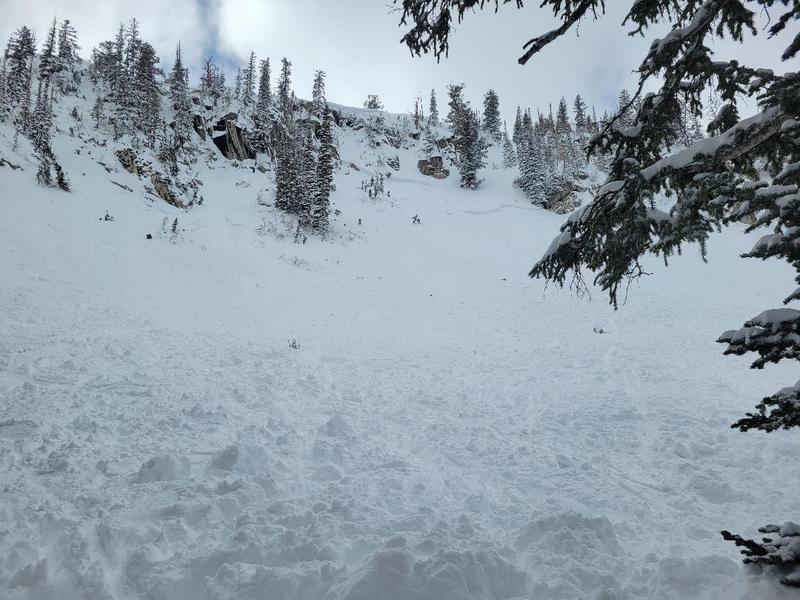 Looking uphill towards the crown of the avalanche from where the victim was buried. Captured the day of the incident. Photo: BSP
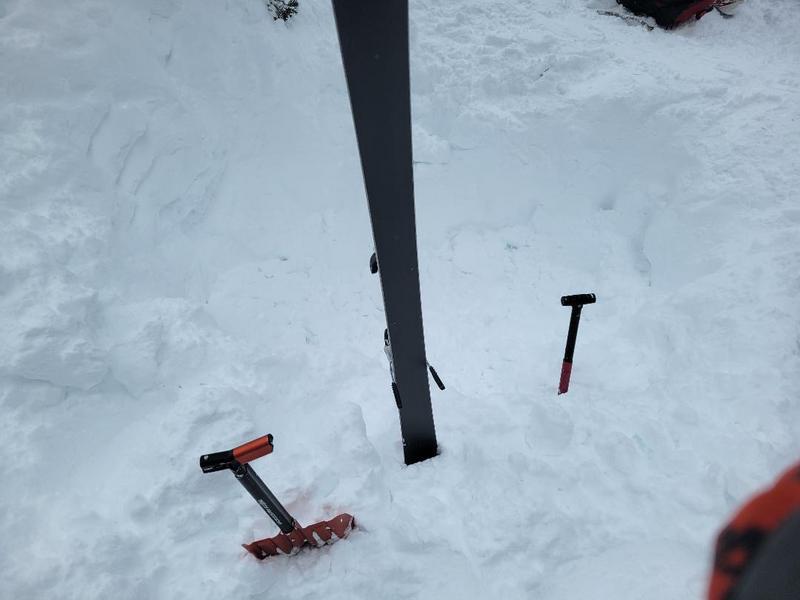
The burial site. Captured the day of the incident. Photo: BSP
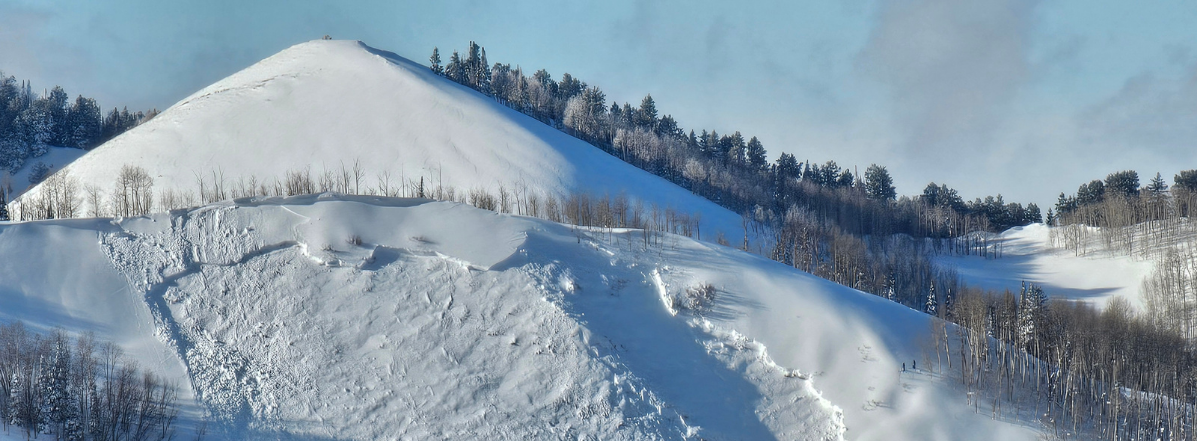
The avalanche occurred on a northeast-facing slope in the backcountry adjacent to Brighton Resort, in an area known as Mary Main Bowl, near Rock Garden and the Mary Chutes. The avalanche crown was between 9380 and 9200 feet in elevation and approximately 550 feet wide. The toe of the debris was approximately 9100 feet in elevation. Slope angles ranged from 32 degrees to well over 40 degrees in steepness. The avalanche broke in the thinner, rockier terrain above the victim, initially breaking on a mid-storm graupel layer before stepping down to the weak, faceted snow that developed during the January dry spell. The slide propagated across the entire apron of Mary Main Bowl, an event that veteran members of BSP cannot recall in recent memory.
While it is not certain, the victim likely rode the Crest Express lift before descending skier's left off the chair, working her way northwest towards the ski area boundary with her father and sibling. Ahead of her family, the young skier likely exited the boundary just uphill of the end of the rope line, past a sign indicating “No avalanche control work beyond this point." Witnesses reported the victim entered the Mary Main Bowl from the skier's right, traversing onto the apron 20-30 feet below rocks when the avalanche broke above her.
*It is important to distinguish this area from the Upper Mary Chutes, which are above Lake Mary. Mary Main Bowl and the Mary Chutes, as they are noted on the Wasatch Backcountry Skiing Map, are below Lake Mary.*
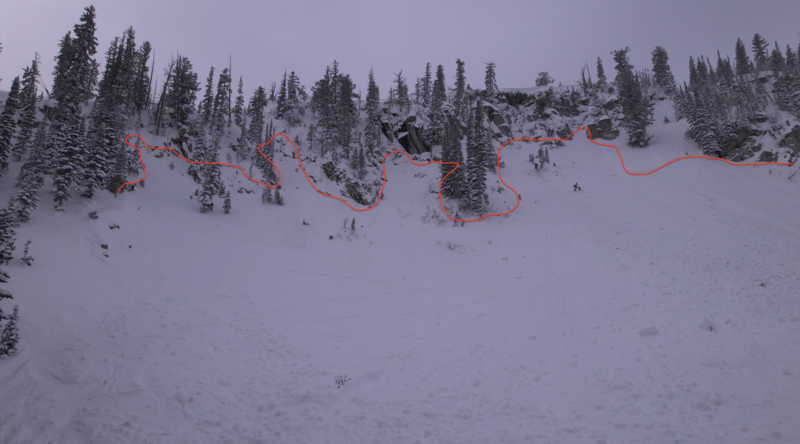
Photo of the terrain where the slide occurred. The victim entered from the left side of the photo, traversing into the bowl. Photo: UAC staff
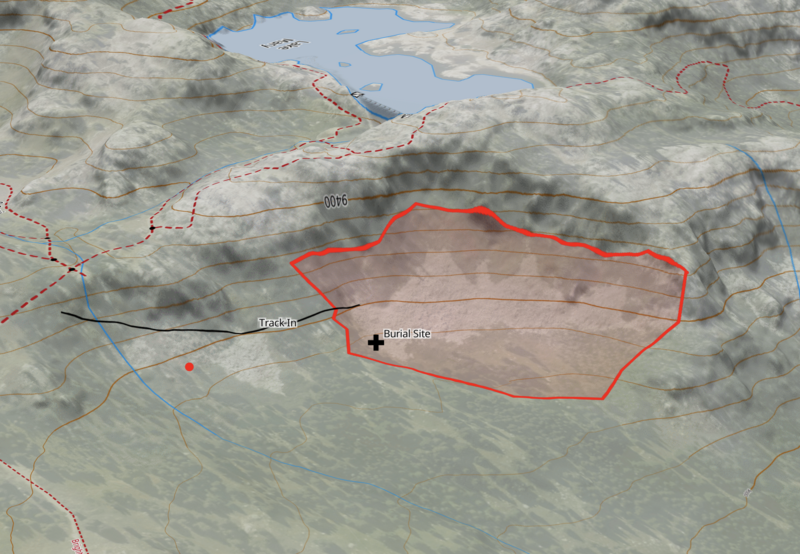
Overview of the slide path, debris, and burial site on CalTopo. The red shapes depict the avalanche.
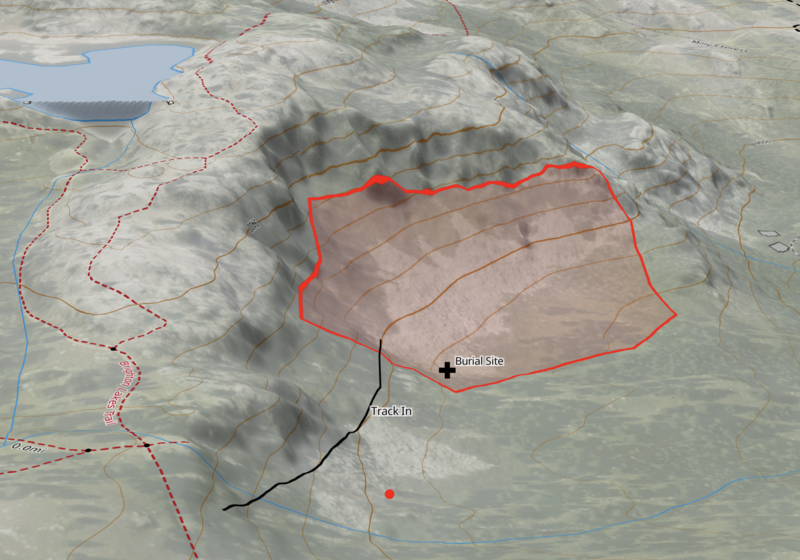
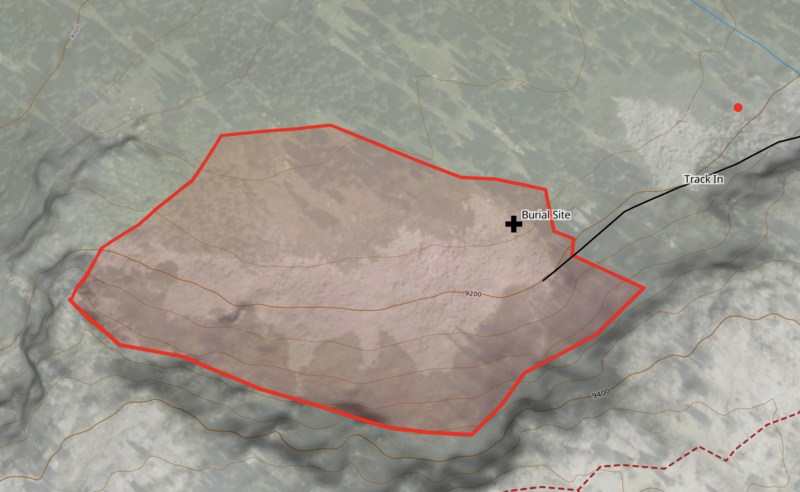
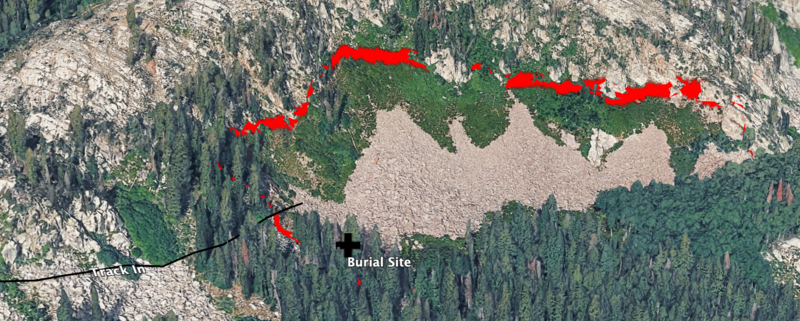
Photo from Google Earth. Red marking depicts approximate crown location. Black line marks the approximate entry track. Black + marks the approximate burial location.
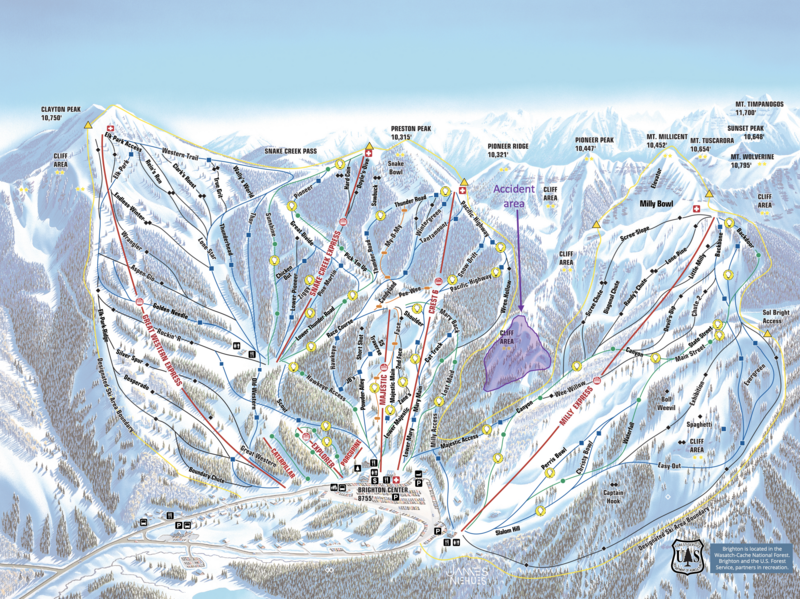
Brighton's Day Trail Map, pulled from their website on February 24, 2026. The accident area is highlighted in purple. Note it is outside of the yellow Ski Area Boundary.
In early February, the Central Wasatch had been under a high-pressure ridge without significant precipitation since January 9, 2026. A small series of storms arrived February 11-12, depositing 8-12 inches of snow in the upper Cottonwood Canyons by the morning of February 13. This new snow buried a persistent weak layer of weak, faceted snow that formed during the dry period in January (Dry January Layer/DJL). Some human-triggered and natural avalanche activity running in the new snow was reported, but the lack of a slab on top made for a mostly quiet weekend on February 14-15. Forecasters note the poor snowpack structure that will produce a large avalanche cycle when significantly loaded in several observations during the weekend.
The Utah Avalanche Center issued an Avalanche Watch on Monday, February 16, ahead of a strong storm expected to arrive Tuesday into Wednesday, 2/17-18. The Avalanche Watch was continued on Tuesday, February 17, as the storm arrived and the avalanche danger rose to CONSIDERABLE. The Watch was escalated to an Avalanche Warning on Wednesday, February 18, as the avalanche danger rose to HIGH. The Avalanche Warning and HIGH danger continued through Thursday, February 19—the day of the accident—as storm totals that morning were close to 50 inches of snow and 4.7 inches of snow water equivalent in the upper Cottonwood Canyons. This rapid loading over a known persistent weak layer created a classic high-consequence avalanche setup.

Temperature run and average air temperature from Brighton Crest (9,577’) from February 17, when significant precipitation started falling, through the day of the avalanche, February 19. The rough time of the incident is indicated.
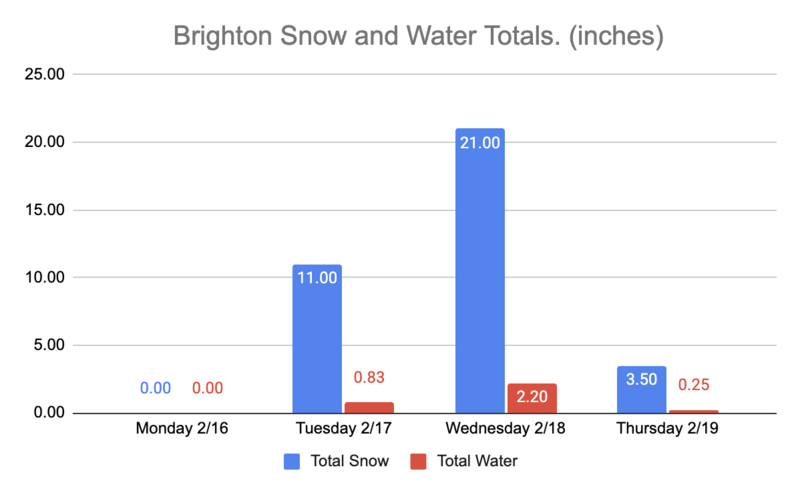
Snow and water for the storm cycle from February 16 through February 19 (day of accident) as reported by Brighton Ski Patrol. Note the snow, 32", and snow water equivalent, 3.03", amounts reported in the two days prior to the accident.
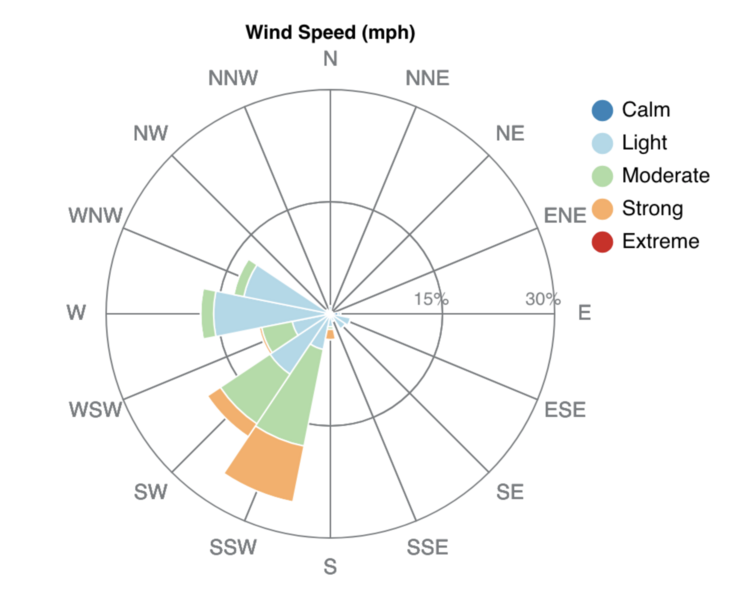
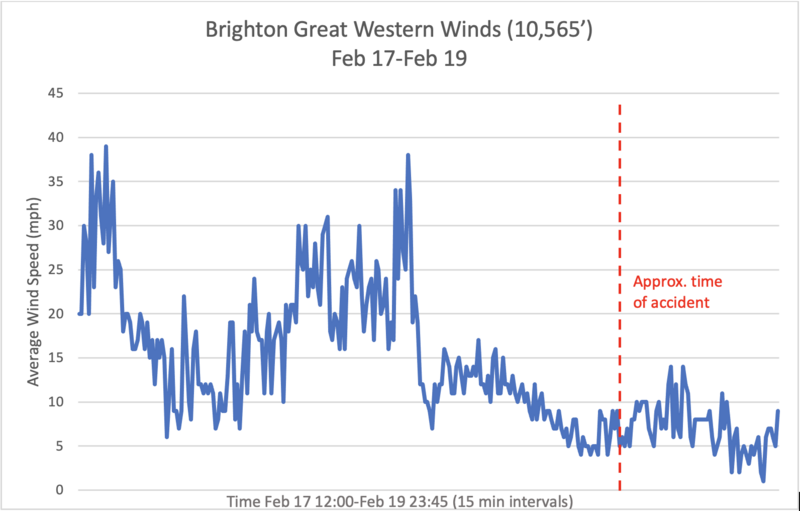
Wind rose and average speeds from Brighton Great Western (10,565’), which is approximately ¼ mile to the east and 1250 feet higher than the site of this avalanche. The graphs show wind direction, distribution, and speed from February 17, when significant precipitation began, through the day of the avalanche, February 19.
The avalanche crown was near 9380 feet on a 38-degree northeast-facing slope directly below a cliff band. The slab was composed of Fist minus to 4 Finger density precipitation particles, wind-broken precipitation particles, and two layers of graupel. The more pronounced layer of 2mm graupel, about 53cm below the snow surface, was where the avalanche initiated before quickly stepping down to a deeper persistent weak layer, 93cm down in the snowpack, allowing it to propagate widely across the slope.
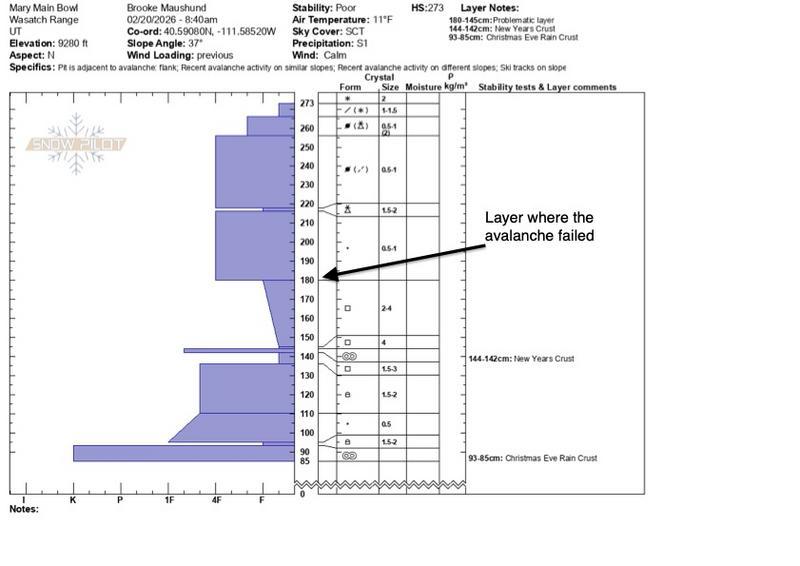
Additional Snow Profile Photos:
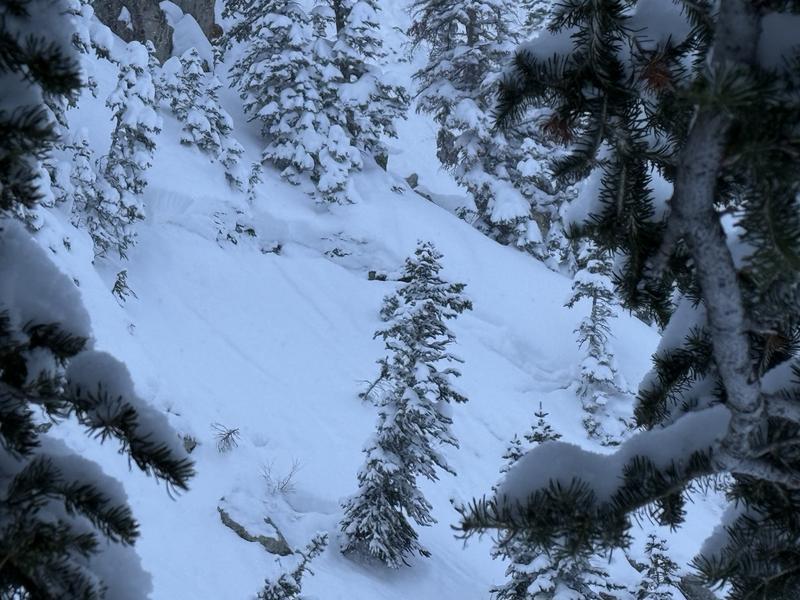
The crown of the avalanche just above where the victim entered the path. Captured the day after the incident. Photo: UAC staff
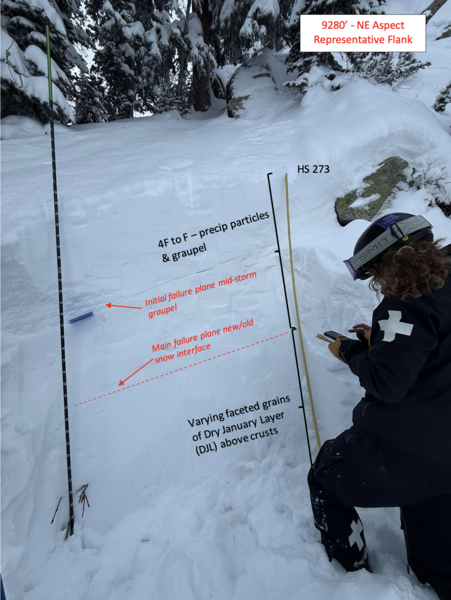
An annotated flank section at 9280' on a north aspect directly below a cliff band in a shallow area, located above where the victim entered the path. Photo: UAC staff
Exiting the Ski Area Boundary
The victim and her two family members were skiing inbounds at Brighton prior to exiting the ski area into Mary Main Bowl. The area where the family exited the boundary was marked by a ropeline and signage indicating “Ski Area Boundary: No Ski Patrol or avalanche control beyond this point.”
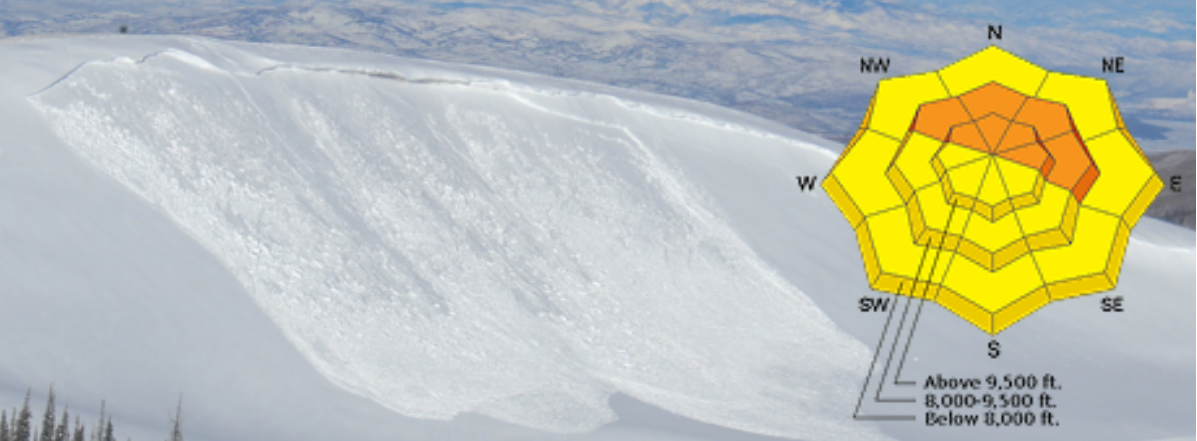
The avalanche danger was HIGH for this aspect and elevation on the day of the incident, February 19, 2026. An Avalanche Warning was in effect for the Salt Lake area mountains, and a buried persistent weak layer was the primary concern in the forecast. It is unknown whether the family reviewed the avalanche forecast before exiting the ski area boundary.
Utah leads the nation in avalanche fatalities of riders who leave ski area boundaries. In general, the backcountry adjacent to ski areas—sometimes referred to as “sidecountry”—can be deceptive. Very different avalanche conditions often exist just feet away from the boundary, despite its proximity to a ski area. As a whole, not all in-bounds patrons are aware of what the backcountry is, nor the hazards that come with backcountry travel.
At the Utah Avalanche Center, we strive to learn from every avalanche incident and share insights to help others avoid similar accidents. Anyone leaving a ski area boundary must treat the terrain they enter as backcountry: check the avalanche forecast, carry a beacon, shovel, and probe, know how to use them, and travel with a partner.
Thank you to all the members of the community who participated in this rescue and provided closure to this individual's family and friends. The UAC and Brighton Ski Patrol extend our heartfelt condolences to the victim’s family, friends, and all those in the community affected by her loss.