Forecast for the Salt Lake Area Mountains

Trent Meisenheimer
Issued by Trent Meisenheimer on
Monday morning, April 20, 2026

Regular avalanche forecasts have ended. We will issue intermittent updates and publish observations through May 1st. You can submit observations and avalanches HERE, and check out the most recent observations and avalanches HERE.

During the spring, there are typically three different avalanche problems:

  • Wet Snow: Wet loose avalanches, wet slab avalanches, roof slides, and glide avalanches
  • New Snow: New storm snow instabilities; soft slab avalanches and loose dry avalanches
  • Wind Drifted Snow: Wind slabs; soft or hard drifts of wind-blown snow
Low
Moderate
Considerable
High
Extreme
Learn how to read the forecast here
Special Announcements

If you are looking to travel uphill at the ski areas, then check out the UAC Uphill Travel Policy page before heading out.

Weather and Snow

Thanks again for another great season. Look for our Annual Report in the coming weeks.

Click HERE to access our weather page for up-to-date weather station data to help plan your tour based on new snow, temperature, wind speed, and direction.

Our partners at the National Weather Service put out a weather discussion HERE.

Recent Avalanches

We will continue to post avalanches and observations. You can submit what you're seeing HERE, and check out all recent avalanches and observations HERE.

Avalanche Problem #1
Wet Snow
Type
Location
Likelihood
Size
Description

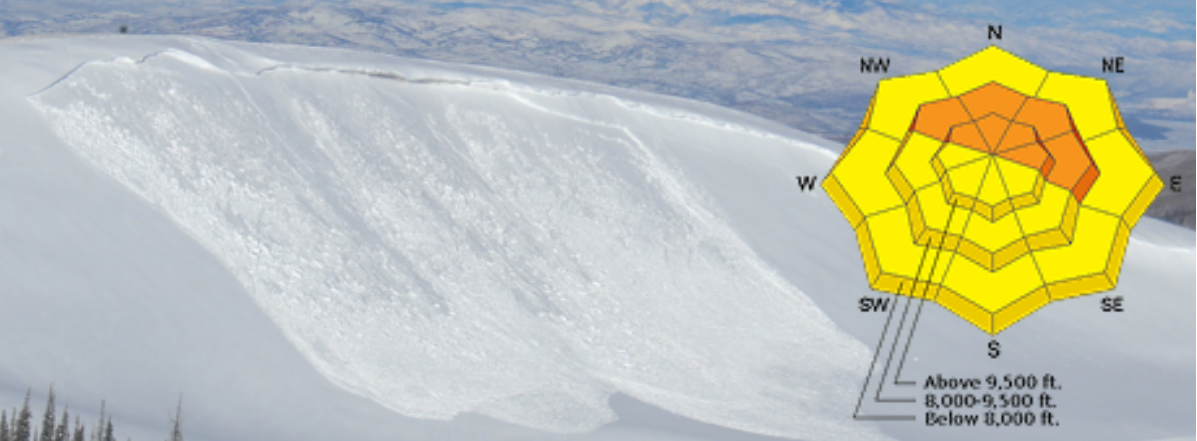
When cold, dry snow becomes wet for the first time, it almost always means wet sluffs (loose snow that fans outward as it descends).

Larger wet slab avalanches can happen when melt water percolates through a layered, winter snowpack for the first time especially after multiple days of warm temperatures combined with no refreeze at night.

Glide avalanches occur regularly in spring as the entire snowpack slides slowly on the ground like a glacier until they suddenly release into a full-depth avalanche. These occur periodically on steep rock slabs and occasionally on steep grassy slopes. Notorious glide avalanche locations include Stairs Gulch or the rock slabs in Broads Fork. Avoid crossing under any slopes with cracks to the ground in the snowpack. Remember, they come down randomly, even at night.

Warning signs may include:

  • Rollerballs (pinwheels) in new snow that is getting wet for the first time
  • Natural or human-triggered wet sluffs
  • Small sluffs fanning out into larger slides or running long distances
  • Cornices breaking off

These signs mean it's time to head home or change to an aspect with cooler snow. Remember, even "smaller" slides can be dangerous in high-consequence terrain, such as above a terrain trap, trees, rocks, cliffs, or a long, large avalanche path.

Avalanche Problem #2
New Snow
Type
Location
Likelihood
Size
Description

We almost always get winter-like snow storms well in the spring. Treat each storm just like you would in winter. Avalanches can occur within the new snow typically from 1) low-density layers deposited during the storm, 2) high precipitation intensity during a storm, and 3) from wind slabs created during the storm.

It's easy to test the new snow as you travel by jumping on small test slopes to see if they avalanche or dig down with your hand to see how well the new snow is bonding. Snow can change dramatically in both space and time, so never let your guard down. Avoid any steep slope with recent wind deposits. Practice good backcountry protocol:

  • Check your gear before every tour, and make sure each person has a working transceiver, shovel, and probe before entering avalanche terrain
  • Only expose one person to a steep slope at a time
  • Never travel above other people
Avalanche Problem #3
Wind Drifted Snow
Type
Location
Likelihood
Size
Description

Wind can rapidly load snow onto steep slopes, making them more prone to avalanches. Avoid slopes greater than 30° in steepness if you see signs of wind-drifted snow, such as rounded and pillowy features, and shooting cracks. In some cases, wind drifts can sound hollow like a drum.

General Announcements

This information does not apply to developed ski areas or highways where avalanche control is normally done. This forecast is from the U.S.D.A. Forest Service, which is solely responsible for its content. This forecast describes general avalanche conditions and local variations always occur.