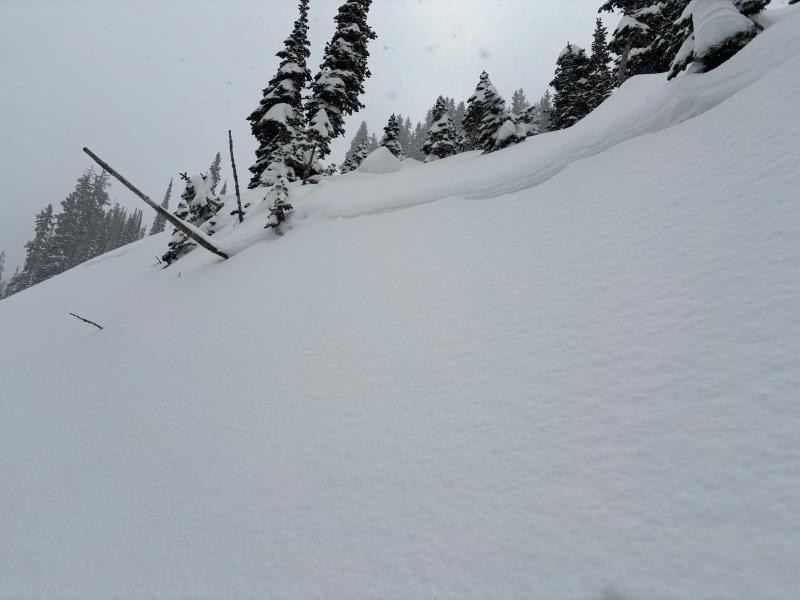
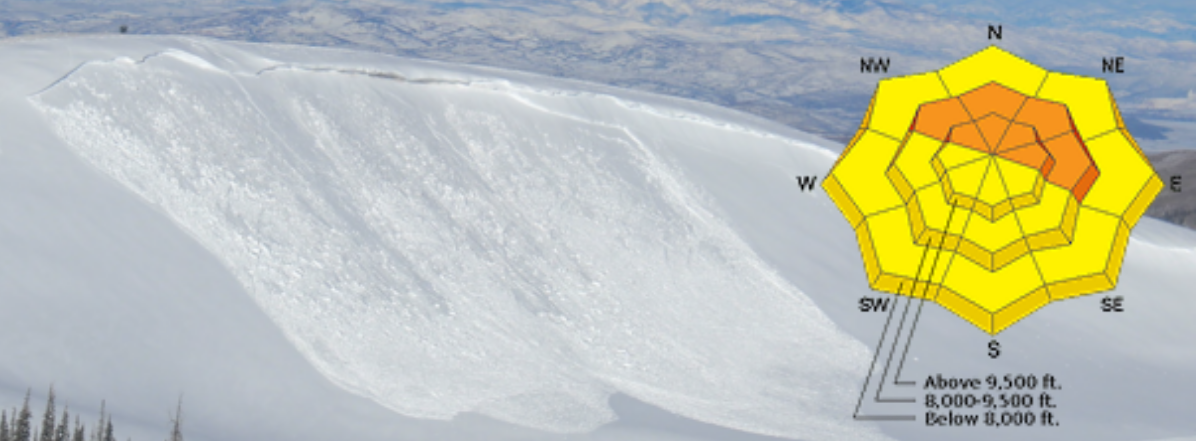
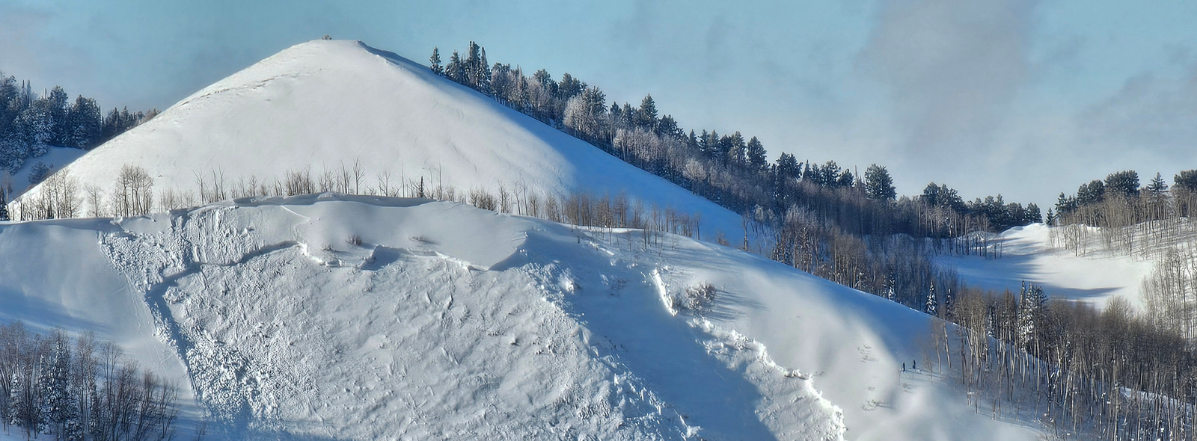
Observed a widespread natural Persistent Slab cycle that appeared to occur during the high PI period that was accompanied by Strong to Extreme SW to WSW winds early in the morning of the 18th. All steep Northerly facing slopes had old filled in crowns with many releasing around rock/cliff bands.
The area observed was between 9800' and 10,000'. Poor visibility prevented identifying many of these occurrences. Of Note, in area noted in the pictures below these crowns had been refilled with at least another 60cm of new snow. HN24 in this location was at least 45cm, and there was very little to no recent wind loading.
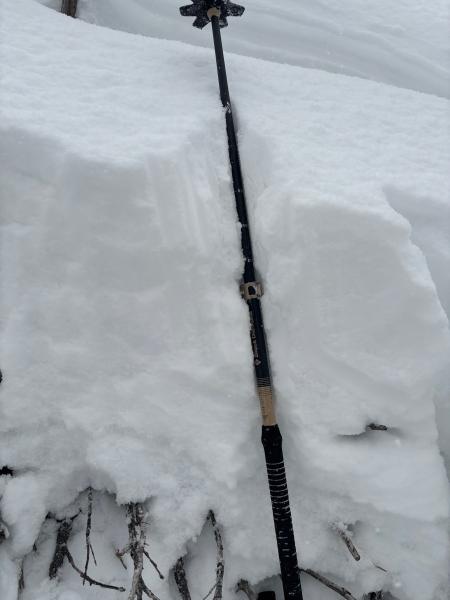
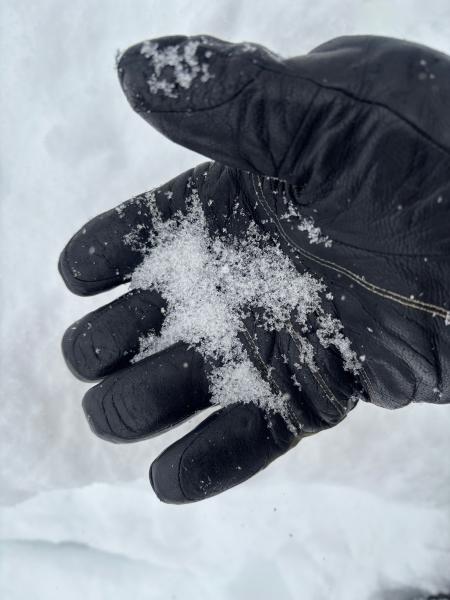
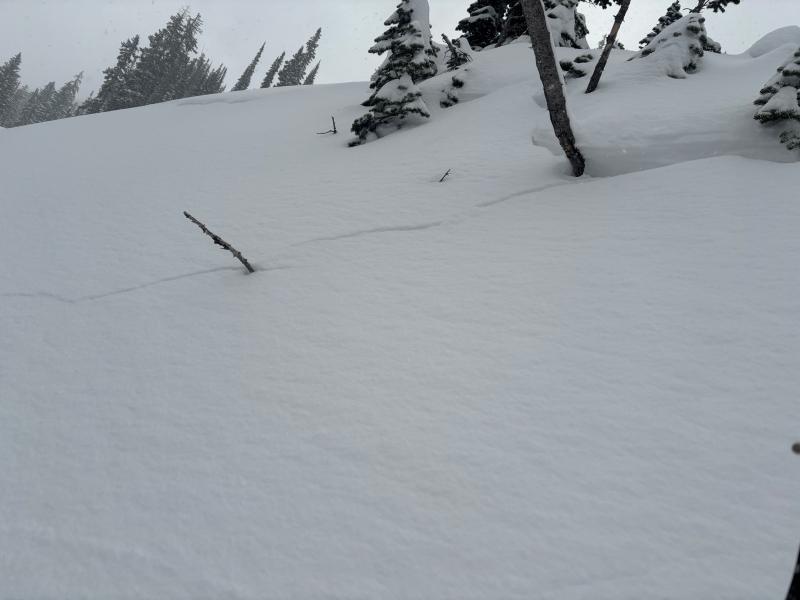
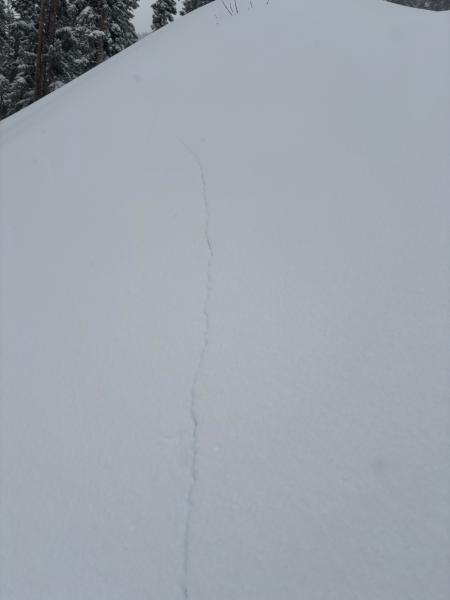
Picture 1 shows the old crown before gaining access to observe it; Picture 2 shows the crown profile indicating 30cm of lingering 2mm facets, and it appeared that the avalanche cycle ran on the upper layers of this buried weak layer deposit leaving significant amounts of facets for future activity; Picture 3 shows the facets; Picture 4 illustrates the potential for Repeaters on newly reloaded paths, and the slope was very touchy when moving across this newly loaded slope with collapsing, shooting cracks, with the new load moving downhill; Picture 5 illustrates the reactive sensitivity of this buried weak layer with loud collapsing and shooting cracks initiating on 32 degree slopes.
It appeared necessary to have slope angles at least 38 degrees or greater to initiate any movement, yet it appeared obvious that the potential for remote triggering and low angle propagation has the potential to initiate slide activity from above on any slopes harboring these buried weak layers. Also of note, was the touchy sensitive reactivity of a Storm Slab that was 45cm down at the interface of the latest event.
It appeared that the brief warming, high humidity and dense cloud cover from the afternoon on the 18th created a thin/friable crust layer that may have even helped create a very thin melt layer recrystallization process at the interface of any new snow that then fell on it. Either way, this weak layer was also very reactive.