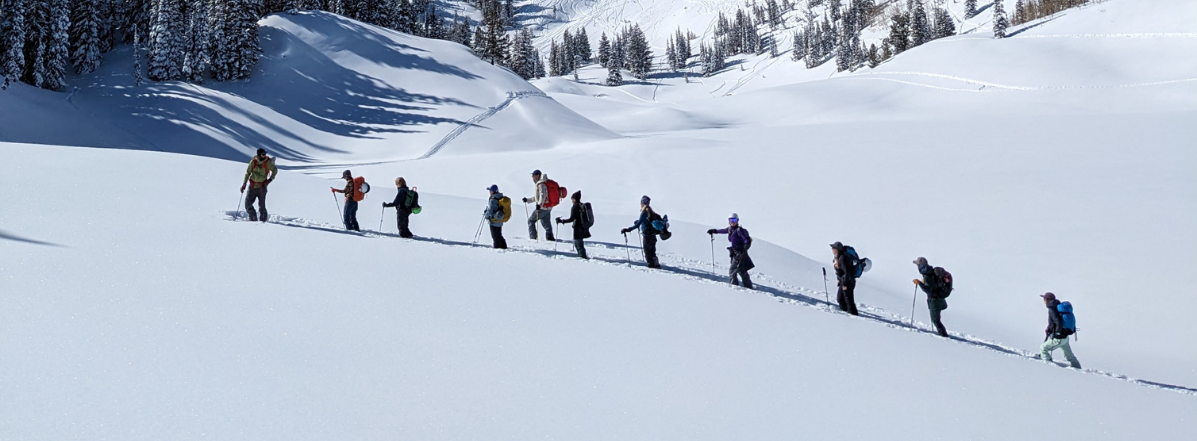
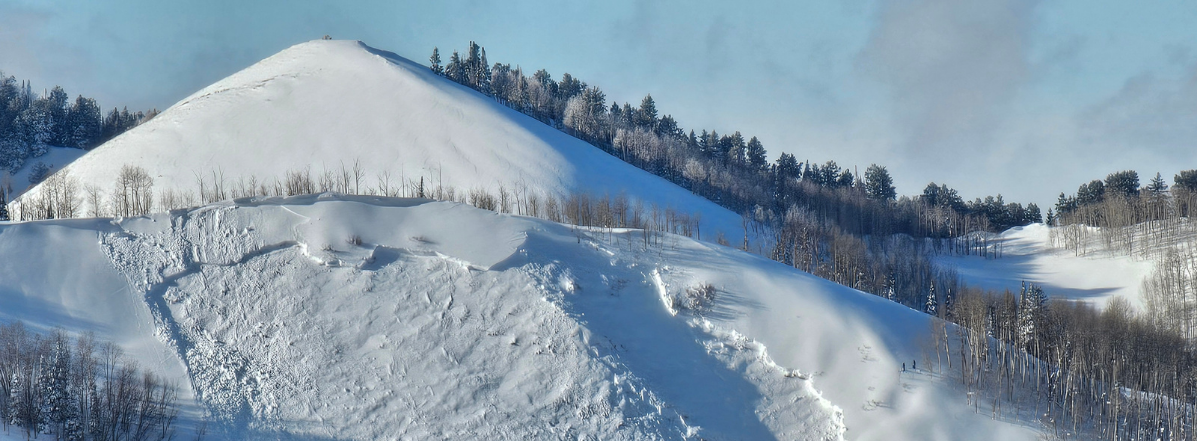
Traveled up through Cardiff, up George’s Bowl, and over toward Mineral Fork via East Fork.
Overall, what we saw closely echoes Brooke’s recent observations from a similar circuit. Snow surfaces are changing quickly right now, and the goal was to get a better sense of how fast ski quality is shifting and how the snow surface, in general, is handling this extended period of high pressure.
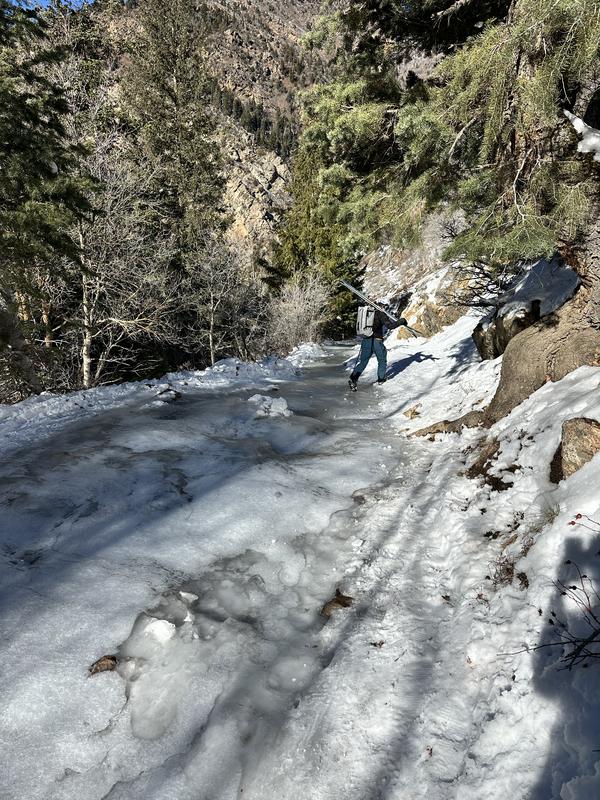
We saw zero signs of instability, aside from evidence of a previous wet cycle and roller balls, especially off rock bands and lower in the canyons on the exits. Lower-elevation solar aspects have taken a beating over the past several days, melting out quickly to dirt, rock, and in some places, pure water ice.
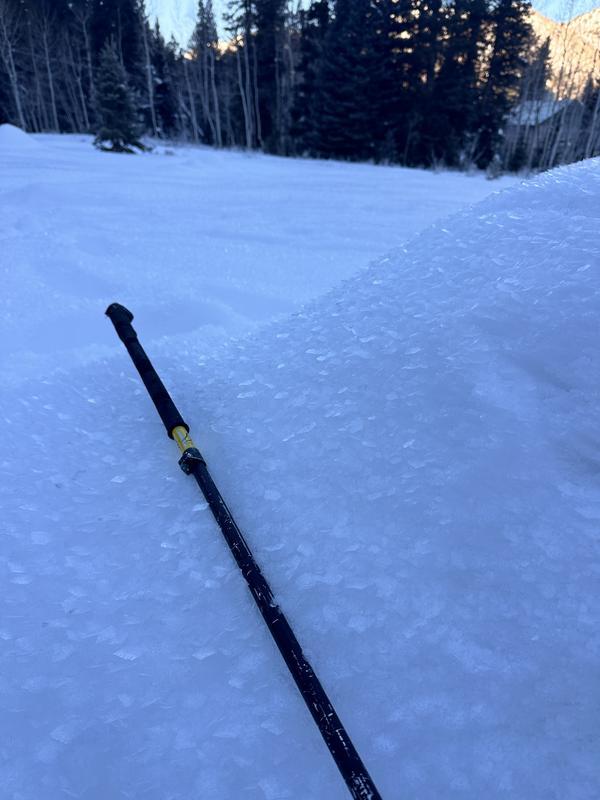
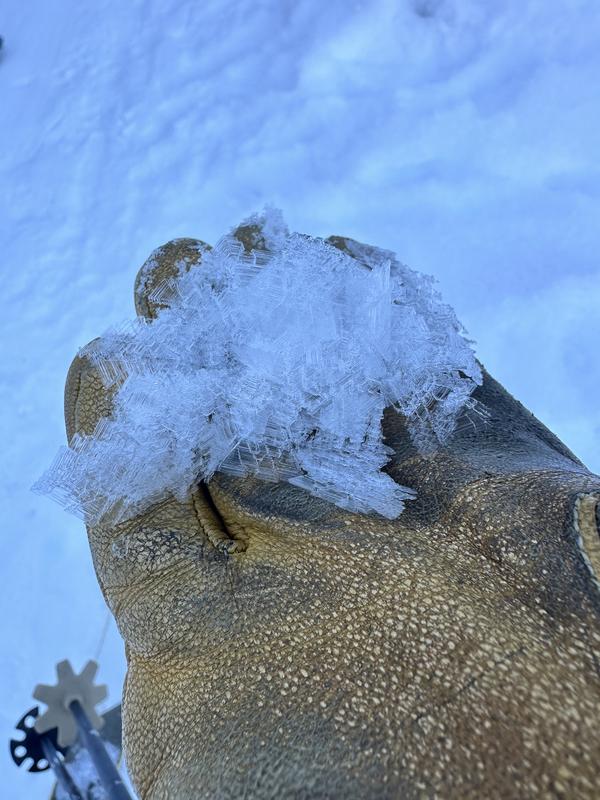
As we moved up in elevation, it became more of a mixed bag in terms of surfaces. The main takeaway recently has been the development of near-surface faceting in sheltered areas. At lower elevations near 7,400 feet, we found impressive surface hoar in protected areas. Additional surface hoar, though not as large, was also observed in sheltered locations up to about 9,000 feet. Widespread, the surface snow is weakening, but it doesn’t appear to be happening rapidly.
On solar aspects, melt-freeze crusts varied quite a bit depending on aspect and slope angle. Above about 9,000 feet, there’s also a thin, aspect-dependent wind skin. There’s some evidence of past and light recent wind transport from N, NW, and Westerly winds, but any wind-affected snow felt generally just textured and unreactive where we traveled.
Consistent soft skiing is becoming more limited.
Key takeaways will be to continue monitoring snow surfaces to identify potential issues that may arise in the future.
Surface Hoar at 7400'
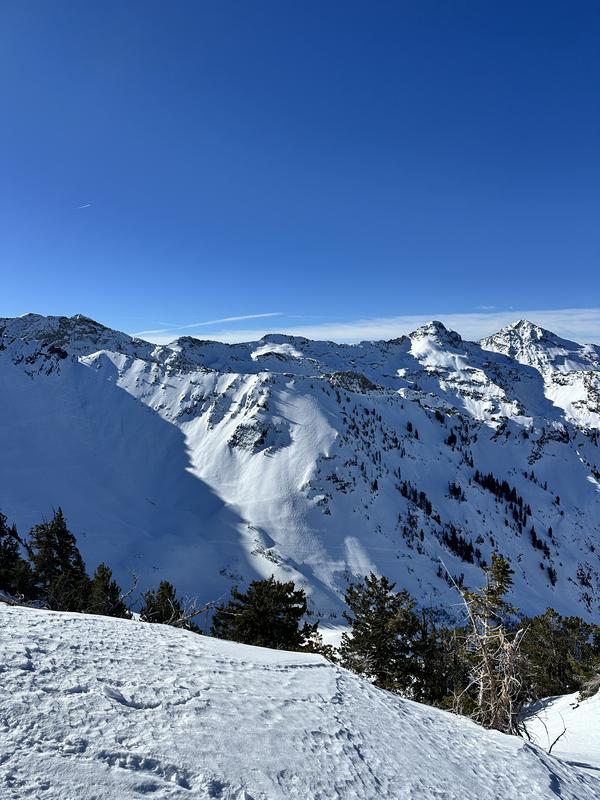
Coverage photo looking into Mineral Fork from the top of East Fork
The Mineral Fork exit...WI2?