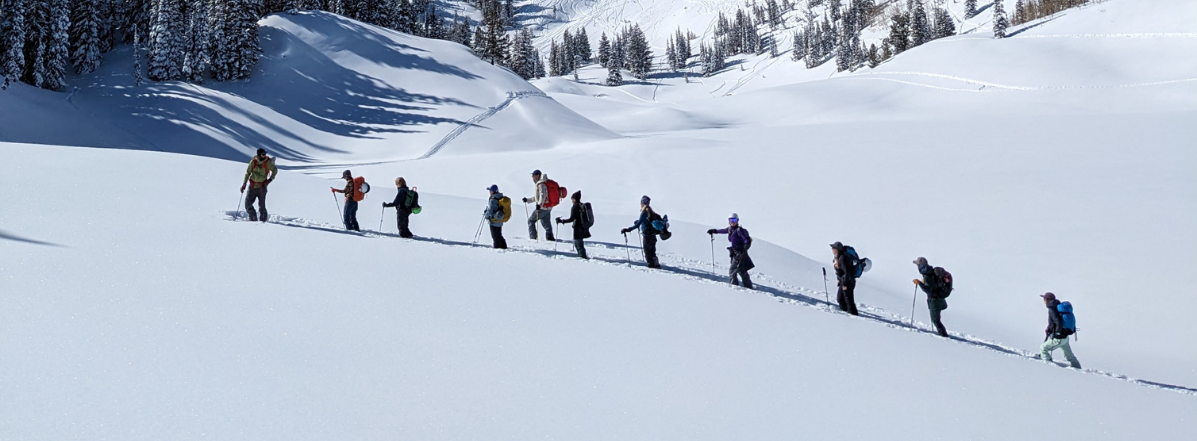
Haven't seen many (any?) obs from Millcreek, so thought I'd put one together. Travel was from Porter Fork TH to Gobbler's Knob. Coverage in Millcreek is improved over the last week, but is still meager below 8,500 feet.
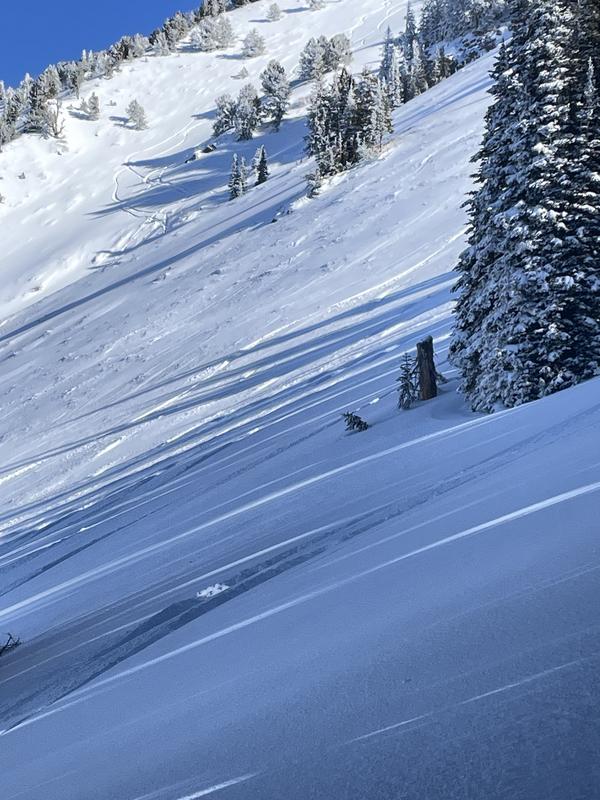
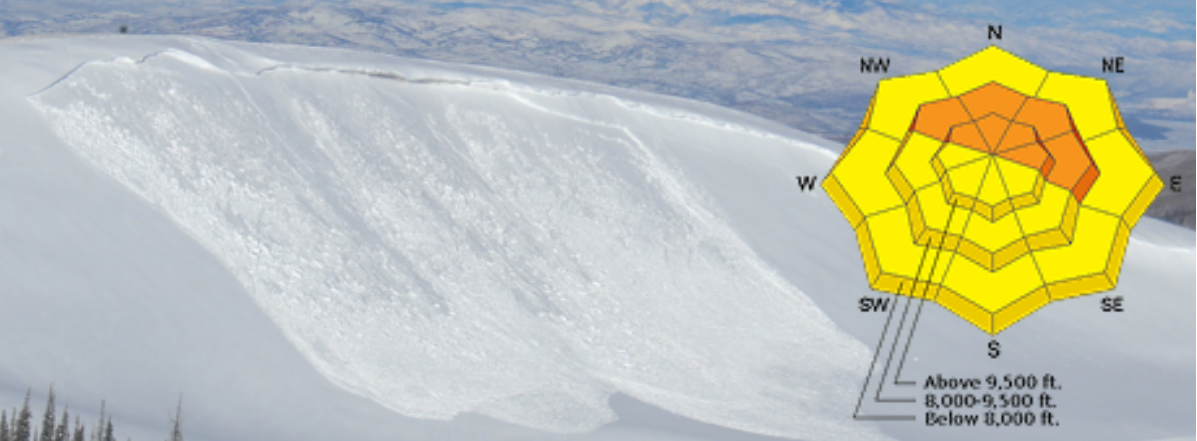
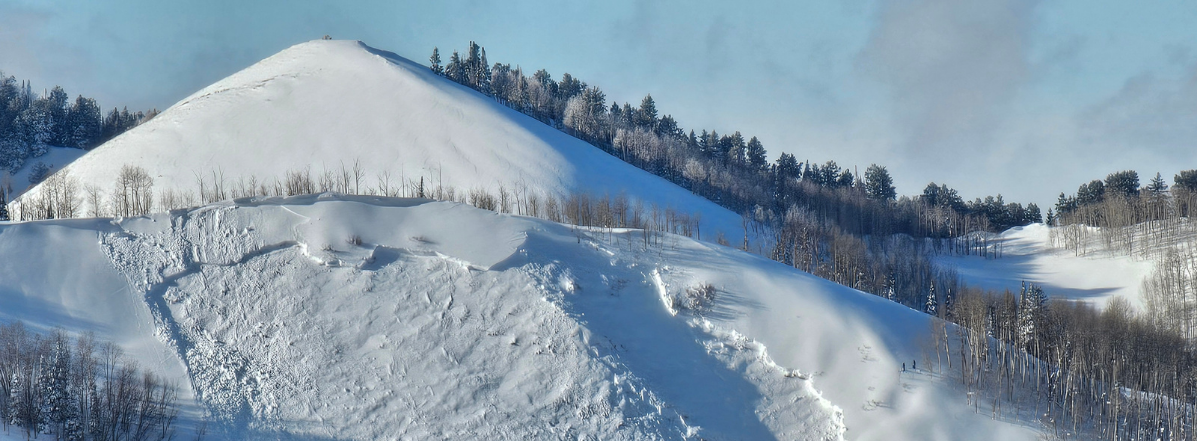
Gobbler's face showed the recent winds have scoured the face somewhat (see photo). Bushes and rocks that are usually covered this time of year were still poking through. Nonreactive, stiff wind pillows were encountered at the top of the Benign Line.
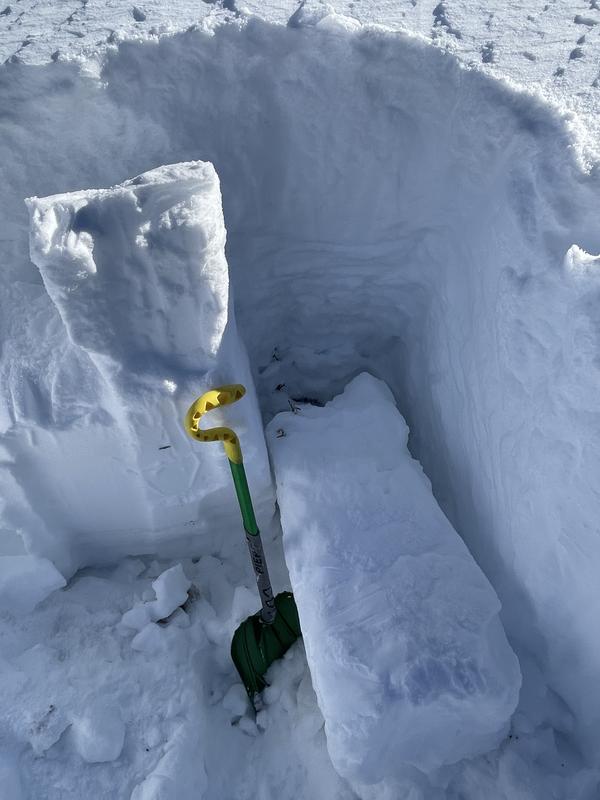
Digging at 9,500 feet on the northwest Gobblers face, on the skin line, with a 30 degree slope angle, I found:
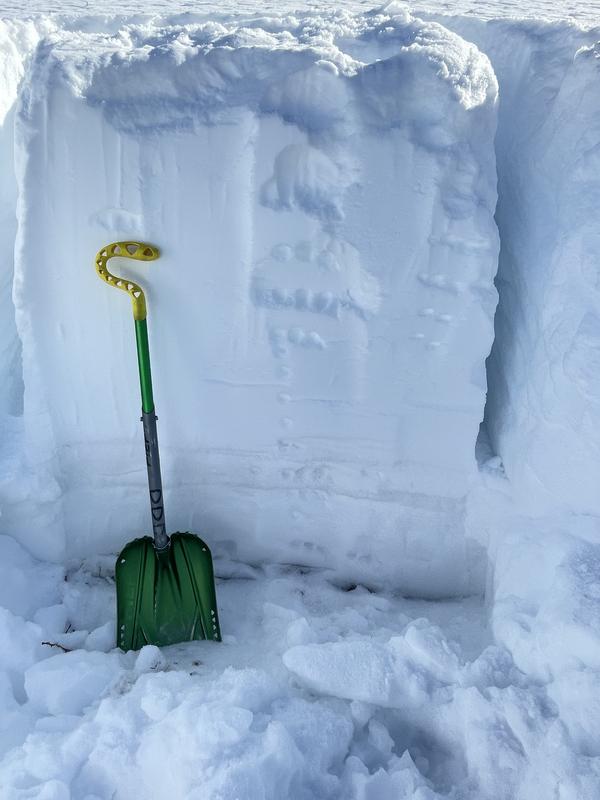
-Total snow depth of almost 4 feet. -Weak layer about 10-12 inches down on a density change, showing ECTN13 and CT12 results. -Well bonded snow down to the CERC, which was about 32 inches down (interestingly, I found two distinct, 1 inch thick knife hard, rain crusts sandwiching a 2 inch thick, 2-3 finger hardness layer between them, can be seen in photo). This crust sandwich was about 4 inches thick total. The crust was stout, and without a saw, I was unable to isolate an extended column below it. -Thin layer of non-reactive facets above the crust. -8 inches of 4 finger hardness below the crust. -4 inches of fist hardness facets at the ground. These facets were weak with CTV results (column failing on isolation). I reproduced this result in a location about 20 yards away as well.
At 8,800 feet on a north facing aspect under Paradise, the snow depth was half that observed higher, approximately 2 to 2.5 feet. In this location, the rain crust was stout and extremely difficult to punch the handle of my ski pole through.
Compared to what I've been seeing over the last week at similar elevations in Big Cottonwood Canyon, my impression is Millcreek has received less snow this year resulting in a shallower snowpack.