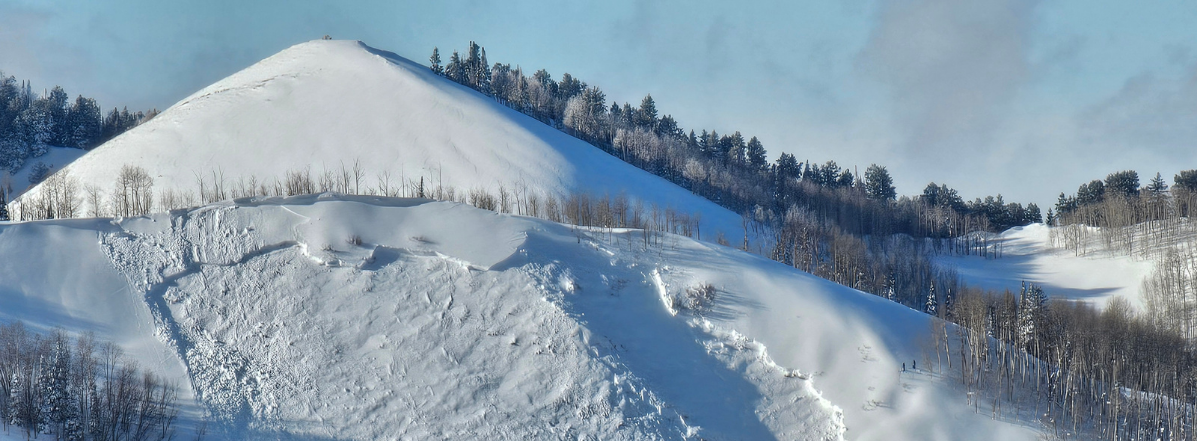
We primarily headed out with the goal of traveling up to the large Two Dogs avalanche that was triggered by a cornice fall the day prior.
On the way up the Flagstaff ridgeline, we noted a slightly upside-down snowpack, with graupel making up the initial snowfall of the storm. There was some isolated cracking along sub-ridges, but nothing widespread or well-connected. No collapsing was observed.
Once we reached the Two Dogs avalanche, the cornices along the ridgeline were large and continuing to grow. If you did not know an avalanche had occurred in Two Dogs, you would not have known, as the entire crown had filled in by the time we arrived. This occurred since approximately 4:40 the day prior, primarily from new snow and wind-drifted snow.
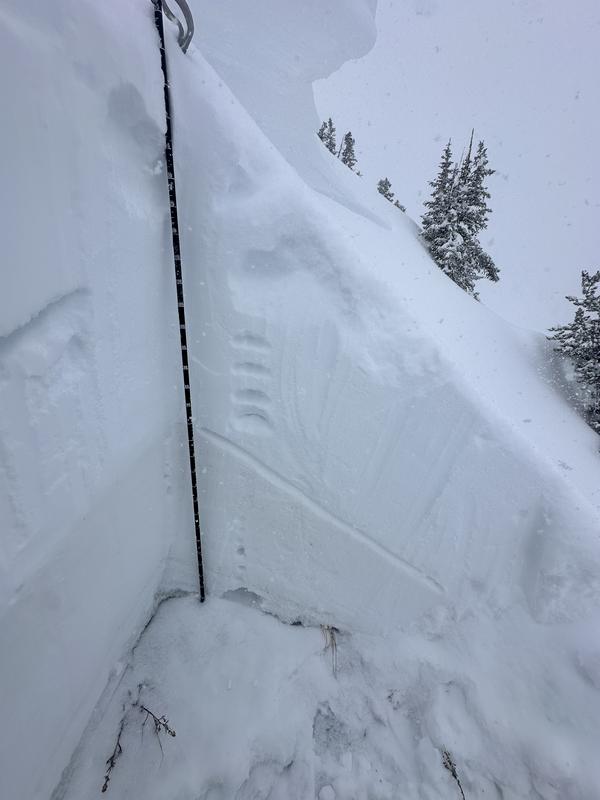
When we dug into the previous crown line, we found new snow sitting atop a stout, supportable crust. It appeared the cornice fall initially triggered an avalanche that failed on this crust and then stepped down more deeply into the old snow.
The crown itself did not provide much new information, but rather reinforced that we have received significant new snow and wind-drifted snow on top of a poor snowpack structure. Large avalanches are likely in the new snow and wind-drifted snow, and either of these could fail on the old crust or step down more deeply into the old snow. We have begun to see avalanches failing in the old snow, and with the increased load, we appear to be nearing a tipping point for this weak layer.
Two dogs avalanche crown - NE - 10,500'