Donate Now to Our Year End Campaign!

Observation: Murdock Peak

Observation Date
12/23/2025
Observer Name
Gagne / St. Jeor / Gronset
Region
Salt Lake » Park City Ridgeline » Murdock Peak
Location Name or Route
Murdock Peak
Weather
Sky
Overcast
Wind Speed
Moderate
Weather Comments
Sustained and moderate winds from the south that kept the snow surface cool. With almost no loose, dry snow available for transport, no recent wind-loading was noted.
Snow Characteristics
Snow Surface Conditions
Dense Loose
Melt-Freeze Crust
Damp
Snow Characteristics Comments

Snow depths along the ridgeline above Murdock Peak are 30-45 cms (12-18 inches). Fortunately, the recent warm temperatures, some wind-drifting, and dense, graupel from last week is making for a supportable snowpack.

Red Flags
Red Flags
Poor Snowpack Structure
Avalanche Problem #1
Problem
Persistent Weak Layer
Trend
Increasing Danger
Problem #1 Comments

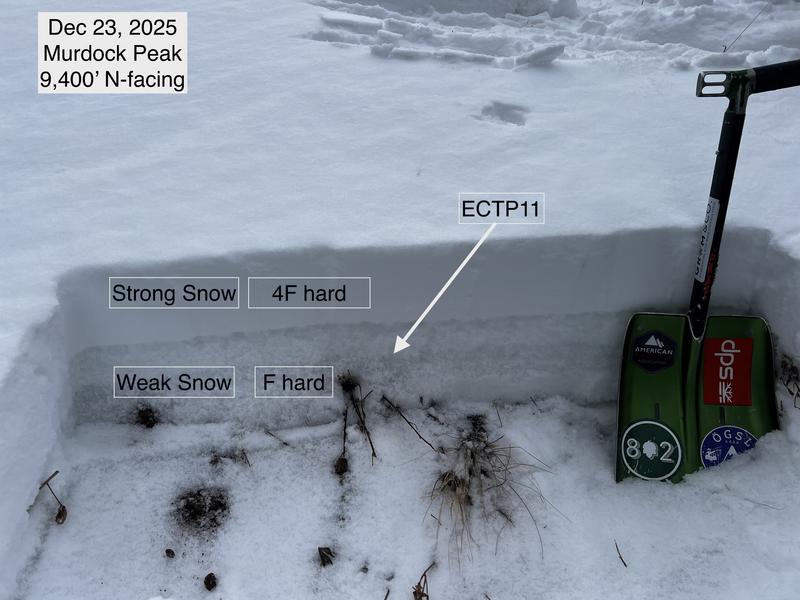
We found dry facets and depth hoar above 9,000 feet adjacent to Murdock Peak. Extended column tests were ECTP11 x 2 and ECTPV x 2, indicating the weak snow at the base of our thin snowpack is unlikely to withstand much of an additional load. Identifying an increasing danger with dense snow (hopefully) and wind in the forecast.

Snow Profile
Aspect
North
Elevation
9,400'
Slope Angle
30°
Comments

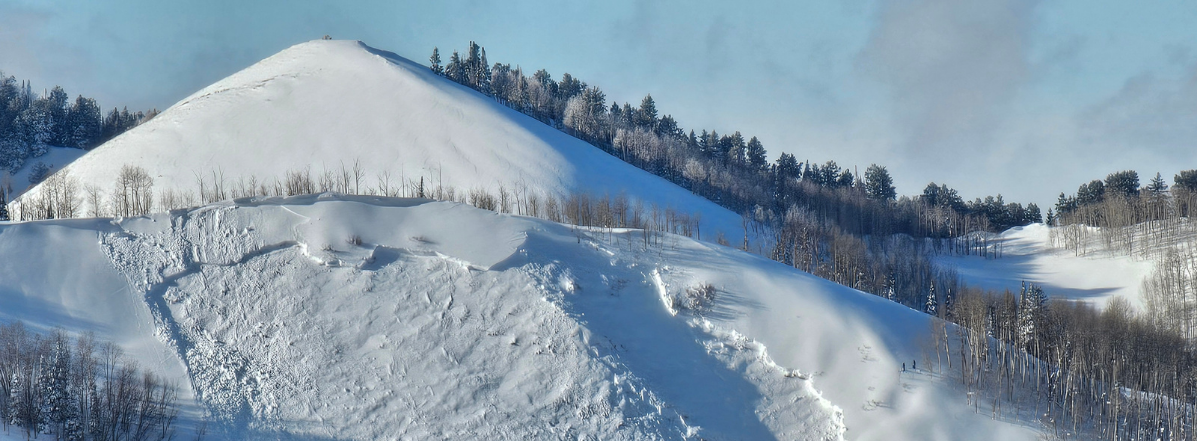
I traveled with snow safety team from Park City/Canyons to look at a remotely-triggered avalanche from Sunday, December 21 on a north-facing slope at 9,400 feet on Murdock Peak. Although others have been finding damp/moist facets - such as what Bo Torrey was finding on Dec 22 near Empire Pass - we found dry and very weak facets and depth hoar down near the ground. Although the snowpack is thin throughout the range, there is still some spatial variability on northerly aspects where in some areas that have had more snow and/or wind-loading, there is a deeper and stronger slab on top of the facets. Where we traveled today, the snowpack was supportable, but shallow. Our group of three all felt the structure we found today would not support much of a load of new snow/water or wind-loading.

Extended column tests on the slope adjacent to the avalanche were ECTP11 (photo) and ECTPV (video).

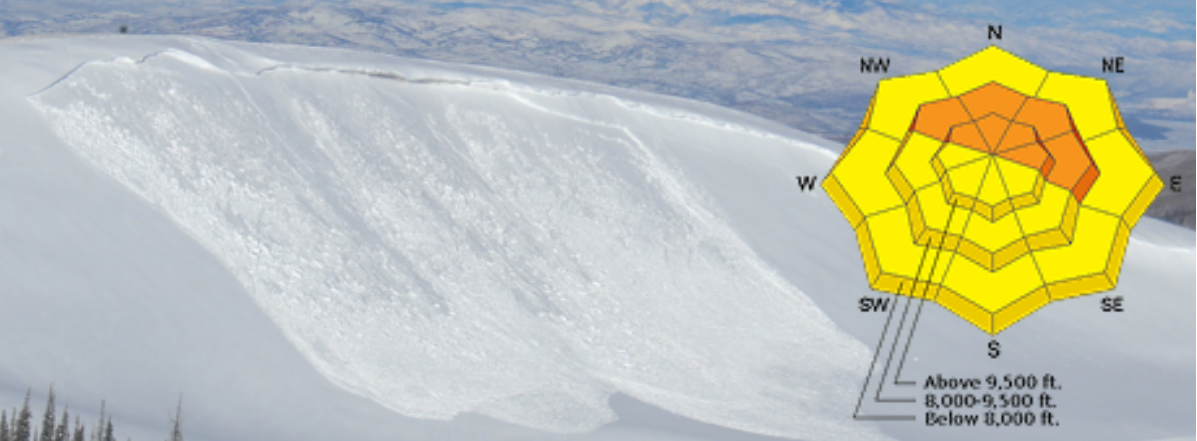
The avalanche danger is mostly Low, with a pockety Moderate danger on isolated slopes on northerly aspects where there is a PWL.


Video
Today's Observed Danger Rating
Moderate
Tomorrows Estimated Danger Rating
Moderate
Snow Pilot URL