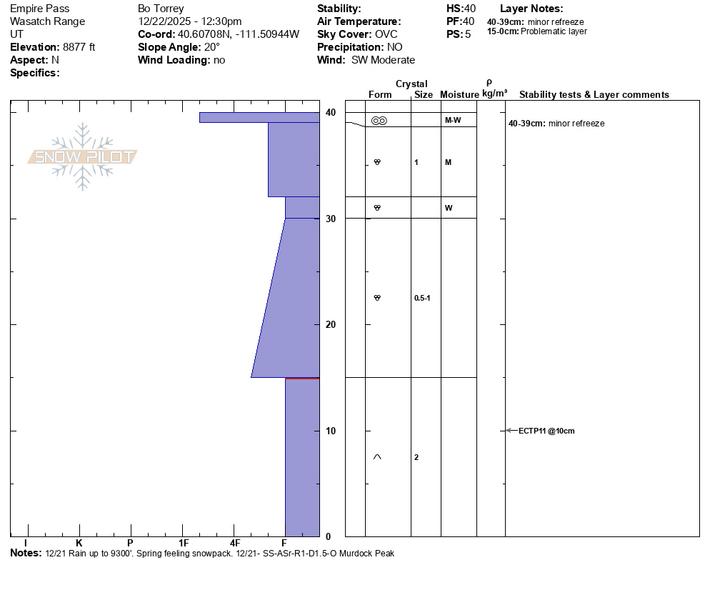
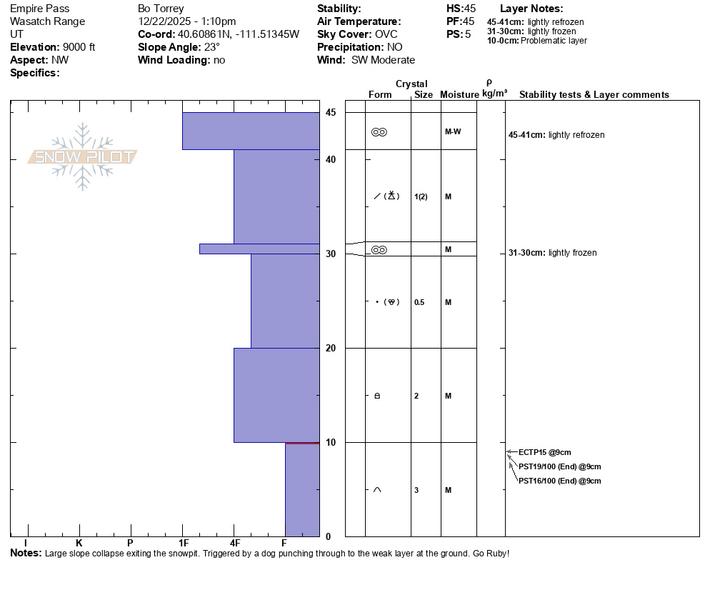
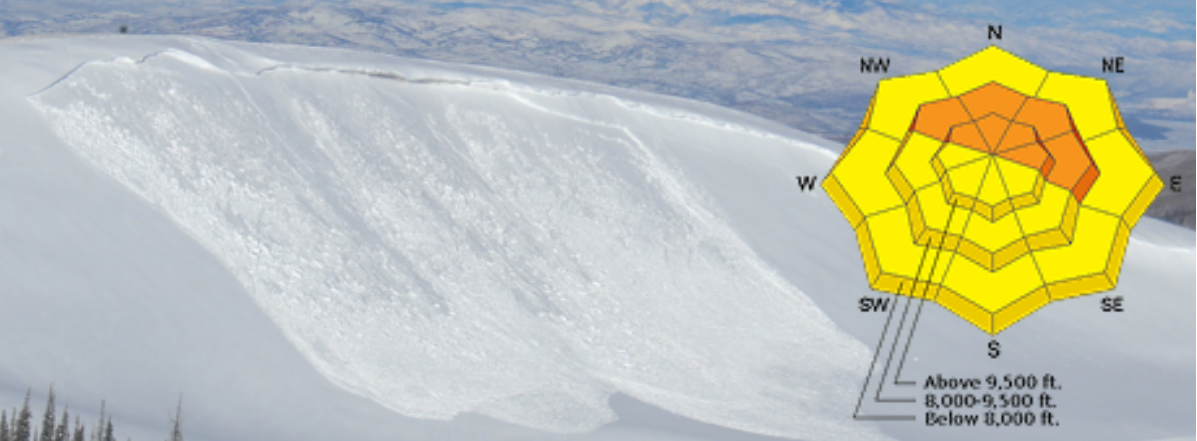
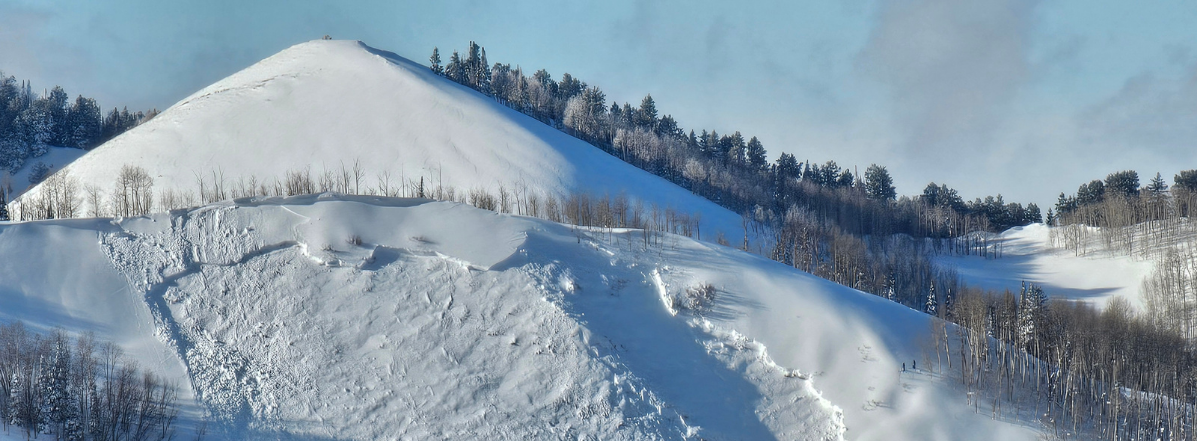
Structure exists for triggering a shallow soft slab avalanche that breaks on a persistent weak layer. The recent warm temperatures seem to be doing two noteworthy things to our snowpack that are increasing the likelihood of triggering an avalanche.
- The warm temperatures and recent precipitation are consolidating the upper snowpack that had previously 'faceting out' in a cohesive slab.
- The warmth and moisture in the snowpack are weakening the layer of facets near the ground in the near term. (This may lead to the strengthening of the layer down the road, but for now, it is presenting signs of unstable snow. i.e., recent remotely-triggered avalanche on Murdock Peak, collapsing, propagation in snow pit tests).
When temperatures *eventually* cool down, we'll need to investigate how the layer of facets near the ground evolves. Since the snowpack is shallow, if we go high and dry and only see cold temperatures, the snowpack will return to a faceting regime and any strength gains, could be lost-quickly.
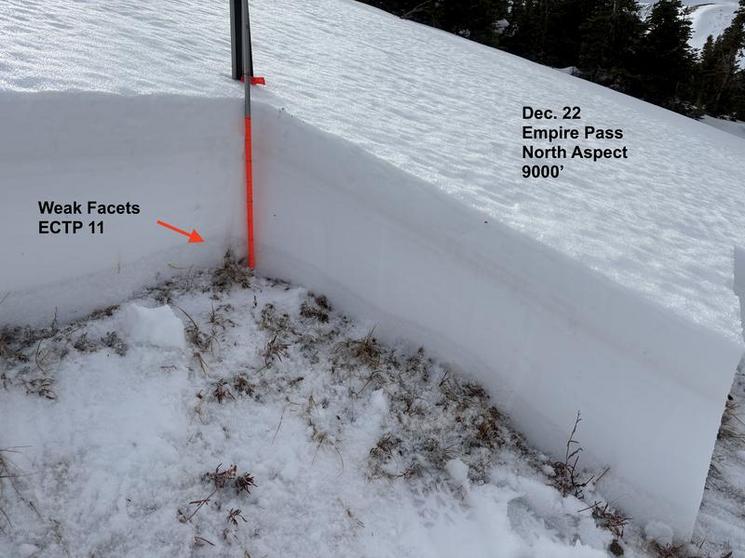
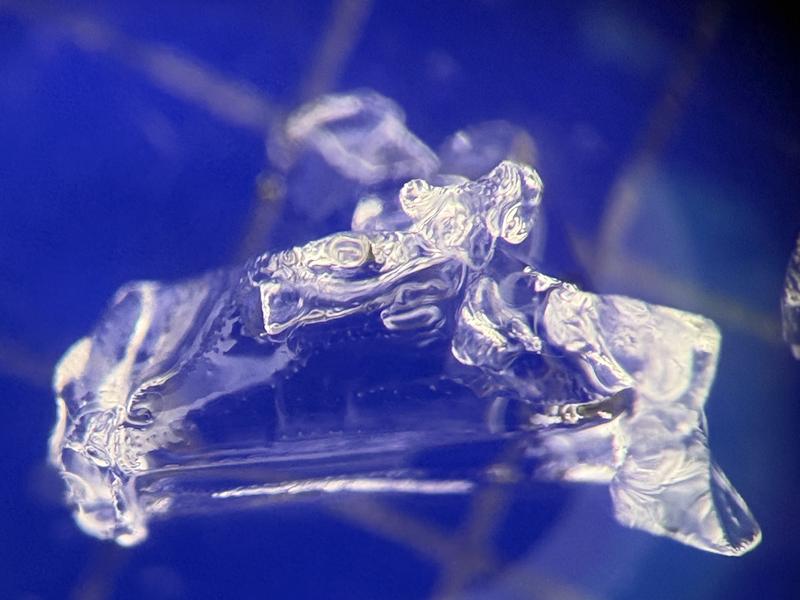
3-4mm rounding depth hoar
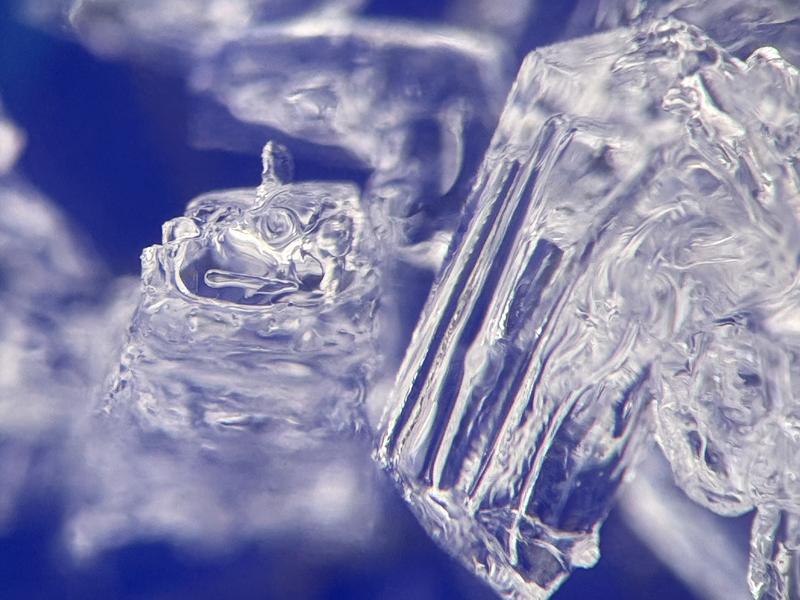
Same pit. 4mm depth hoar.