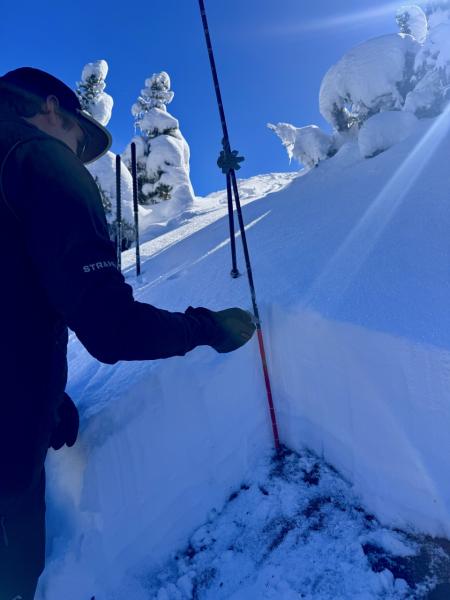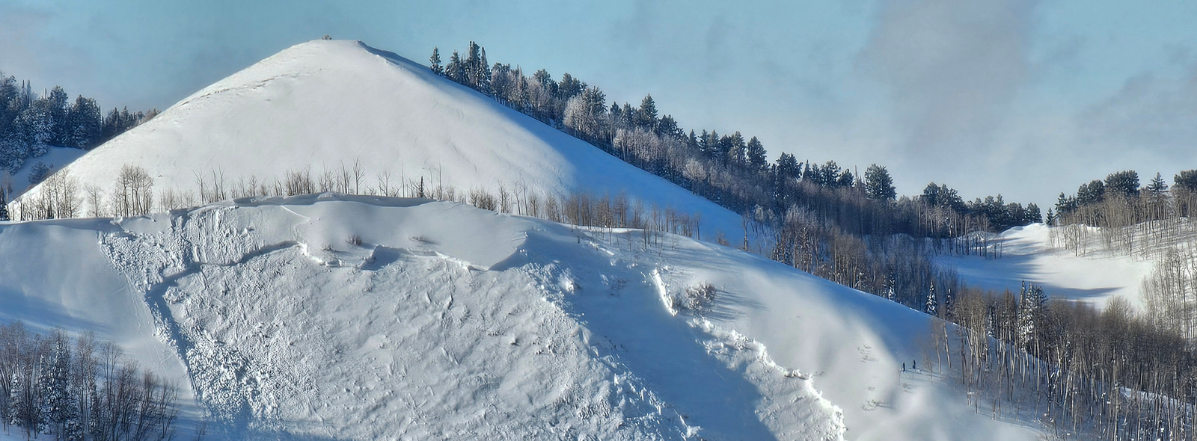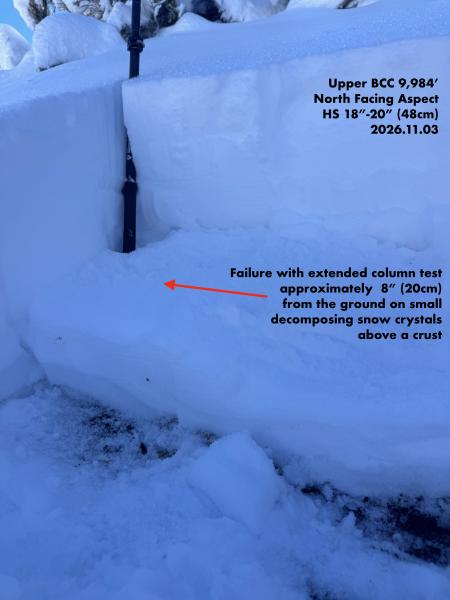
We dug on a north facing slope just under 10,000'. We found 18"-20" (48cm) of snow in a non wind-drifted area down from the ridgetop. The surface snow was made up of surface hoar on top of a very slight temperature crust. The older snow below the 8" (20cm) mark was damp. The layer of greatest concern was a layer of small decomposing (likely faceted) crystals above a melt-freeze crust. We had failure on this layer with an extended column test as well as couple of shovel shears. The layers below this crust were made up of moist crystals and crusts.
With cold temps at night, November sun angles and a shallow snowpack I would imagine that the snowpack will facet quite quickly on higher elevation north-east facing slopes.
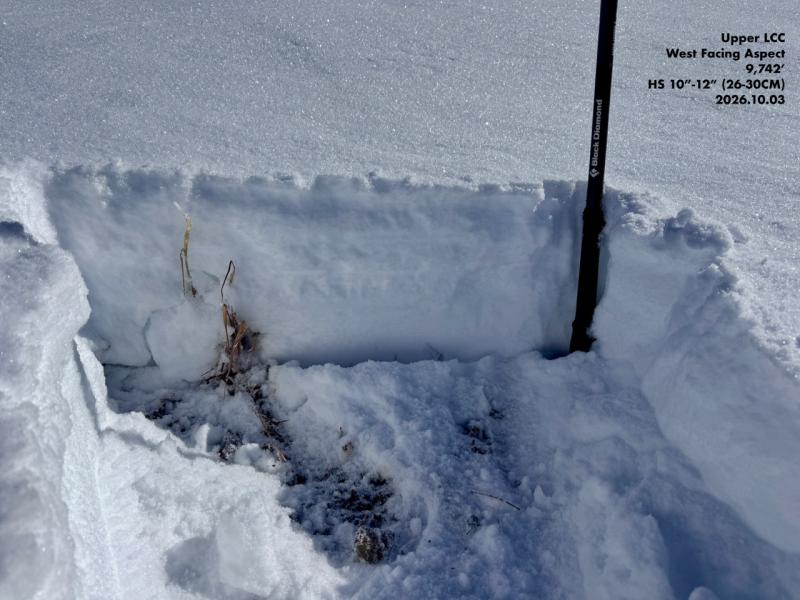
Photo below of a quick pit on a west facing slope in upper Little Cottonwood. By the time we hiked back down the surface of this slope was damp. There was notably less snow on south facing slopes.
We did find some isolated wind-drifts along the ridgeline between Grizzly Gulch and Silver Fork that were closer to 4' (120cm) deep. These drifts were isolated to ridge-tops. In higher elevation terrain above 10,500' these wind-drifts may not have bonded well to the old snow surface and will be planar (flat) and look like good riding, If you do tempt some turns dig down to see how bonded the wind drift is to the old surface before committing.
Below Greg shaking the cobwebs out of his snow study kit.