TLDR; The snowpack on west/north/east has widespread weak facets, but has become more complex with the recent warm weather and strong sunshine. This will make for trickier avalanche conditions when it does snow.
My field work focus the past two days has been to map the existing snow surface ahead of what will hopefully be a series of storms over the next 7-10 days. Prior to the huge warmup beginning late this past week, there was widespread weak snow on most snow surfaces, other than southerly-facing aspects where it was quite easy to initiate facet sluffs on anything steep. But the warm weather and strong sunshine tightened up the snow surface, capping the near-surface facets and surface hoar with a 1-2 cm thick layer of denser snow. Although the warm weather has likely helped destroy the weakest snow at the surface, the snowpack is now more complicated as there is plenty of weak, faceted snow underneath any crusts.
Northwest/north/northeast aspects above 8,500' are more straightforward as the weak snow at the surface has been preserved, while east and west aspects have a thin, friable crust at the surface, with loose, dry, weak facets underneath. This crust may help support more of a load, but it still won't take much to stress these weak layers.
Photos:
- Snowpit on northerly aspect with an entirely faceted snowpack down 60 cms to the holiday crust
- Snowpit on east aspect with some radiation recrystallization facets above a 2 cm thick friable sun and temperature crust and dry facets below the crust
- Snow surface on east aspect with a thin layer of radiation recrystallization (RR) facets above the crust
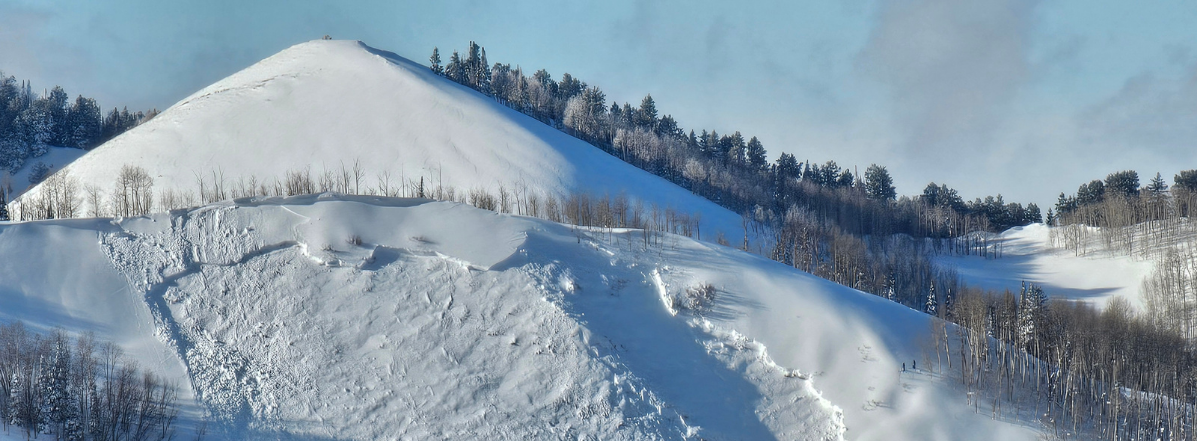
- Looking across toward Big Cottonwood canyon with (1) glide crack opening on Cardiac Ridge, (2) bare solar aspects in Mill A Basin below Raymond and Gobblers and in mid-Big Cottonwood Canyon