Forecast for the Salt Lake Area Mountains

Greg Gagne
Issued by Greg Gagne on
Monday morning, March 23, 2026

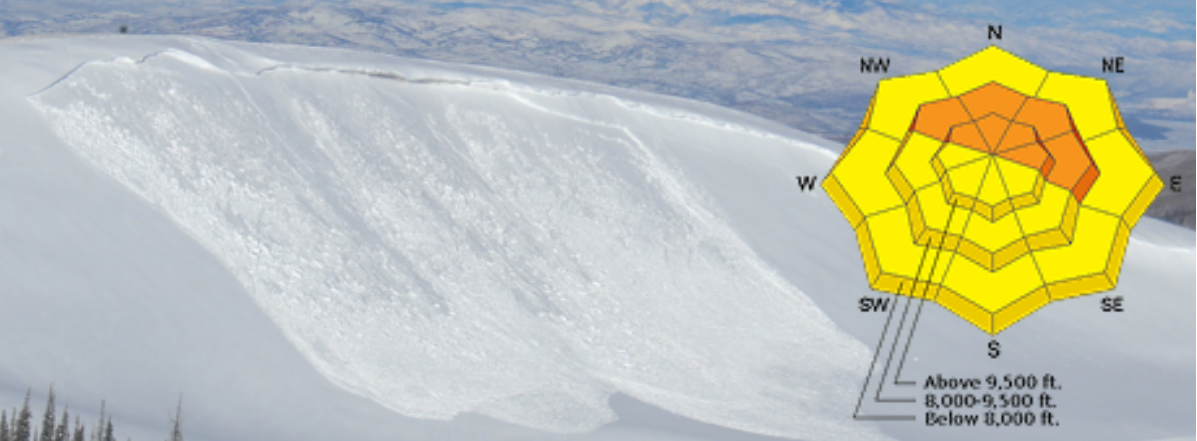
The avalanche danger will quickly rise to MODERATE with daytime heating for both wet-loose and large, destructive wet slab avalanches. Avoid being on or underneath steep slopes once the snow surface becomes loose and unconsolidated.

(Gray on the danger rose indicates little to no snow.)

Low
Moderate
Considerable
High
Extreme
Learn how to read the forecast here
Special Announcements

After a difficult week in February that included four avalanche fatalities, UAC forecasters will host a community debrief to discuss the conditions surrounding these accidents. We will review the weather and snowpack patterns, share observations from the field, and discuss lessons learned. This event will not be live but will include time for questions and discussion, with the goal of learning together as a community. Please use the form below to submit questions for review. Submit your questions HERE.

A new version the UAC's mobile app has been released with many new features and performance improvements. Download our app today, available on iPhone and Android. Learn more HERE.

Join Caroline Miller, UAC Executive Director, in exploring a life-altering accident in the mountains. Broken Neck, Broken Systems is a deeper dive into decision-making in the mountains. Learn more HERE.

Weather and Snow

This Morning: Skies are partly to mostly cloudy and temperatures are 30-45 °F, a few degrees warmer than yesterday morning. Winds are from the west, with gusts of 15-25 mph along exposed ridges above 9,500 feet, with gusts near 50 mph at 11,000 feet.

Today: Skies will be partly to mostly cloudy with temperatures rising into the mid and upper 50's °F. Winds will be from the west and won't change much throughout the day, with gusts near 25 mph along exposed ridges and peaks above 9,500 feet, with 11,000 foot gusts in the 40's mph.

With cloudy skies and a poor overnight refreeze, the window for a supportable snow surface will be short - if at all - this morning.

This Week: Warming temperatures through mid week, with (yet another) dry cold front around Thursday which will lower temperatures, but still remaining well above average.

Recent Avalanches

There were a few significant wet avalanches reported over this weekend:

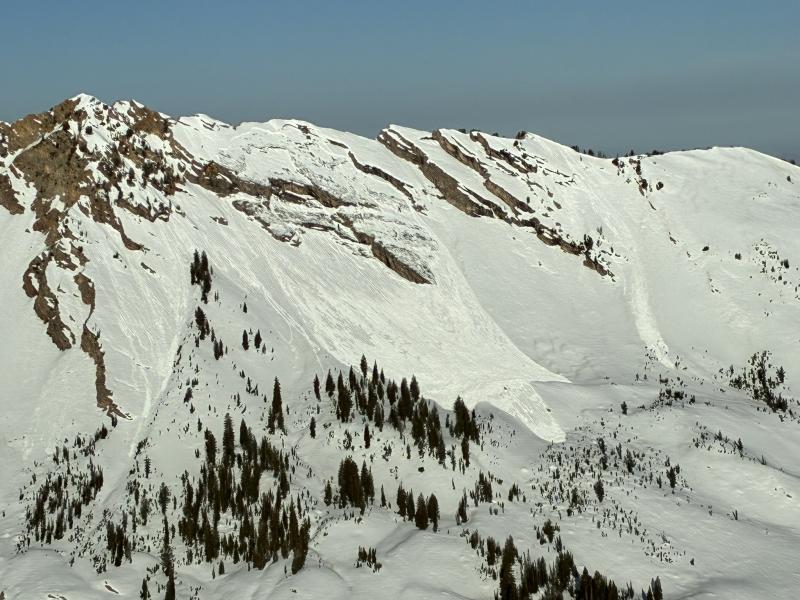
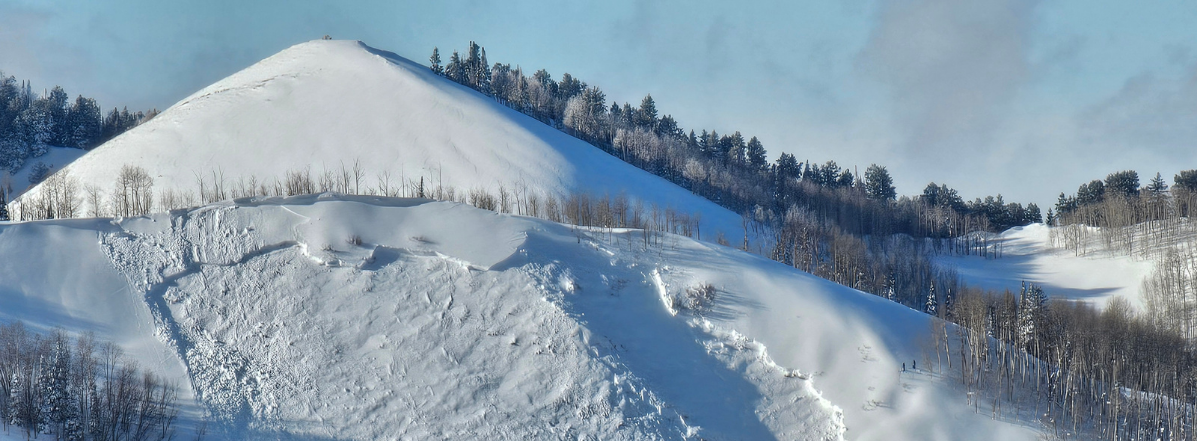
- High Ivory in Cardiff Fork - a glide avalanche over 3 feet deep and several hundred feet wide, running on rock slabs (photo below)

- Long John Silver in White Pine - a long-running wet loose avalanche (photo by Logan Cookler)

- Control work at resorts using explosives triggered large wet slab avalanches that ran on facets above crusts that formed over the holidays (the CERC layer).

Glide avalanche on High Ivory (photo Andrew Hamlin)

Avalanche Problem #1
Wet Snow
Type
Location
Likelihood
Size
Description

There are three concerns for wet snow avalanches:

1. Wet Loose - This will be the most common concern, with the possibility for natural and human-triggered avalanches involving wet snow near the surface. These may be long-running and gouge down into the snow pack. These avalanches are especially dangerous in steep terrain or above terrain traps such as steep-sided gullies where escaping the flow is difficult.

2. Wet Slabs - As meltwater moves deeper into the snowpack, it can pool on buried crusts or weak layers, weakening the structure and allowing avalanches to break deeper and wider. These are larger and more destructive avalanches and may occur naturally, possibly failing down around crusts that formed over the holidays in late December.

3. Glide Avalanches - These avalanches occur when the entire snowpack slowly slides on the ground, typically over smooth rock slabs or grassy slopes. They are nearly impossible to predict and are almost always natural, such as the avalanche on High Ivory over the weekend. Avoid traveling on or beneath slopes with visible glide cracks or known glide activity, such as Broads Fork, Stairs Gulch, and Mill B South.
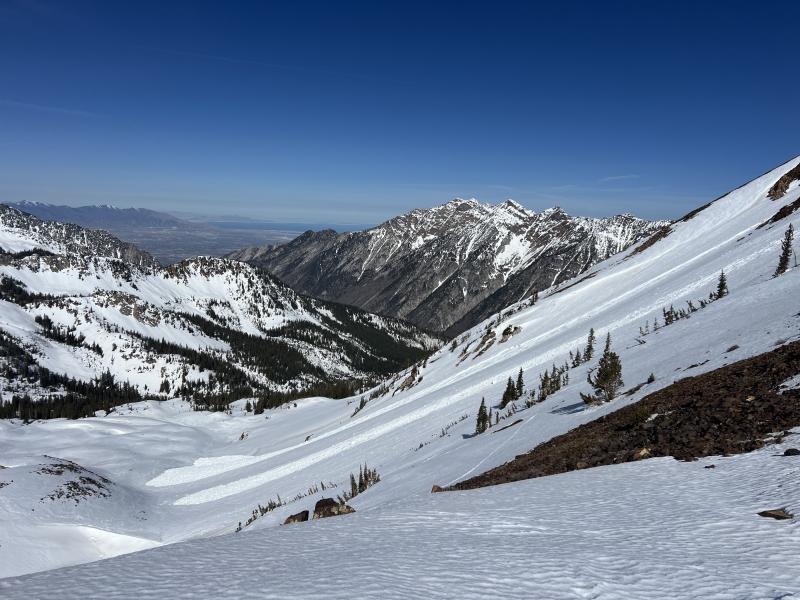
Long-running wet-loose avalanche in White Pine Canyon over this weekend (photo Logan Cookler).


General Announcements

This information does not apply to developed ski areas or highways where avalanche control is normally done. This forecast is from the U.S.D.A. Forest Service, which is solely responsible for its content. This forecast describes general avalanche conditions and local variations always occur.