Donate Now to Our Year End Campaign!

Forecast for the Salt Lake Area Mountains

Drew Hardesty
Issued by Drew Hardesty on
Thursday morning, December 18, 2025

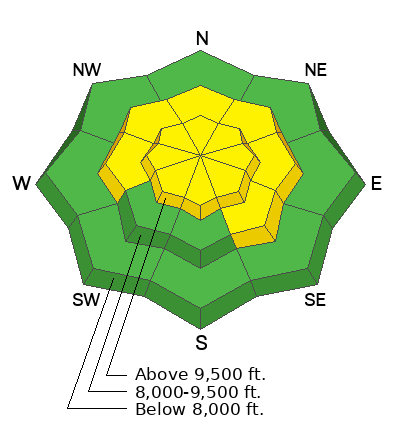
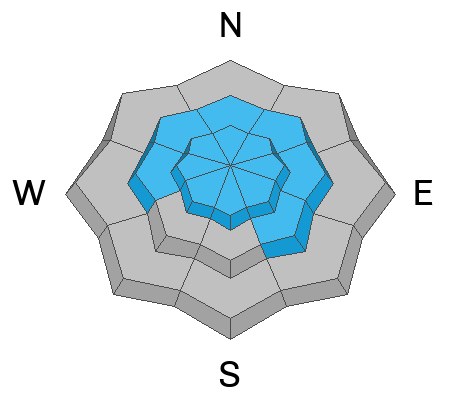
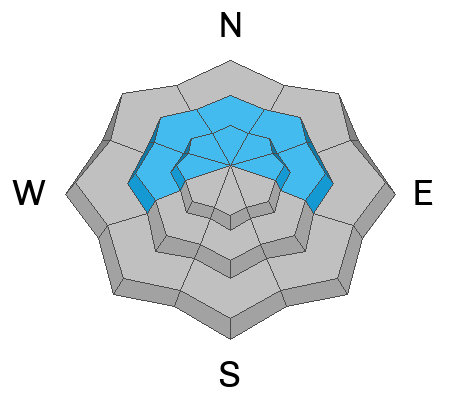
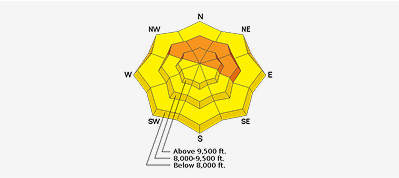
Most terrain has an overall LOW avalanche danger. In the higher elevations, a pockety MODERATE danger exists where you may encounter soft or hard pockets of wind blown snow. Some of these may crack out and step down to our old persistent weak layer (PWL) of early season facets, particularly on northwest to east facing aspects.

Low
Moderate
Considerable
High
Extreme
Learn how to read the forecast here
Weather and Snow

Now that's what I call a cold front: winds strong enough to knock a few trees over, temperatures plummeting into the icebox, pyrotechnics and growling thunder, intense graupel and waterfalls of graupel down the cliffs and gulleys (see Colin Gregerson's video below). But at the end of the show, you realize it was all a circus act - you go home with a parting gift, a consolation prize of only 1-4" of new snow (though up to 0.5"-1.25" of snow-water-equivalent). The rain-snow line was around 8-8250'.

As of 5AM, skies are clear, but not for long. Temps are in the teens to single digits and winds from the west-northwest are blowing 15-20mph with gusts to 30mph. The winds remain strong along the 11,000' level with gusts to 60mph. (I did note a gust at 2pm yesterday of 120mph).

We'll see increasing clouds today with maybe a flurry or two up high. Temps will warm to above freezing by tonight ahead of the next storm on tap for tomorrow into Saturday. Today's winds will lose steam for a few hours before ramping up again in the late afternoon. Tomorrow's storm is another weakening atmospheric river event with high rain-snow lines and STRONG WIND from the west. We might be able to squeeze 4-8" inches of high density snow out of it (maybe 0.8-1.3" snow water equivalent); we'll see. The weather still looks active into next week.

Travel conditions remain rough and rugged. Dave Kelly and Nat Grainger described conditions in White Pine of LCC as "a mixed bag of leaves, rocks, melt-freeze crust and damp snow. The trail was supportable, but off trail was a breakable mushy mess." By the afternoon, however, Bo Torrey found surprisingly decent turns on the high density snow and graupel on low angle terrain. Operative words: low angle.

Recent Avalanches

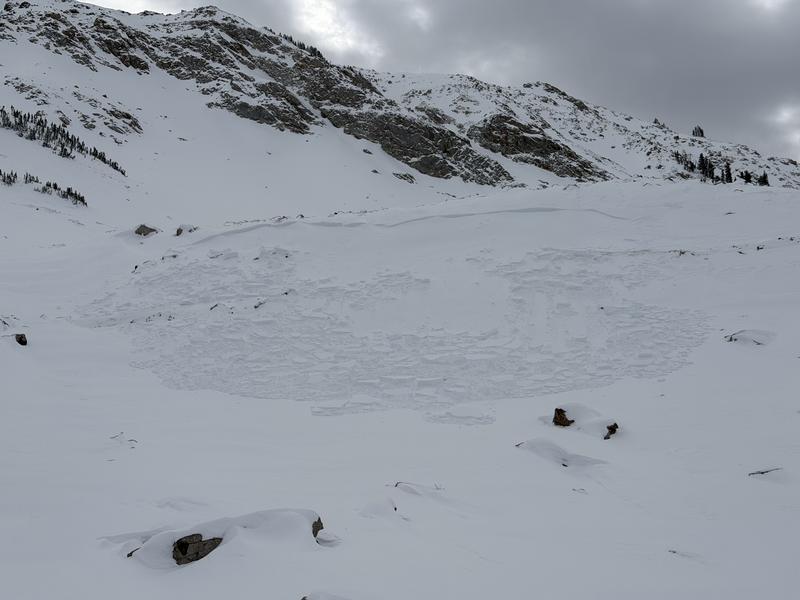
The last reported avalanches were on December 7th with the last significant storm.

Avalanche Problem #1
Persistent Weak Layer
Type
Location
Likelihood
Size
Description

There is a widespread persistent weak layer (PWL) of faceted snow on northerly-facing slopes at mid- and upper elevations. Most of the snowpack is currently faceted, meaning it's unlikely but not impossible to find a slab on top of the weak, old snow to trigger an avalanche—especially in high, northerly terrain above 9,000 feet that has recently been loaded by the new snow and wind. Remember that cracking and collapsing are sure give-aways of potentially unstable snow.

Avalanche Problem #2
Wind Drifted Snow
Type
Location
Likelihood
Size
Description

Isolated pockets of wind slab may be found along the higher elevations. These probably disconnected slabs may be hard or soft and may crack out with the weight of a skier or rider in steep terrain.

Additional Information

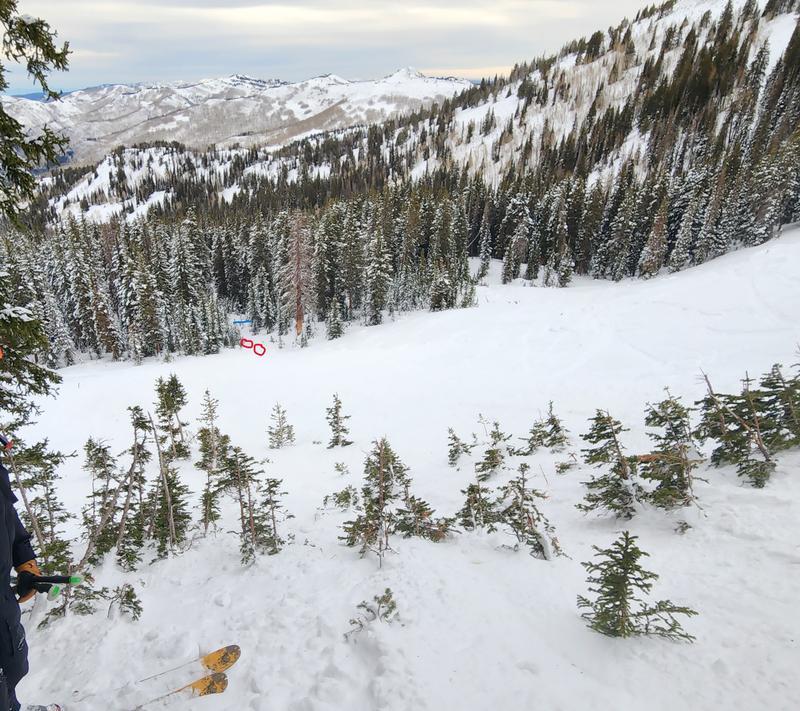
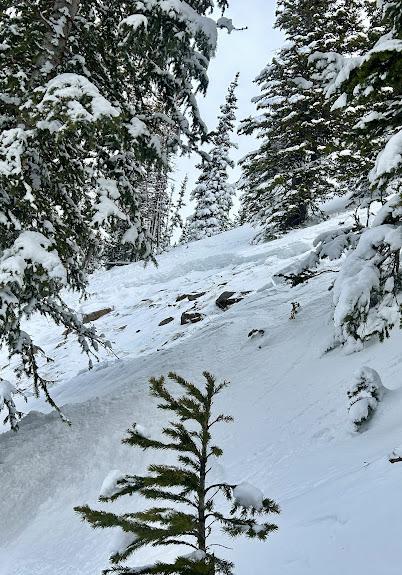
What is graupel? Graupel is formed generally when a perfectly good snowflake is sent for the spin cycle in a highly convective atmosphere. In that spin cycle, the snowflake picks up more and more supercooled water droplets - now rimed - until it's shaped like round or comical conical lunar-lander snow pellets before falling to earth. Not unlike stuffing out of a bean bag. It's all high density snow and can make for pretty fun skiing and riding, fast and surfy on a supportable slope. Bo Torrey photo below.

General Announcements

This information does not apply to developed ski areas or highways where avalanche control is normally done. This forecast is from the U.S.D.A. Forest Service, which is solely responsible for its content. This forecast describes general avalanche conditions and local variations always occur.