Forecast for the Salt Lake Area Mountains

Brooke Maushund
Issued by Brooke Maushund on
Wednesday morning, December 17, 2025

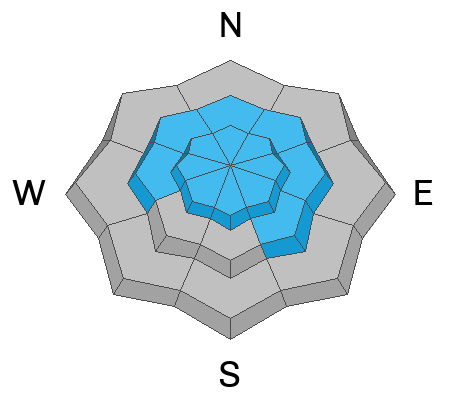
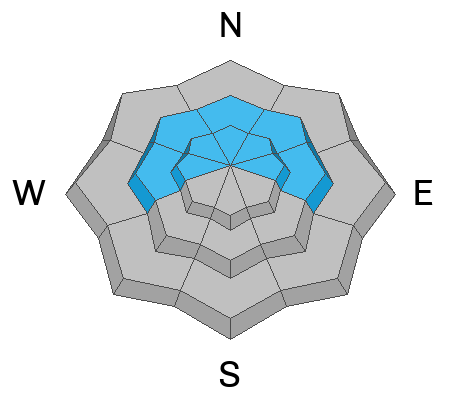
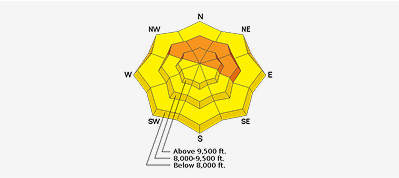
Avalanche danger will rise to MODERATE by the afternoon in mid and upper-elevation terrain IF the windy and wet storm delivers. Be most suspect of northerly slopes at upper and mid-elevations, where the wind is building slabs of new snow over our persistent weak layer (PWL) that can break 1-2 feet deep. New snow will also be loading on slick, icy crusts where it can run farther and faster than expected on all aspects.

Avalanche danger is LOW as of early this morning before the arrival of the storm.

Low
Moderate
Considerable
High
Extreme
Learn how to read the forecast here
Weather and Snow

This morning, a strong Pacific jet is riding in on strong winds out of the west—anemometers on the highest ridgetops are clocking in at 75mph gusts at 4:00 am. Mountain temperatures hover around freezing under broken skies.

Today, precipitation will increase throughout the morning, peaking in the afternoon. Steady 30-50mph winds at ridgetops will blow throughout the day, gusting into the 100s mph. Snow levels will start above 8,500'—with dense snowfall early in the storm—before dropping to around 6,000' by the afternoon. There's a lot of uncertainty in snow totals, timing, and snow lines from this storm, but:

  • Favored areas (Upper Cottonwood Canyons) can expect 2-5" snow (0.3-0.6" H2O) on the low end; 4-7" snow (0.6-1" H2O) on the high
  • Less favored areas (Park City, Wasatch Back) can expect closer to only trace snow totals, with mostly rain falling (0.2-0.5" H2O) in much of the terrain until frontal passage.

Looking ahead, this is the start of a pattern shift towards unsettled weather with moist air intrusion from the jet stream. Expect a weaker pulse on Thursday before more water arrives over the weekend...however, snow lines are uncertain in the models. Cross your fingers.

Gary Larson shows us communication isn't always that simple.

Let's talk about avalanche danger, and the boxes we use to communicate it. The fact of the matter is that you shouldn't get too focused on the color of the rose today. This morning, it is unlikely that you can trigger an avalanche‚ meaning the danger is LOW. The faceted snowpack, with a variety of crusts, needs a new slab on top to produce avalanches. We opted to leave danger at MODERATE—since dropping danger with active weather coming felt like it painted the wrong picture to us—and emphasize that this will only be true if the storm produces a new slab on top of our weak existing snow. This storm in particular has a lot of uncertainty. Not seeing the storm produce? The danger hasn't risen. Getting blasted by snow and wind, seeing slabs of new snow develop? It's on the rise. We're forced to pick a color, but there's at least a couple (dozen) ways to communicate the same message.

Recent Avalanches

No backcountry avalanches have been reported in over a week.

Avalanche Problem #1
Persistent Weak Layer
Type
Location
Likelihood
Size
Description

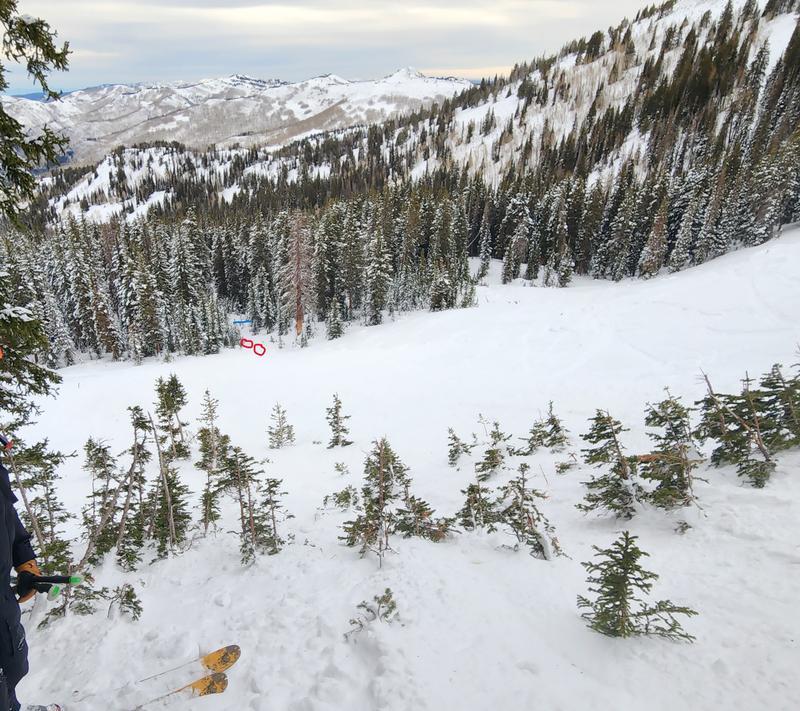
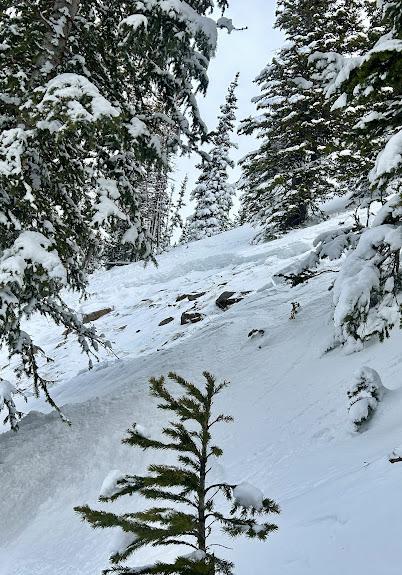
There is a widespread persistent weak layer (PWL) of faceted snow on northerly-facing slopes at mid- and upper elevations. If the storm today produces and builds a slab on top of our weak snowpack structure, expect to be able to trigger avalanches that break widely and deeply, potentially to the ground. Most of the snowpack is currently faceted, meaning it's unlikely but not impossible to find a slab on top of the weak, old snow to trigger an avalanche this morning—especially in high, northerly terrain above 9,000 feet.

Avalanche Problem #2
Wind Drifted Snow
Type
Location
Likelihood
Size
Description

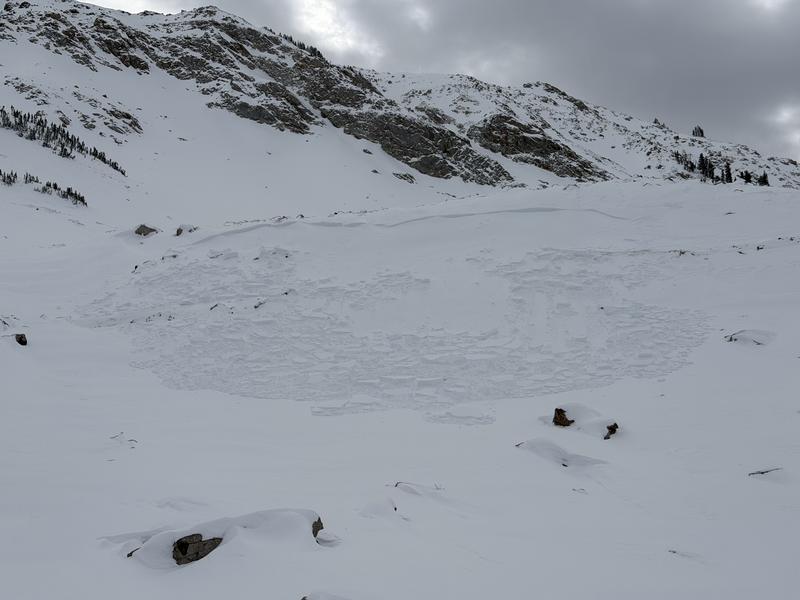
With the storm today comes steady and strong winds out of the west. There is also widespread crusts from our spring-like temperatures last week, connecting slopes...and even on northerly facing slopes up to near 9500 feet. Expect the wind to drift the new snow into slabs that have the potential to run far, fast, and break wide on these slick crusts. Be on the lookout on the leeward sides of ridges and mid-slope catchment areas like gullies and rollovers. Textured snow surfaces, drifts, and pillows are signs the wind has been at work.

In wind-sheltered areas, particularly at mid-elevations, be aware of the potential for new snow to build into slabs and break wider than you may expect on these crusts.

General Announcements

This information does not apply to developed ski areas or highways where avalanche control is normally done. This forecast is from the U.S.D.A. Forest Service, which is solely responsible for its content. This forecast describes general avalanche conditions and local variations always occur.