Forecast for the Ogden Area Mountains

Brooke Maushund
Issued by Brooke Maushund on
Saturday morning, January 3, 2026

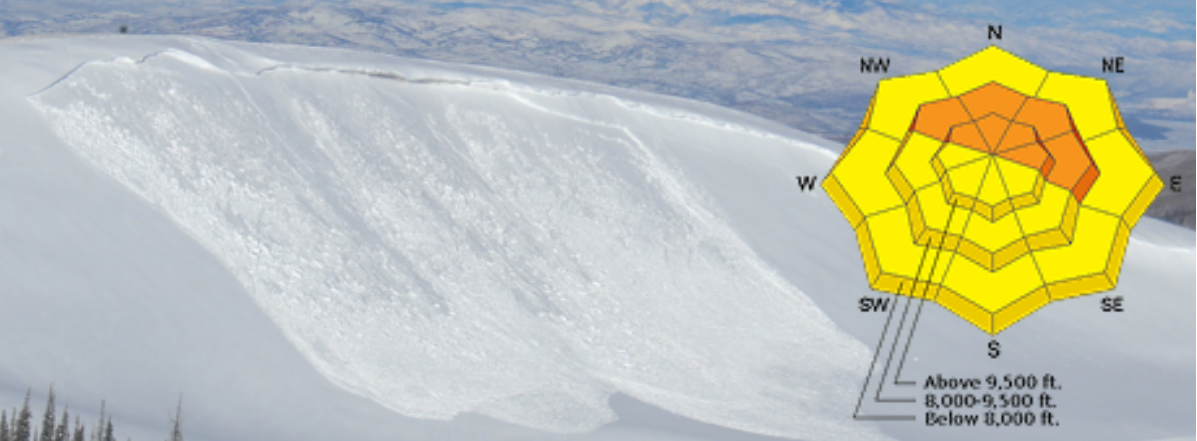
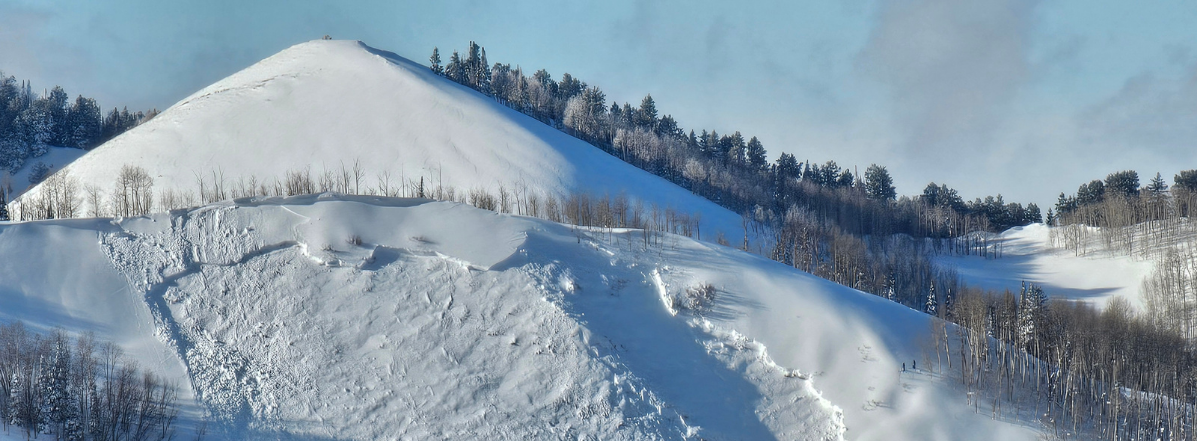
With new snow and moderate winds, avalanche danger is MODERATE on all upper elevation slopes and mid elevation slopes facing W-N-E. Hard slab avalanches could break 1–2+ feet deep on persistent weak layers, especially on higher, steep, rocky, wind-loaded terrain.

A slick rain crust is creating hazardous slide-for-life conditions. Exercise extra caution on steep, exposed terrain where self-arrest would be difficult.

Low
Moderate
Considerable
High
Extreme
Learn how to read the forecast here
Weather and Snow

The past two days, a a warm storm that rolled in with sustained moderate winds from the SW dropped new snow above the rather high snow lines, exceeding 8000' at times. Low elevations got a wash of rain, and the high water and low snow totals paint quite the picture:

  • More favored areas (Snowbasin, Ben Lomond, Areas along Ogden Skyline): 4-8" snow // 2.5-2.9" of H2O
  • Less favored areas (Powder Mountain, mountains East of Eden): 3-8" snow // .7-1.1" H2O

Today, we enjoy a break in the active weather. Under broken skies, most weather stations are in the high 20s F this morning, with forecast highs for the day reaching only into the low 30s. Patchy cloud cover is expected to continue throughout the day, with light to moderate SW winds increasing gradually into the late afternoon.

Late tonight into tomorrow, a decaying atmospheric river makes its way toward us on southwest flow. Snowfall rates will increase Sunday into Monday—check back tomorrow for the ever-evolving forecast snow totals.

Recent Avalanches

No new avalanches reported from the Ogden area backcountry.

Matt Barry braved the thin conditions to head up the Cutler Ridge on Monday, and his excellent report can be found HERE.

Derek DeBruin submitted an excellent observation from western side Ben Lomond from this past Saturday.

Avalanche Problem #1
Wind Drifted Snow
Type
Location
Likelihood
Size
Description

With 6-8 inches of new snow falling with this last storm, winds may have created smooth, rounded pillows of wind drifted snow are forming on a variety of old snow surfaces. While initial wind-drifted avalanches will likely be shallow, there’s potential for them to step down into the deeper, more dangerous hard slab problem, 1 to 2 feet deep, on upper elevation W-N-E facing slopes.

Outside of the wind zone, sensitive new snow instabilities may exist on all aspects. Even a small loose or soft slab avalanche could run long and far on the supportable crust, especially in steep terrain where the snow surface is smooth and continuous. With the rain and snow mix that fell, expect these to be most likely in the highest, coolest terrain above snowlines that exceeded 8000' at times.

Avalanche Problem #2
Persistent Weak Layer
Type
Location
Likelihood
Size
Description

Due to the supportability of the Christmas Eve Rain Crust (CERC) in the majority of terrain, it's unlikely that you can trigger a slab avalanche on the persistent weak layer. However, if you did, it has the potential to be a large, destructive, and potentially fatal avalanche.

Slabs running on weak snow below the CERC can range from unreactive to stubborn, however we want to stress that this does NOT mean that these are entirely off the menu if you head to just the wrong spot. The PWL is largely dependent on the supportability of the CERC above it. In higher, wind-exposed, W-N-E terrain where the snowpack may be thinner, the CERC may prove less supportable. These areas are most suspect for triggering a large slide. Some higher mid-elevation slopes fit this bill as well.

General Announcements

This information does not apply to developed ski areas or highways where avalanche control is normally done. This forecast is from the U.S.D.A. Forest Service, which is solely responsible for its content. This forecast describes general avalanche conditions and local variations always occur.