Donate Now to Our Year End Campaign!

Forecast for the Ogden Area Mountains

Bo Torrey
Issued by Bo Torrey on
Wednesday morning, December 24, 2025

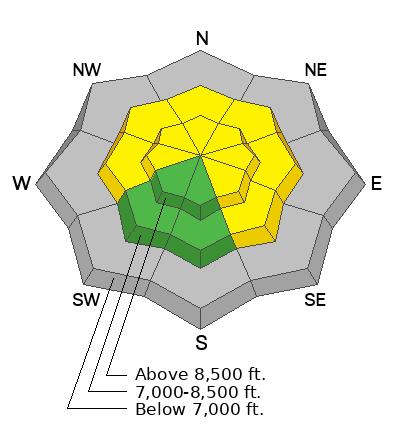
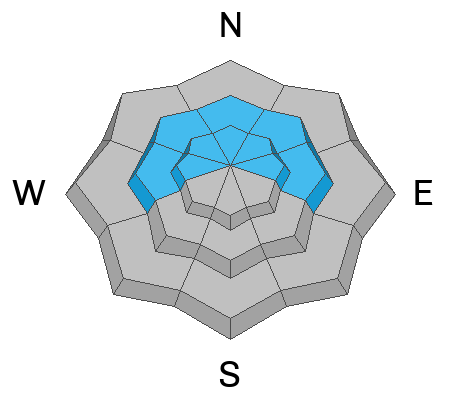
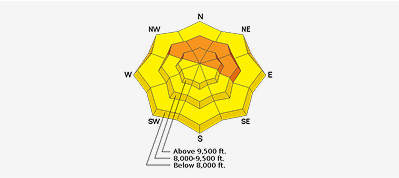
Avalanche danger is MODERATE on upper-elevation wind-drifted slope, where you could trigger a 1 to 2 foot deep slab avalanche on a buried persistent weak layer.

Avalanche danger is LOW elsewhere. Watch for unstable snow on isolated terrain features, where warm temperatures and rain on snow can produce small, wet, loose avalanches in steep terrain.

Low
Moderate
Considerable
High
Extreme
Learn how to read the forecast here
Weather and Snow

Overnight, temperatures remained warm, dropping only into the low 40s °F at most locations above 7500 feet. The wind blew from the south at 15-30 mph, with gusts into the 40s and 50s. No new snow reported.

Today, temperatures will climb into the 40s °F as wind out of the south and southwest increases, gusting into the 50s. Light precipitation begins this afternoon with a very high rain/snow line up to peak tops. Heavier precipitation is expected to move in overnight, potentially delivering 2 to 4 inches of heavy, dense snow by tomorrow morning.

Don't let low snowfall totals fool you; this storm is wet. We expect 0.5 to 1.0 inches of Snow Water Equivalent (SWE). This adds significant weight to the snowpack and will increase the sensitivity of avalanche problems, even if it doesn’t look like a major storm.

Looking ahead (and not wanting to jinx it), another storm is lined up for Friday into Saturday that looks like a more classical, cold Utah storm.

Statwide Snow Water Equivalent is 53% of the median and in the 0-percentile, meaning we are at or near historic lows for this date. It's low tide, but coverage is improving, and things can change quickly.

Recent Avalanches

There were no reported avalanches yesterday in the Ogden zone. Find all recent observations HERE.

Avalanche Problem #1
Persistent Weak Layer
Type
Location
Likelihood
Size
Description

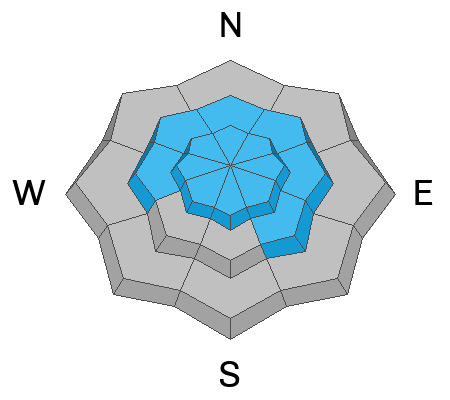
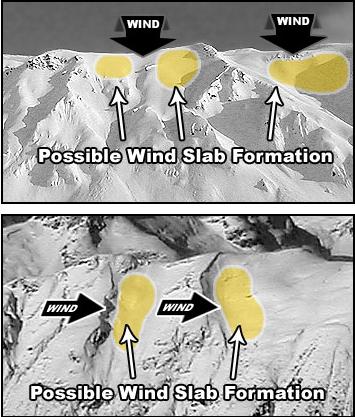
A strong-over-weak snowpack structure persists, with old, weak snow near the ground. The possibility remains to trigger a small soft or hard slab avalanche that fails on a persistent weak layer of facets near the ground. These avalanches are most likely on upper-elevation slopes where southerly winds have drifted additional snow onto the terrain.

While the snow may feel solid near the ridge, it will likely soften as you descend. Be careful of this transition—once you are a few turns onto the slope and the snowpack thins, you are in a prime spot to trigger a soft or hard slab that breaks above you.

Avalanche Problem #2
Wet Snow
Type
Location
Likelihood
Size
Description

Unseasonably warm temperatures and rain falling on snow may create loose wet avalanches. While these slides may be small, the heavy, wet debris can be dangerous in tight spots.

Avoid terrain traps like road banks, creek beds, and gully walls where this heavy snow can pile up deeply and bury a person.

General Announcements

This information does not apply to developed ski areas or highways where avalanche control is normally done. This forecast is from the U.S.D.A. Forest Service, which is solely responsible for its content. This forecast describes general avalanche conditions and local variations always occur.