Donate Now to Our Year End Campaign!

Forecast for the Ogden Area Mountains

Brooke Maushund
Issued by Brooke Maushund on
Tuesday morning, December 23, 2025

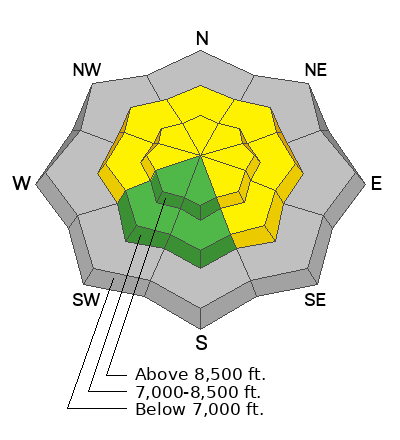
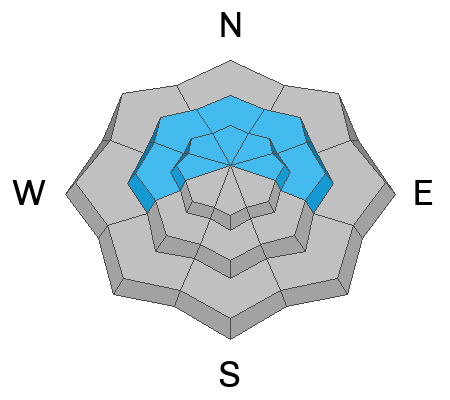
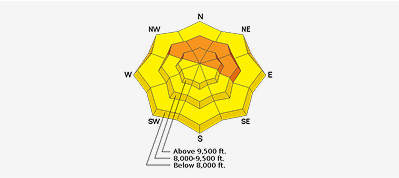
A MODERATE avalanche danger exists on high W-N-E facing slopes, where you can trigger a shallow slab of wind-drifted snow, or a deeper slab avalanche on a persistent weak layer. These are most likely in upper elevation areas where the wind has drifted snow into denser slabs. You are unlikely to receive any warning signs—like cracking or collapsing—before triggering a slide.

If cloud cover and temperatures pan out as forecast, be aware of how wet the snow surface is becoming under your feet, as there is a potential for wet, loose avalanches.

Low
Moderate
Considerable
High
Extreme
Learn how to read the forecast here
Weather and Snow

This morning, it's 38°F at Powder Mountain. Mountain temperatures hover in the mid 30s to low 40s F. The top of Strawberry is blowing into the 20s mph, with gusts reaching into the 40s mph.

Today, expect moderate to strong winds out of the south to continue into the evening. High cloud cover and temperatures into the high 30s to mid 40s F have the potential for some more greenhousing of an already damp snowpack. No precipitation throughout the day, with spits and spats of rain starting late this evening.

Tomorrow evening into the weekend, an atmospheric river pulse rides in off SW flow from the Pacific—a unique pattern for us this season. Snow levels will start near 10,000 feet until early Thursday, before cooler air slowly makes its way into the Wasatch through Saturday. While the timing's off if you're into Santa, keep your fingers crossed for low snow lines and the higher end of storm totals.

We feel it important to acknowledge that many low elevation slopes in the Ogden zone do not have enough (if any) snow to be home to any sort of avalanche problem.

Recent Avalanches

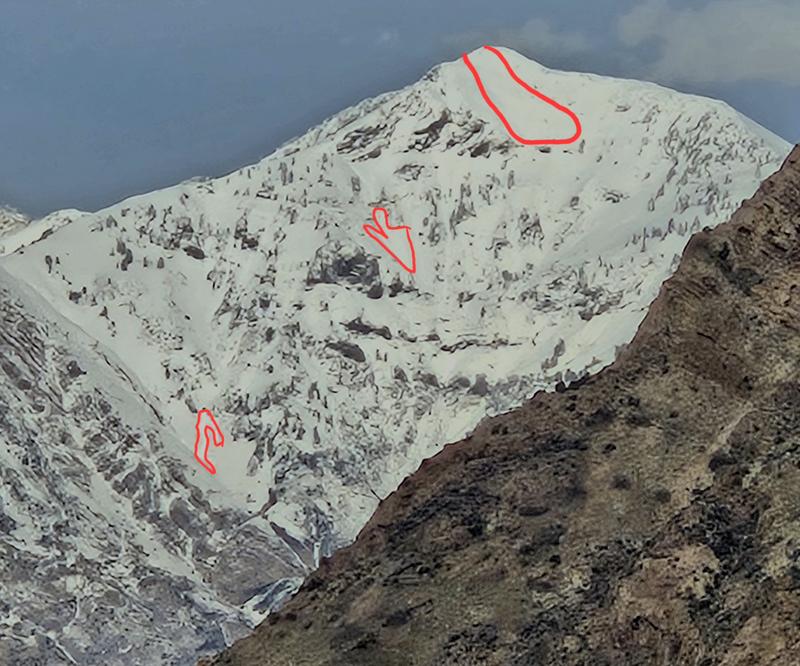
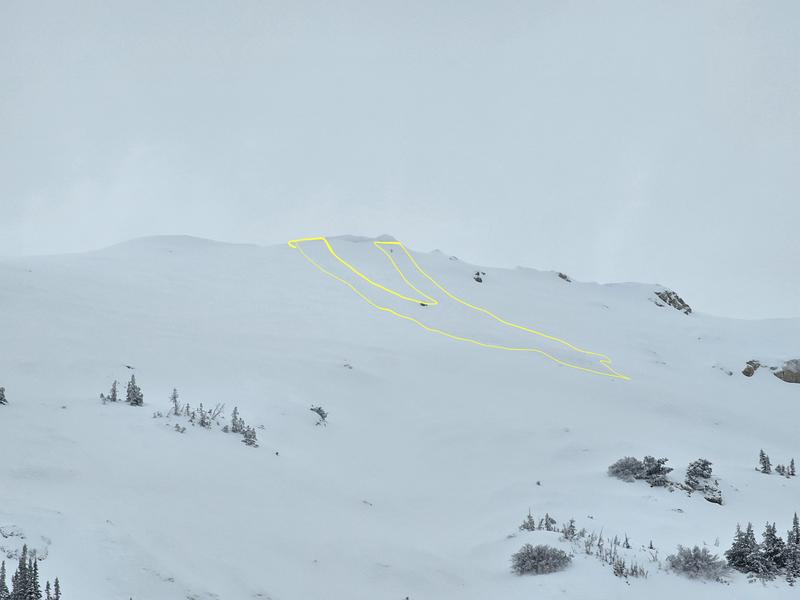
There were no reported avalanches yesterday in the Ogden zone. Cracking, collapsing, and propagating extended column tests continue to be reported. Find all recent observations HERE.

Avalanche Problem #1
Persistent Weak Layer
Type
Location
Likelihood
Size
Description

A strong over weak snowpack structure persists, with old, weak snow near the ground and at the middle of the snowpack.

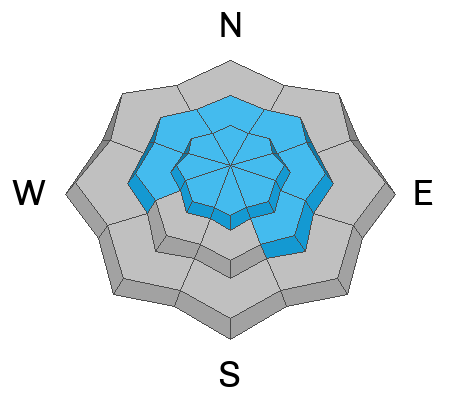
The snowpack has handled the modest stress of the past week well, even with warm temperatures and small amounts of snowfall. Still, the structure persists. While coverage and access remains a crux, the terrain with the most appealing snow coverage to ride—higher, steep, northerly wind-loaded terrain—is where you're most likely to trigger an avalanche. We haven't gotten much feedback—cracking or collapsing—from the snowpack in over a week. However, a quiet snowpack isn't always a stable one.

Avalanche Problem #2
Wind Drifted Snow
Type
Location
Likelihood
Size
Description

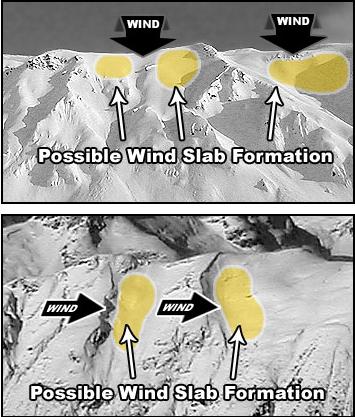
Moderate to strong southwest winds have been blowing for several days. While there hasn't been a ton of snow available for transport in the Ogden zone, drifts at higher elevations are still out there.

These winds have been effective at building drifts of snow adjacent to ridgelines, as well as on wind-exposed mid-slope features such as gullies, rolls, and rock bands. Watch for changes in snow density; suddenly deeper or stiffer snow likely indicates a wind-loaded area. This will be most common on upper W-N-SE aspects, though wind-exposed mid-elevation terrain is also possible.

Wind-drifted snow avalanches will be effective triggers for releasing a deeper, larger avalanche on our persistent weak layer mentioned above.

General Announcements

This information does not apply to developed ski areas or highways where avalanche control is normally done. This forecast is from the U.S.D.A. Forest Service, which is solely responsible for its content. This forecast describes general avalanche conditions and local variations always occur.