Forecast for the Moab Area Mountains

Eric Trenbeath
Issued by Eric Trenbeath on
Monday morning, January 26, 2026

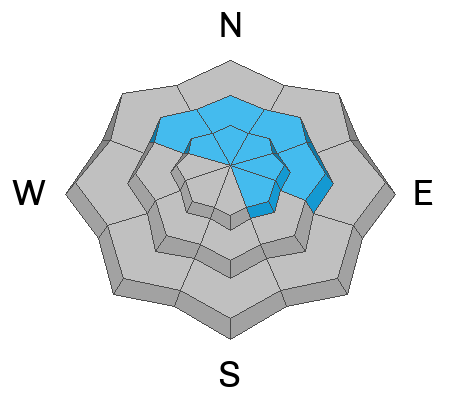
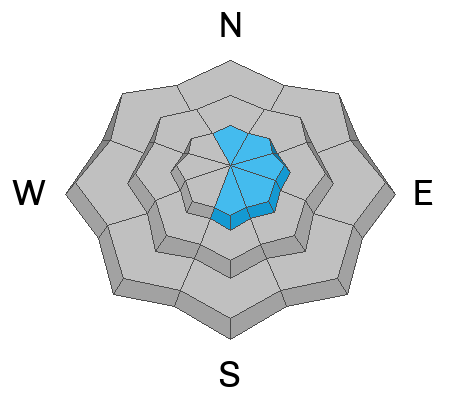
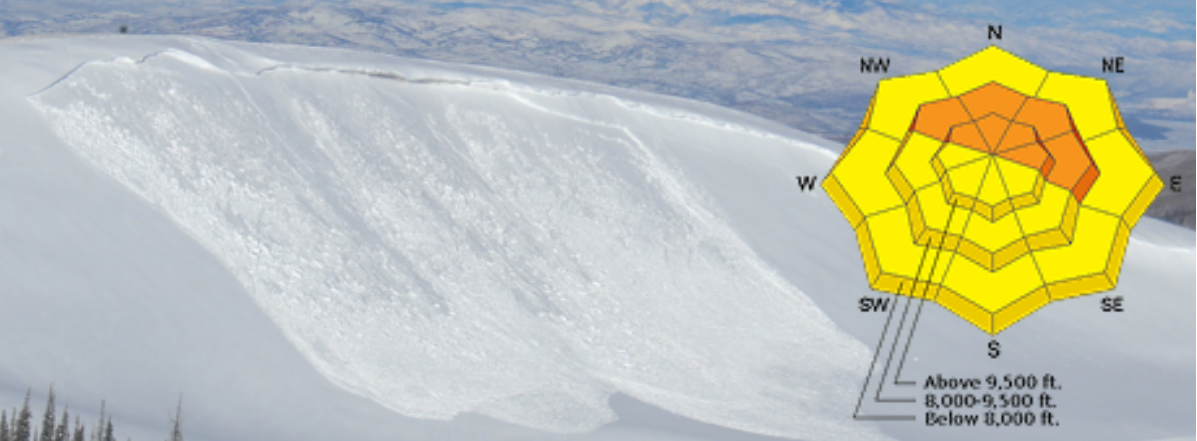
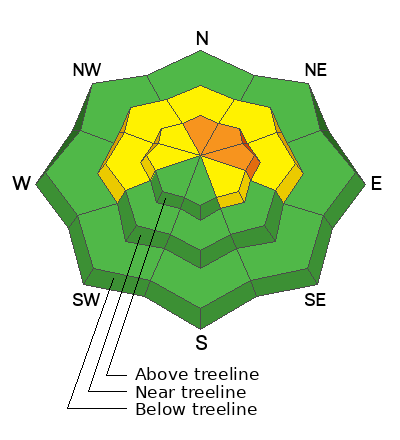
The avalanche danger remains CONSIDERABLE on steep, wind drifted slopes above tree line that face N-NE-E. In these areas, human triggered avalanches involving slabs of wind drifted snow are likely. Triggered wind slabs have the potential to step down into a buried persistent weak layer causing a deeper and much more dangerous avalanche. Slopes steeper than 30 degrees should be avoided in these areas.

The avalanche danger is MODERATE on W-N-E, and on upper elevation, SE aspects. In these areas, recent and wind drifted snow has accumulated on a variety of surfaces from slick, hard, and wind blasted to loose, weak, and faceted. Human triggered avalanches are possible. Slopes facing NW-N-NE-E near tree line and above are the most suspect.

Most south facing slopes have generally LOW danger.
Low
Moderate
Considerable
High
Extreme
Learn how to read the forecast here
Special Announcements

Geyser Pass Road Conditions: The road is not yet plowed. Grand County said they will make it up sometime this week. 4x4 required.

Grooming: LUNA groomed into Gold Basin again yesterday.

We are looking to reschedule our Moab Backcountry 101 Class to February 20, 21 in the hopes that we will have more snow. Click here for information and registration. Moab and Monticello locals can use the discount code MOAB-LOCAL for a 10% discount.

Weather and Snow

24 Hour Snow: 0" 72 Hour Snow: 8" Season Total Snow: 44" Depth at Gold Basin: 29"

Winds on Pre-Laurel Peak: NNW 10-15 G 20 Temp: -4°F

Weather

Strong ridge top winds blew from the northwest all day yesterday and up until just before midnight last night with average speeds in the 20-30 mph range. They dropped off into the 10-15 mph range around 1:00 AM. Under sunny skies today, look for light to moderate winds shifting to more westerly, with high temperatures at 10,000 feet climbing up to around 20°F. Dry and gradually warming conditions are on tap for the upcoming week.

General Conditions

The story yesterday was the wind. Mercifully, most of the damage and wind loading occurred at upper elevations. Cloud cover and cold temperatures preserved the snow on southerly aspects and Dave reported finding good conditions up there yesterday. The 8 inches of low density snow we received on Friday wasn't a huge dump but it was enough to reset conditions and change the overall avalanche landscape. Fresh wind drifts have formed on north through easterly aspects above tree line, and on northerly facing slopes the recent snow is sitting on top of a faceted layer adding to our already poor snowpack structure. More on that in the video below.

See recent observations here.

Snowpack and Weather Data

Gold Basin SNOTEL site (10,000')
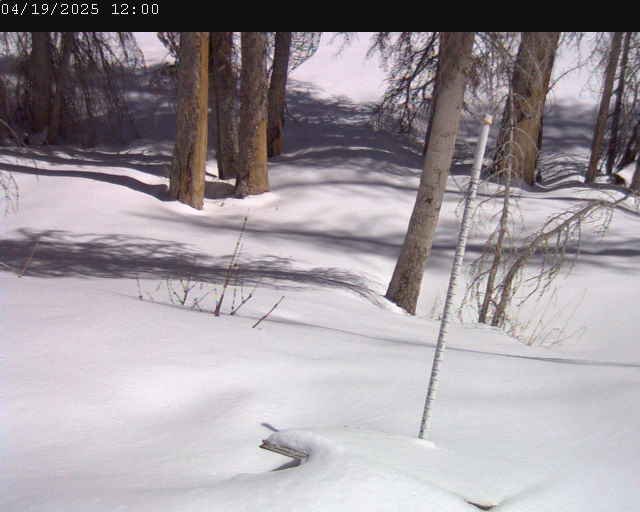
SNOTEL site near Geyser Pass Winter Trailhead (9600')
Wind Station on Pre-Laurel Peak (11,400')
NWS forecast for the La Sal Mountains.
Recent Avalanches
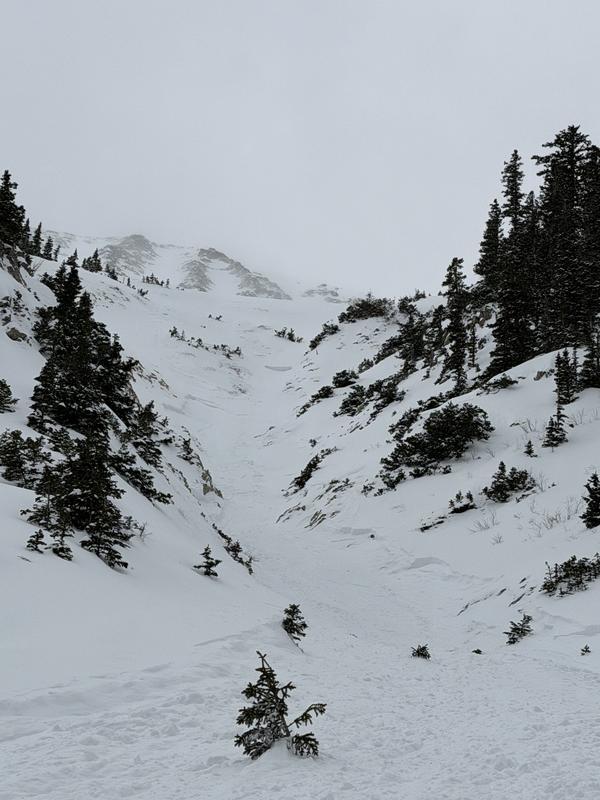
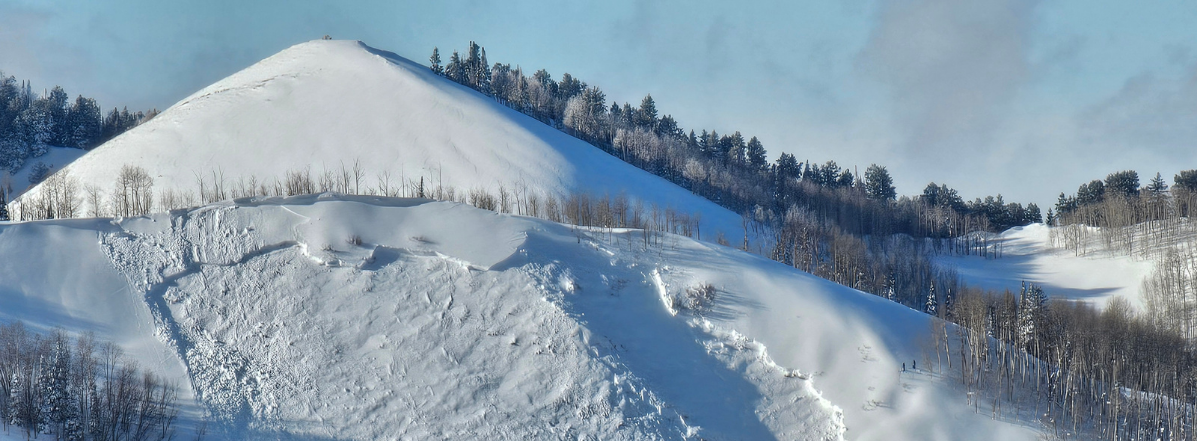
Evan Clapper reported this slab avalanche from Gold Basin yesterday underneath the NE Face of Mount Tukno. Although the actual trigger is unknown, tracks were observed leaving the scene. This is exactly the kind of terrain where you can expect to find trouble. Two other natural loose, dry avalanches were observed.
Click here for the complete avalanche database.
Avalanche Problem #1
Persistent Weak Layer
Type
Location
Likelihood
Size
Description

The most dangerous problem you will encounter out there is the possibility of a deep and dangerous avalanche failing on a buried persistent weak layer. You are most likely to encounter this on steep, wind loaded slopes near and above tree line that face NW-N-NE-E with the highest likelihood on N-NE-E aspects.

If you've been following along by now you know we have a very poor snowpack structure where the pack is faceted entirely through. The Dark Canyon avalanche failed on facets beneath the Christmas Rain Crust (CRC), and we now have a new faceted layer to be concerned with immediately beneath the recent snow (see recent observations from myself, Chris Benson, and Travis Nauman). This layer is a bit tricky in that it hasn't formed everywhere. The last stretch of high pressure also saw a lot of wind from the northwest so many snow surfaces were crusted or blasted into hard wind board. This new faceted layer only formed in areas protected from the northwest winds. Slopes near tree line with an easterly component to their aspect are the most suspect. An avalanche failing on this layer could step down below the CRC and take out the entire season's snowpack.

Avalanche Problem #2
Wind Drifted Snow
Type
Location
Likelihood
Size
Description

Sustained strong winds from the northwest have blown and drifted snow on to slopes facing the east half of the compass. Look for fresh drifts on the leeward sides of ridge crests and terrain features in exposed terrain. Fresh drifts are often recognizable by their smooth, rounded appearance and cracking is a sign of instability. The most dangerous slopes will be those facing N-NE-E. In these areas, human triggered wind slab avalanches may step down to a buried persistent weak layer causing a deeper and much more dangerous avalanche.

Additional Information
General Announcements
This forecast is from the U.S.D.A. Forest Service, which is solely responsible for its content. This forecast describes general avalanche conditions and local variations always occur.