Week in Review for Friday, March 27th - Thursday, April 2nd, 2026

Summary: The week started with our first night of below-freezing temperatures in 10 days. Temperatures warmed through the weekend, and wet snow avalanches continued. Snow coverage took a serious hit over the last two weeks, leaving many sunny slopes bare. Early in the week, conditions began to change with cooling temperatures, cloudy skies, and a return to active winter weather.
Friday, March 27: The weekend kicked off with our first night of below-freezing temperatures in 10 days. Snow surfaces saw a strong, supportable refreeze, leaving riders thrilled for corn snow, "The second greatest snow on earth." Although the freeze was notable, the underlying snowpack remained warm, unconsolidated, and wet. We forecast a MODERATE danger rating, anticipating wet snow avalanches would resume once the overnight crust melted.

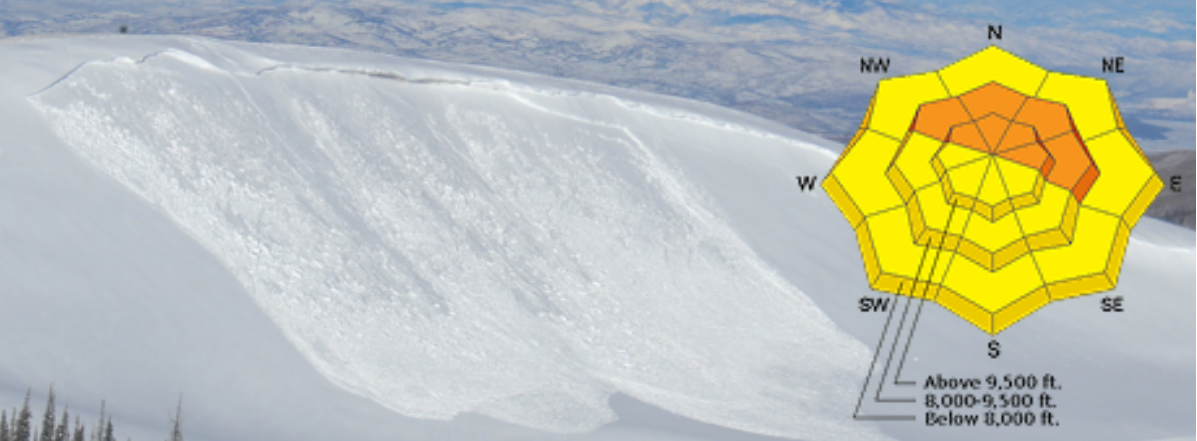
Photo: Late reports came in of additional wet loose avalanches from Thursday in upper White Pine on the southwest aspects of Red Top Mountain.
Saturday, March 28: Overnight lows in the 40s led to a questionable refreeze, making supportable surfaces short-lived. Signs of summer appeared in various ways, including forecasters measuring snowpack foot penetration in flip-flops.

Photo: UAC Forecaster Brooke Maushund measures foot penetration in flip-flops. A sign of the times.
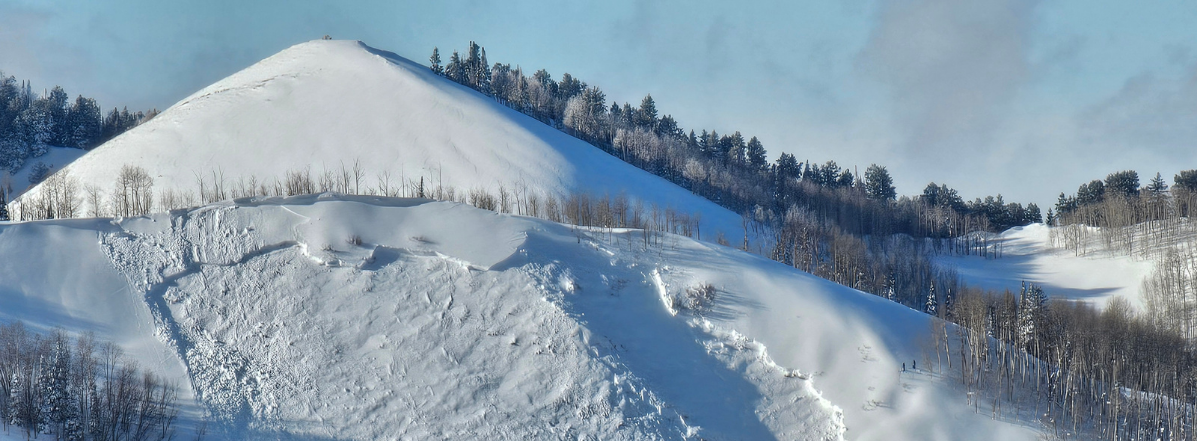
Sunday, March 29: Warm temperatures continue to strengthen through the weekend. Overnight lows reach into the mid-30s, while daytime highs reach into the 60s. A report of a few-day-old cornice-triggered wet loose avalanche comes in from the Brighton backcountry near Pioneer Peak.

A cornice-triggered slide along Pioneer Ridge. Photo: J Scheuerlein (Observation Here.)
Monday, March 30: The UAC stops issuing daily avalanche forecasts, but that doesn’t mean the season is over. Overnight lows Sunday into Monday drop into the mid 30s, and those who are still sliding around find supportable, albeit short-lived, corn riding. Coverage is disappearing fast, especially on south and west-facing aspects. Light rain showers move in early evening, but nothing measurable.

South-facing slopes in Upper Little Cottonwood Canyon. Photo: Champion
Tuesday, March 31: “Stormy” weather begins to move in from the southwest, with warm temperatures and light to moderate winds. The storm is mostly clouds, with very little precipitation associated with this first wave. Resorts report a rain-snow line around 9000 feet, with a trace of snow above 10,500 feet.
Wednesday, April 1: A more substantial wave of moisture arrives overnight with 2-6 inches of dense snow by 5:00 AM, with more falling through the morning. Early in the afternoon, a period of greenhousing occurs. The already soggy snow quickly warms as some early-afternoon greenhousing occurs, and a natural wet loose cycle is observed.

A small wet snow avalanche near 10,420 in Big Cottonwood Canyon. (Observation Here).
Thursday, April 2: Another wave of moisture moved through overnight, which brought Upper Cottonwood storm totals to 10–16 inches (over 2 inches of water equivalent) and raised the avalanche danger to CONSIDERABLE. A midday cold front brought dropping temperatures, intense snowfall, and even a few claps of thunder. Wind speeds begin to ramp up, quickly drifting snow into reactive wind slabs 1-2' deep. Storm totals in the end - 20-30" in the upper Cottonwoods and up to 3.35" of snow-water-equivalent. Totals along PC were 12-20".