This piece written to us by longtime friend and backcountry skier John Climaco
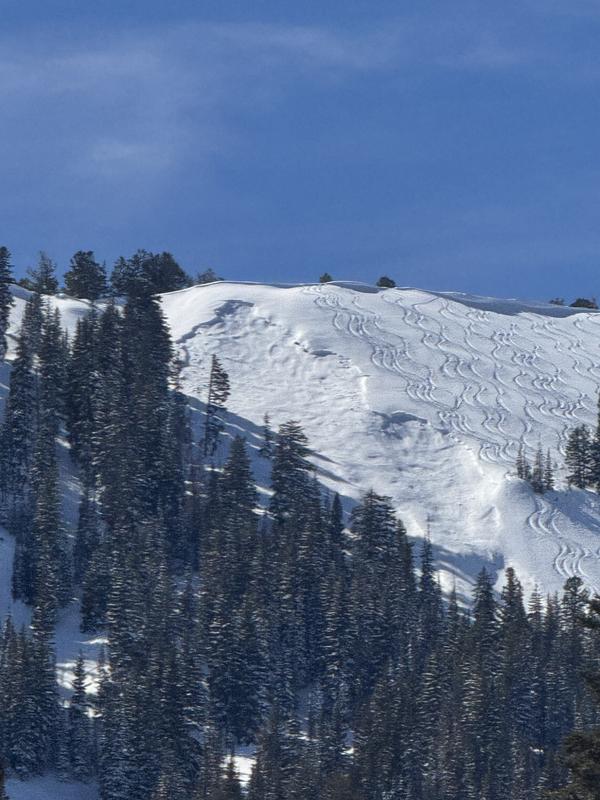
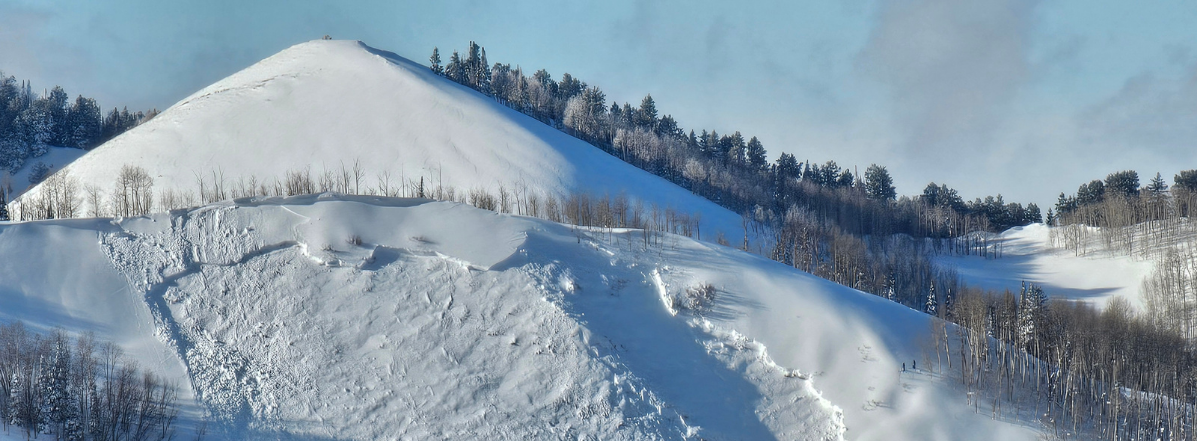
I spent Sunday skiing PCMR with my daughter, much of it trying to explain to her why I was so upset. Conditions in the resort were perfect and the sky was blue but ironically it was the view that gnawed at me all day. The Park City ridgeline, covered with a deep coating of fresh snow, was being devoured by a small army of riders seemingly oblivious to the considerable danger they were aggressively courting. Every steep shot south of Murdock Peak save for main Squaretop and No Name Bowl, was tracked. So numerous were the turns that people were resorting to wild traversing lines to find the fresh. Under cornices, across crowns, everywhere. It was astonishing.
I’ve been caught in two avalanches and lost a dear family member to one in which other two children escaped with their lives by pure, dumb luck. While I’d witnessed scores of avalanches over the years, taken my first AVI course in my twenties and skied I don’t know how many BC days, it was only after being caught that I finally understood. “It’s funny how it makes an instantaneous change in you, isn’t it?” a friend who knows more about snow than just about anyone in this area asked me recently. He’s right; there’s a before and an after . . . you hope. If you’re telling yourself you could probably out run it, or swim though it, or pull your airbag or any one of a number of other similar fantasies, you’re definitely “before.” Because if you’re “after,” you know what it’s like to have your gear and clothes ripped off, or what the weight that’s beyond human words feels like, or what a scream that doesn’t come out because your mouth is packed with snow, sounds like. It sounds like nothing, and that’s what you’re terrified you’re about to become if you’ve been caught.
Last week was one of the deadliest weeks of avalanches in the US that I can remember. Yet if avalanches on the national news isn’t enough to make people pause, this little behavioral observation certainly won’t be either. It is sad but as a species our imaginations often fail us and we seem to need to put our hand on the stove to know it’s hot. I know it's hard to imagine listening to your relatives yell "why?!?" at a funeral after an avalanche, but believe me it's even harder to forget if you've heard it.
My daughter, who thankfully knows nothing of avalanches, remained untroubled throughout the resort day. “It’s still bothering you?” she asked in the afternoon after my 50th comment. “Honey, it’s like watching a child play with a loaded firearm.”
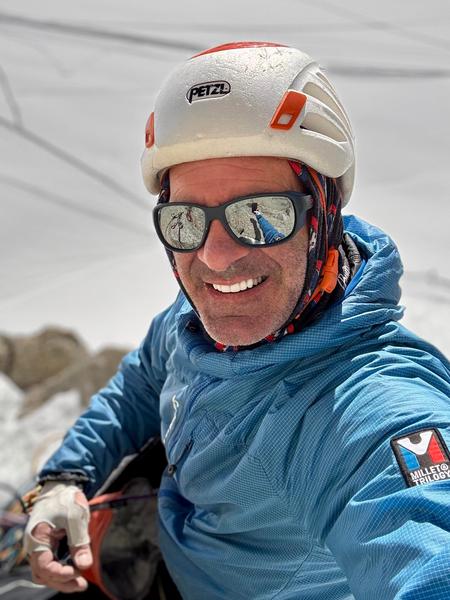
John Climaco is an avid alpinist, skier and adventurer. He has led expeditions to Pakistan, Nepal, China, Peru, Bolivia, Ecuador, Svalbard, Guatemala, West Papua and Alaska. John’s writing and photography appears in anthologies including Epic: Stories of Survival From The World’s Highest Peaks; and 30 Years of Climbing: The Best Writing From Climbing Magazine as well as Men’s Journal, Alpinist, Climbing Magazine, Rock and Ice, and The American Alpine Journal. Professionally John has been the CEO of public and private biotech companies for the last 23 years and holds degrees from the University of California Law, San Francisco and Middlebury College. John lives with his family in Park City, Utah.
- reply