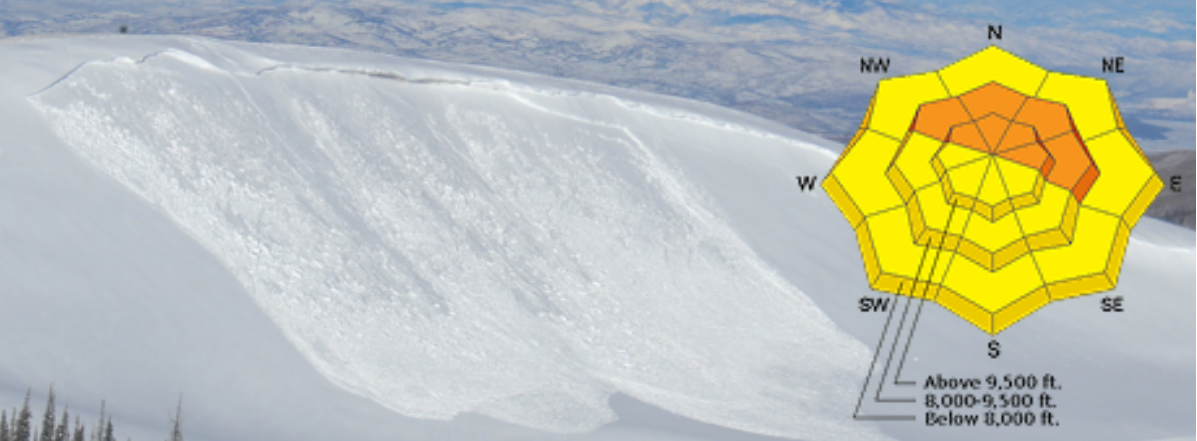
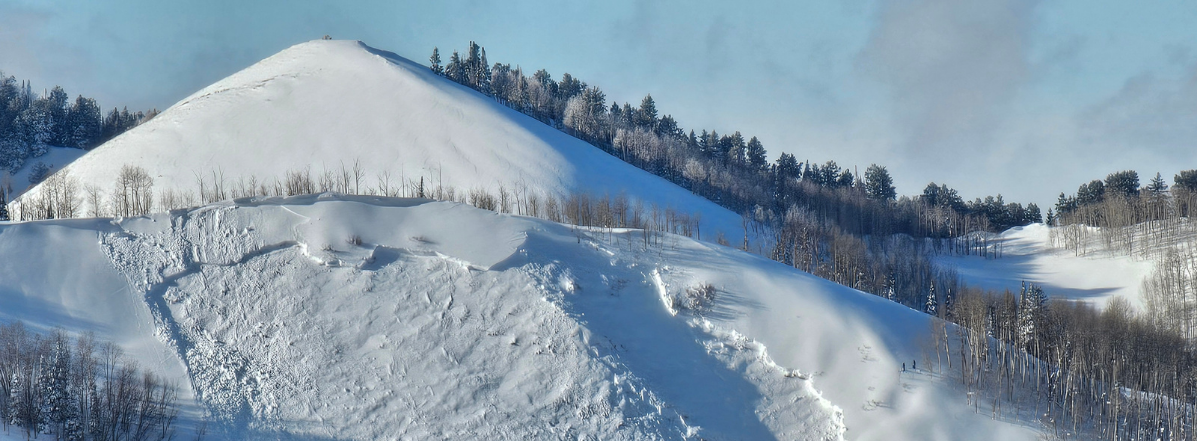
A walk looking at Twin Lakes Pass, Wolverine Cirque and Patsey Marley today showed the effects of this warm, windy storm laying its cohesive slab on a landscape of spatial variability. While most slopes were free of thoroughly-faceted October snow, those isolated areas that still hold it showed energetic instability. The tension created by high water weight and consistent wind with this storm makes this slab reactive and eager to fail/move where the slope angle supports it.
My take-away is that it is a simple avalanche problem (strong over weak snow) with the complex issue of identifying where this now-hidden problem will be present.
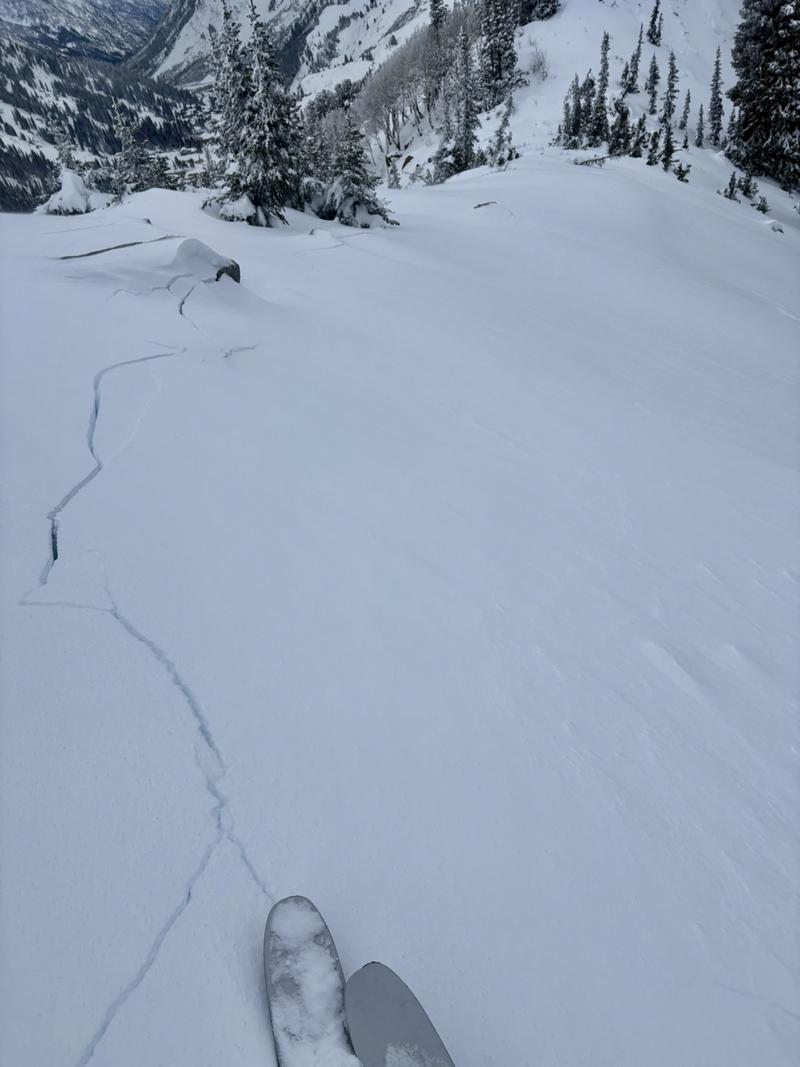
Rolling collapses and shooting cracks were consistent on North->East faces above ~9500' (Pic 6). Many column tests fail on isolation.
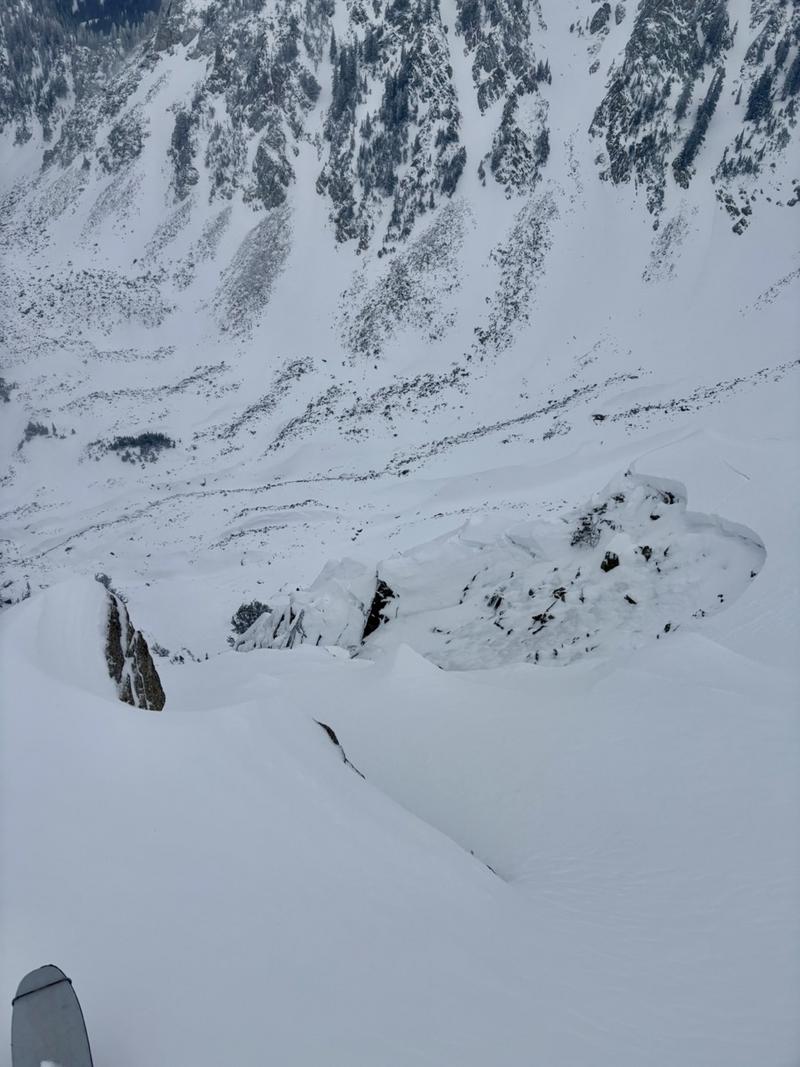
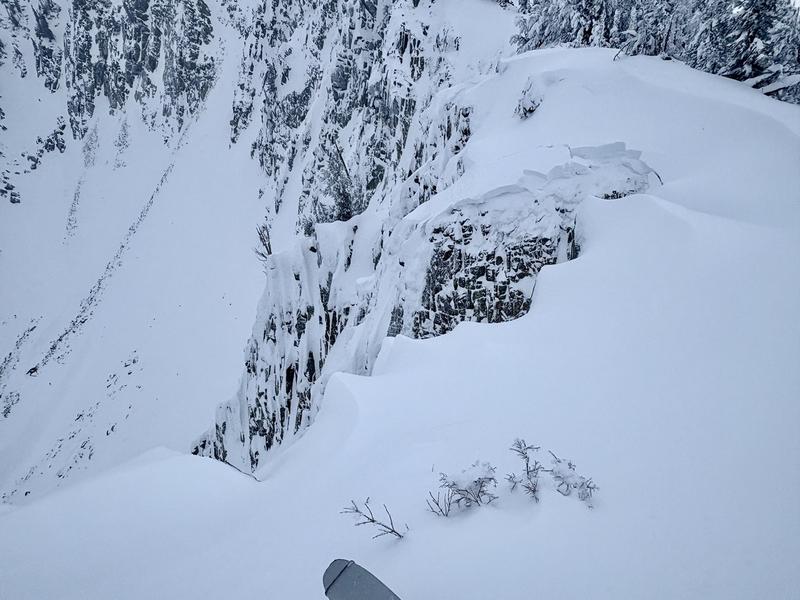
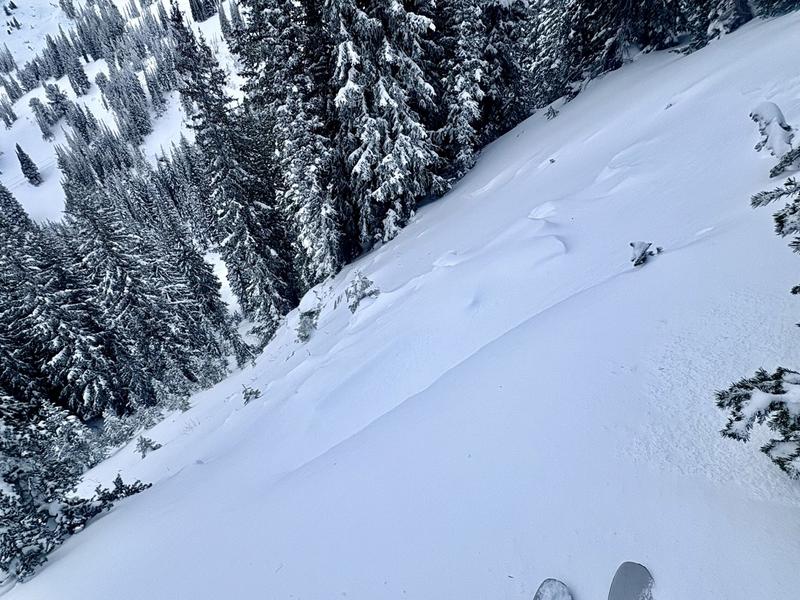
As I walked the ridgeline, 2 of my collapses remotely triggered avalanches 14-18" deep as they reached avalanche-prone slope angles (Pics 1, 2). These slides were limited in width due to rocky, complex terrain but propagated cleanly with minimal connection.
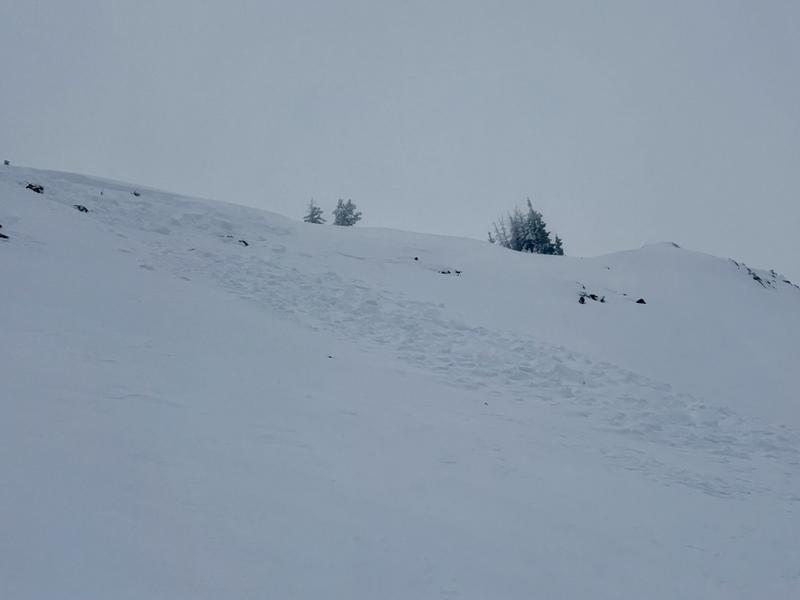
A number of avalanches were triggered by other parties earlier in the day (Pic 3)
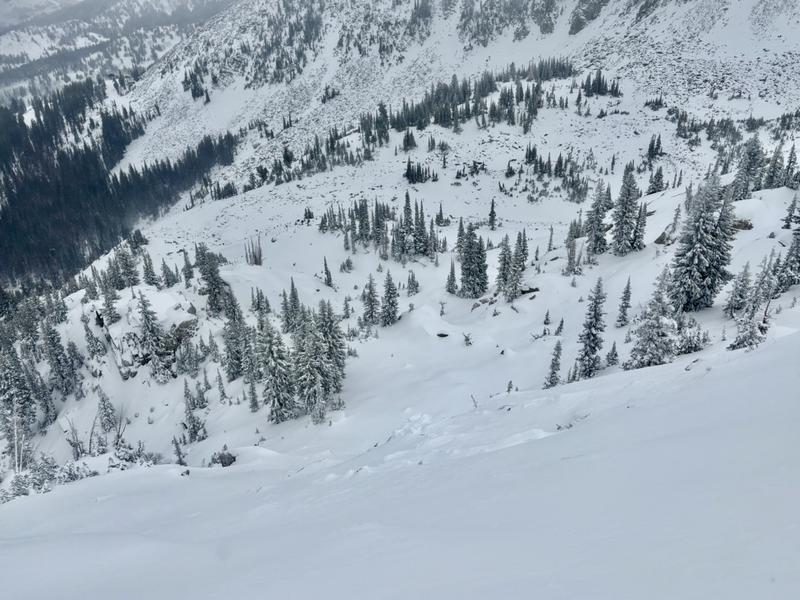
I was interested to see a number of areas that appeared to have naturaled during the storm (PIcs 4, 5) and had the bed surfaced lightly covered by new snow. The biggest of these was ~100 wide, 10-14" deep and likely occurred early this morning.
I think this "pockety" problem has the potential to surprise skiers for the near future as it become more stubborn to trigger but maintains strong slab characteristics and gnarly, hazardous bed surfaces.