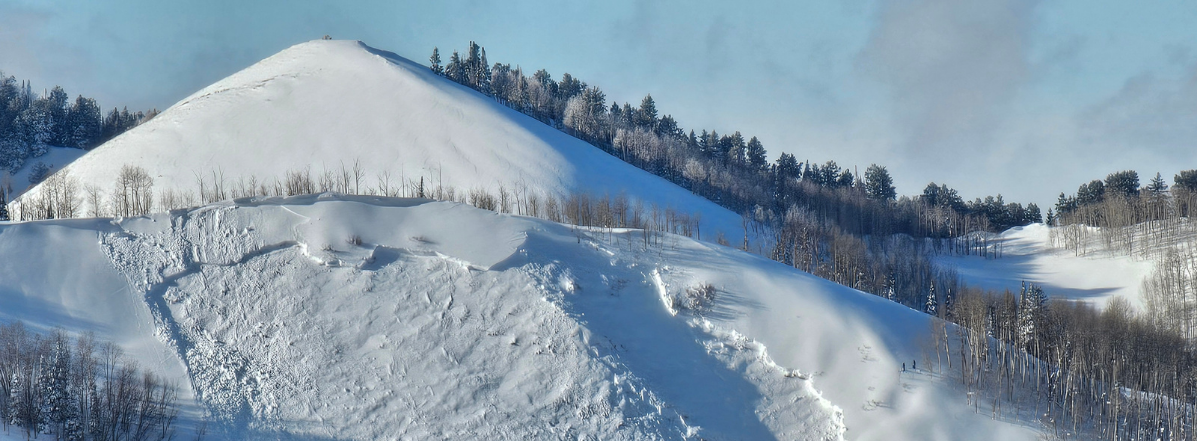
Weak faceted snow in the basal layers of the snowpack remains is my biggest concern. However, I don't think these weak layers are actually posing much of a threat right now. We just don't have a significant enough slab on top of them to cause a widespread avalanche issue.
I have seen some improvement in the overall structure of the snowpack in one location. This was in Big Meadow (lower Lake Canyon, NE facing, 10,000'). I was there on Jan 3. I dug a snowpit and performed an Extended Column Test. The test result was ECTP23 which means the column failed and fully propagated on the 23rd time I tapped on it. I also used the Propagation Labs Snow Scope probe to sample the snowpack layering.
On Jan 10, I returned to the same location and did the same thing. I could not get the column of snow to fail during my test. I took another reading with the Snow Scope probe. You can see the comparison in the snow profile image below. What is interesting to note is that the snowpack has settled since Jan 3 and the hand hardness of the faceted snow near the ground has increased slightly. You can see the faceted layer (red) has been compressed a little. You can also see that the two crusts have settled as well. This was caused by the weight of the additional snow we picked up over the last week. This is what I like to see. This process would continue, and the snowpack would gain strength if we could continue getting snowstorms. Unfortunately, things are going high and dry, and there's no sign of snow in the near future. I fear another layer of facets will form near the snow surface over the next couple of weeks during this dry period.