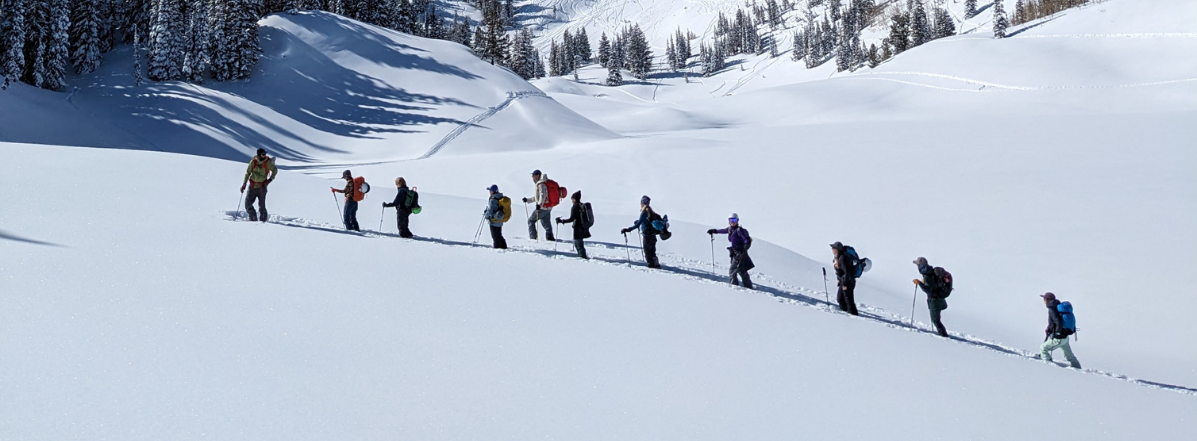
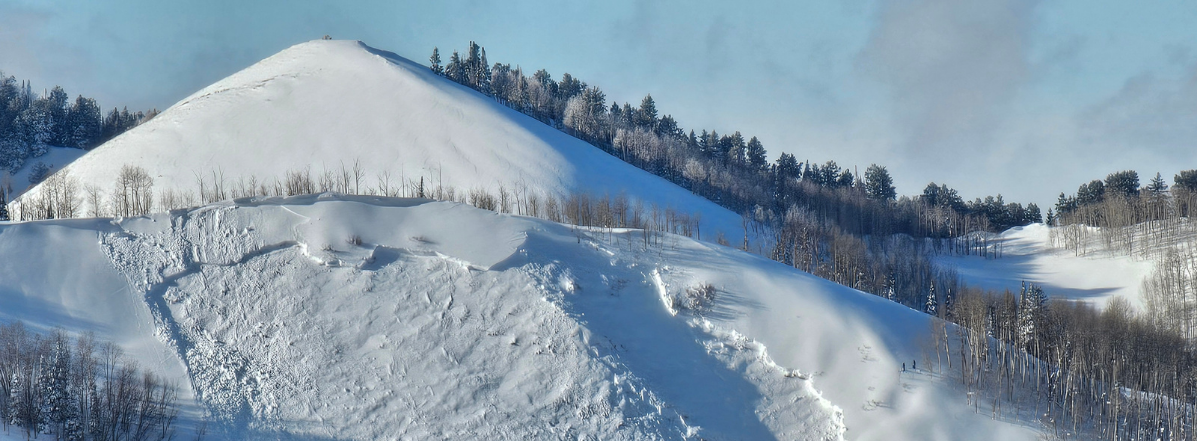
Overall, a really pleasant day of travel. Temperatures kept the snow surface cool in most places. We noted zero signs of instability. No cracking, no collapsing. Even as we stepped into steeper terrain, we didn’t experience any sluffing.
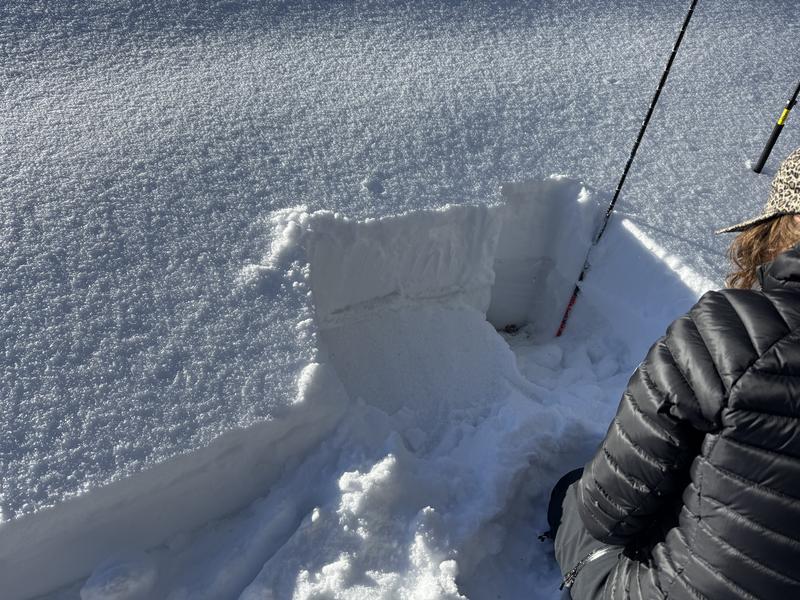
When we dug on both northwest and east-facing aspects, we found a generally similar setup. One to two feet of new, low-density snow sitting on top of a damp but supportable crust interface that extended to the ground. In some areas, the previous layering was still more visible, but the entire bottom of the snowpack was damp or wet. Right now, the supportable crust is acting as the primary interface, and we saw no signs of weakness below the new snow to old snow contact at this time.
Looking ahead, my main concern for the northern Bear River Range is the new snow to old snow interface and how cold evenings affect that boundary. Specifically, will weak snow start to form above the crust as overnight temperatures remain cold.
New snow sitting atop supportable crust - E Aspect - 8100'