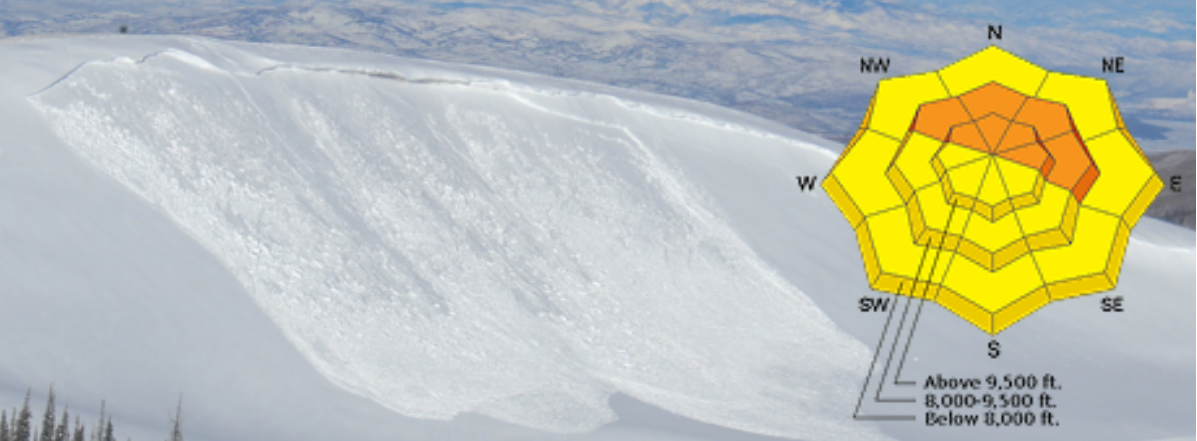
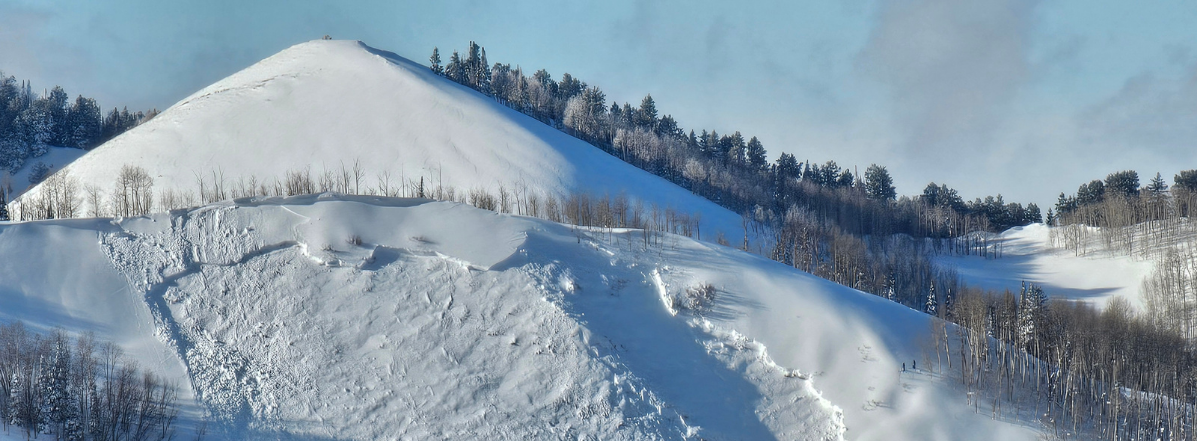
There are two key stories in the snowpack right now. The first is that every aspect has a stout, supportable rain crust. It’s an excellent bed surface for the recent new snow and wind drifted avalanches to run fast and far. It only takes a small amount of snow to pick up speed and entrain more snow along the way. The bed surface is slick, both for avalanches to slide on and for a slide for life condition in places. If something does get kicked off, it could turn into a slide for life in terrain that rolls long or ends in consequences.
On the northerly end of the compass, a poor snowpack structure exists, with dry, well developed facets preserved below the crust. The crust itself is stout and well connected. If someone were to find a thinner part of the crust, or an isolated pocket of terrain where it isn’t as strong, an avalanche stepping down into the old snow would be deep and dangerous.
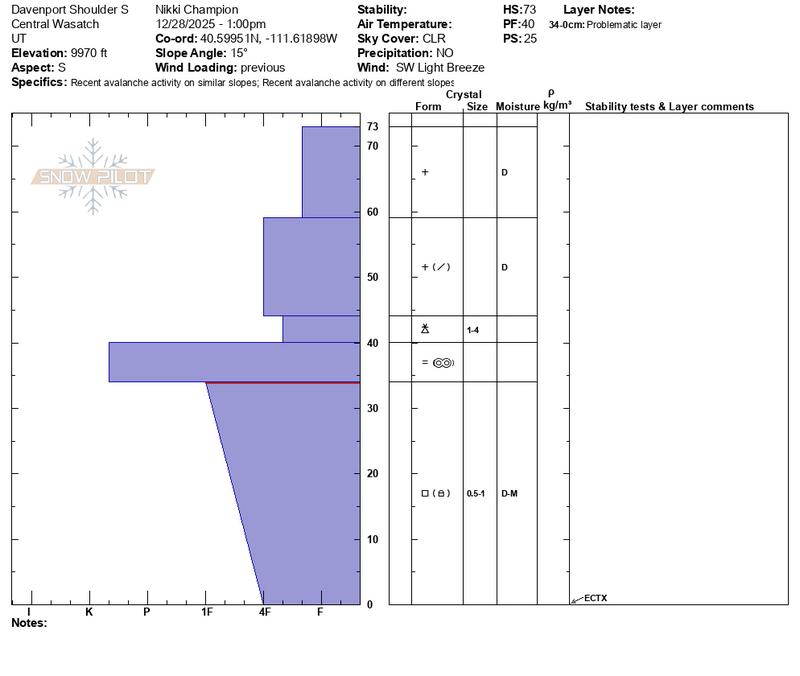
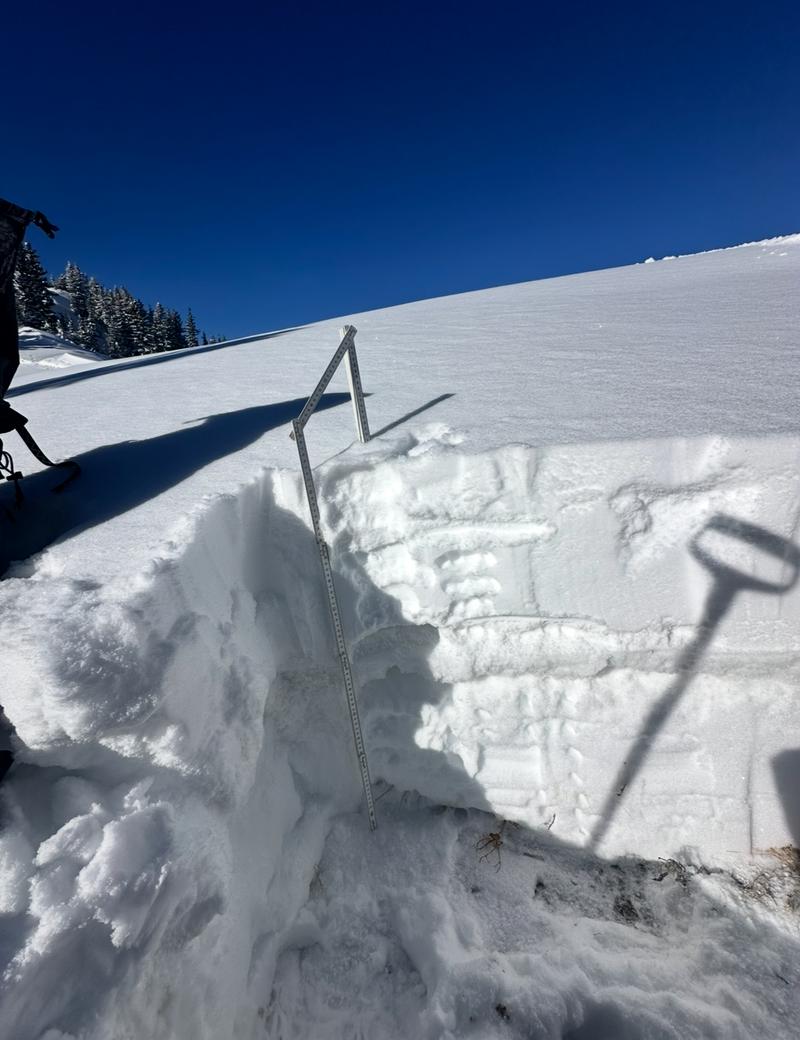
We dug full pit profiles on the northerly facing aspects of Davenport Shoulder, as well as the more solar aspects, to compare surface snow, crust structure, and how damp the facets were near the ground.
On both aspects, we found a similar structure: new snow sitting on top of a rain crust. On the solar aspects, the crust was noticeably thinner, less supportable, and more textured. Below the crust, the facets told a different story, well-developed and dry on the north-facing slopes, and less developed, with some rounding on the solar side.
The key info for the day came from ECT results. On the northerly aspects, when we performed a standard ECT with a back cut, we got fairly consistent ECTV results. In one test, we saw no propagation (ECTX). We then ran an ECT without isolating the backwall to test the crust itself, and again got ECTX. To me, this shows the crust is the key connector right now. When it’s fully isolated, the structure becomes extremely suspect, but the crust needs to lose that connection in some capacity to unlock deeper propagation. That could happen through terrain features, a thinner snowpack, a thinner crust, or a larger load from wind or water. Either way, the poor structure exists, and the crust is stout and well connected—for now.
Pit profile and pitwall photo from the northerly facing Davenport Shoulder Pit - NW Aspect - 9900'

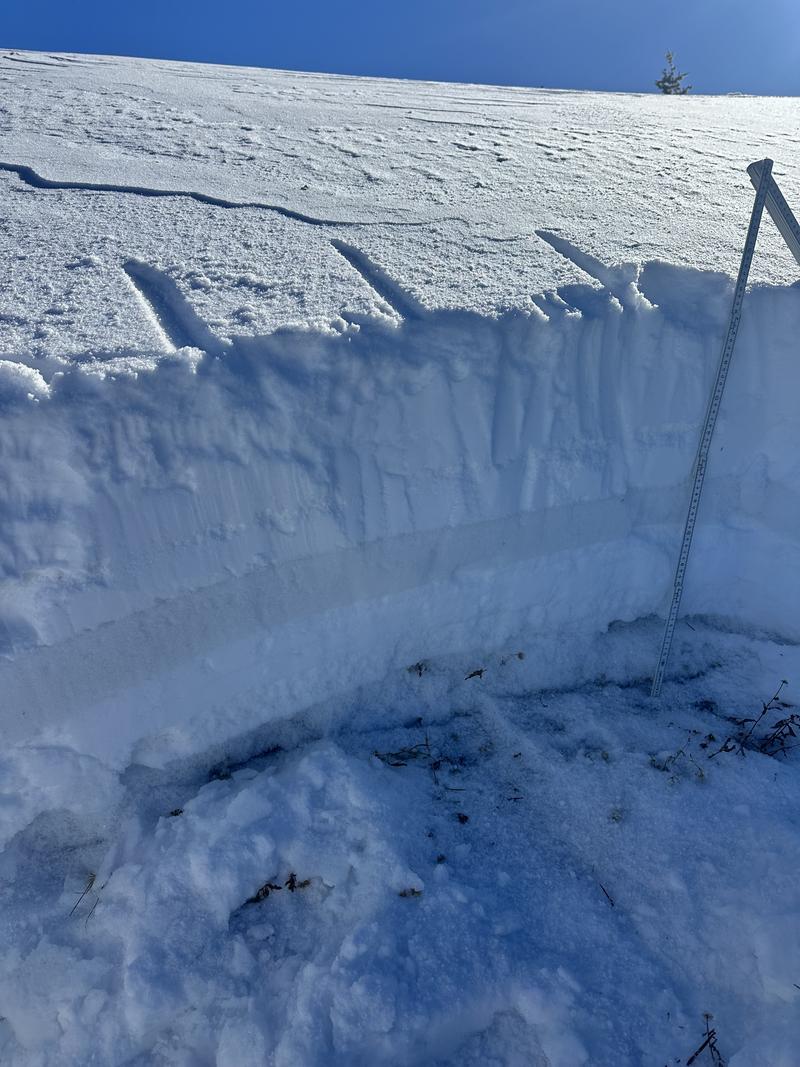
Pit profile and pitwall photo from the solar facing Davenport Shoulder Pit - S Aspect - 9900'