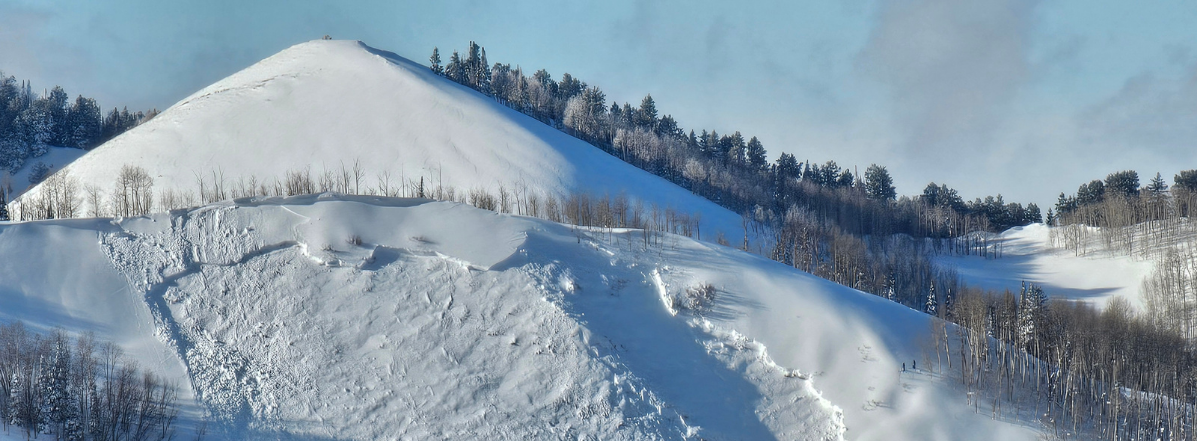
The primary issue is the poor snowpack structure. We traveled on both NE, and NW facing aspects above 9700' and in both places found a very similar, shallow snowpack structure.
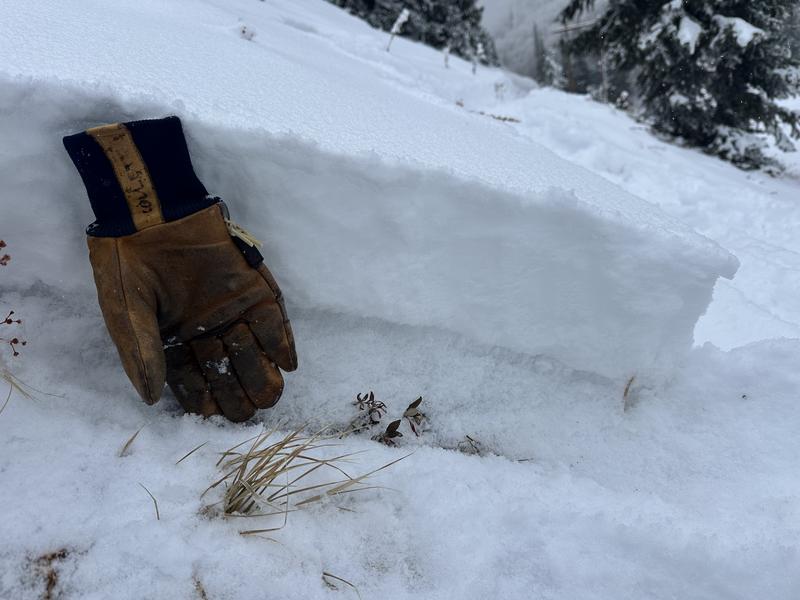
We found about 30 cm of snow, a little deeper in the wind drifts, with the lower 10 to 15 cm made up of weak facets. It is a shallow and fragile setup, and along the Park City ridgeline most slopes were still missing a real slab. Even the small wind drifts were too soft to act like one.
The problem will really show up once a slab forms on top of this layer. That could happen with new snow if we end up on the higher end of the forecast, or with a combination of new snow and strong winds. If we get a slab on top of this layer, avalanche danger will rise.
The good news is that terrain management goes a long way here. The south side of the compass is still pretty bony, but it does not have that weak faceted base. If we get heavier snowfall, you can manage this issue by sticking to southerly grassy slopes or by staying off slopes steeper than 30 degrees on the north side of the compass.
Snowpack structure - NE Aspect - 9700' - PC Ridgeline - the dark grey layer along the bottom is 10cm of facets.