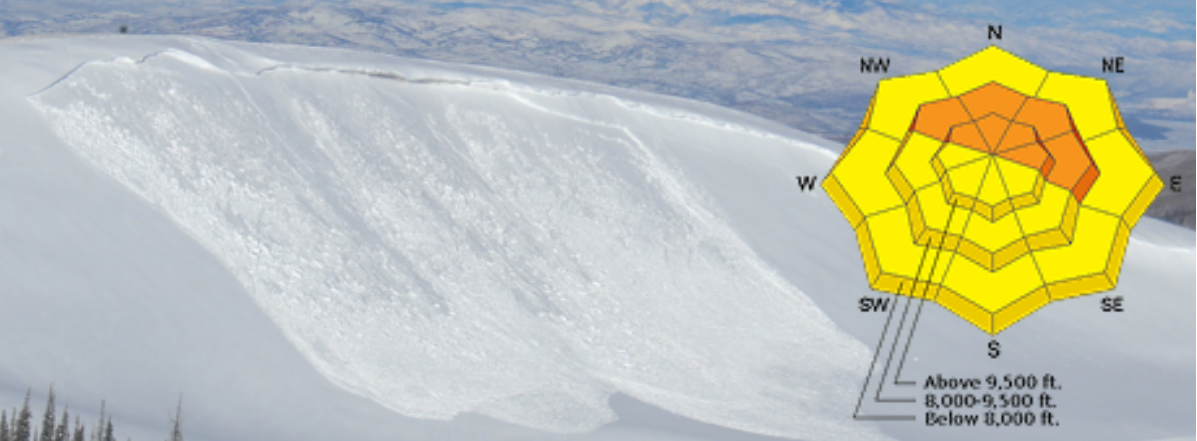
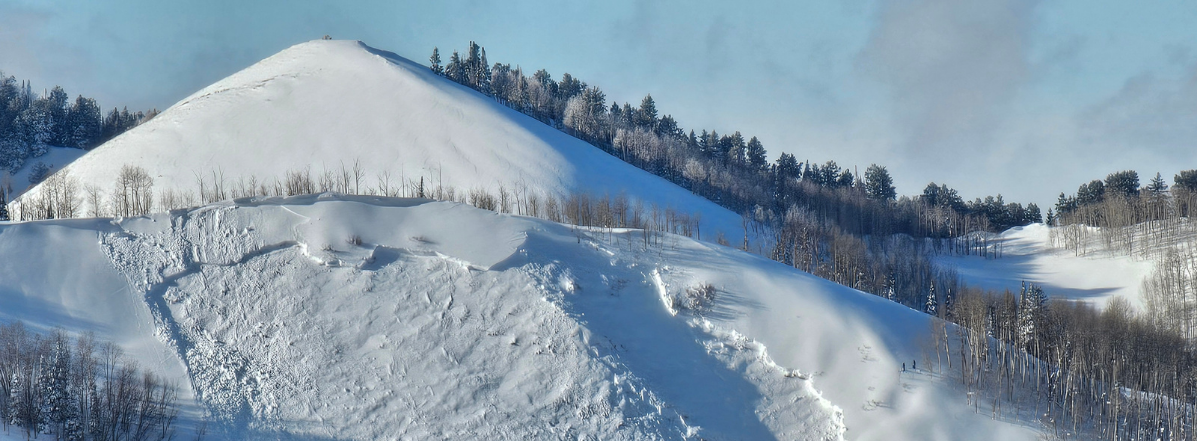
I poked at a north-facing slope off the Laurel Highway at 11,260'. HS, snowpack structure, and test results were very similar to what Eric and I found in Colorado bowl on Monday. ECTP 8 and ECTP 9 down 26cm, failing on 0.5 - 1.0 mm facets. This layer was buried on 11/30, so from here on, we will refer to it as the 11/30 weak layer. It's worth noting that the overlying slab here is F density. This is somewhat tricky because the slab is so soft that I am not getting collapsing or cracking in my travels, but it is definitely capable of producing shallow, soft slab avalanches on steep slopes where the slab has just enough cohesion. High elevation slopes that have received any amount of wind-drifted snow are especially suspect.
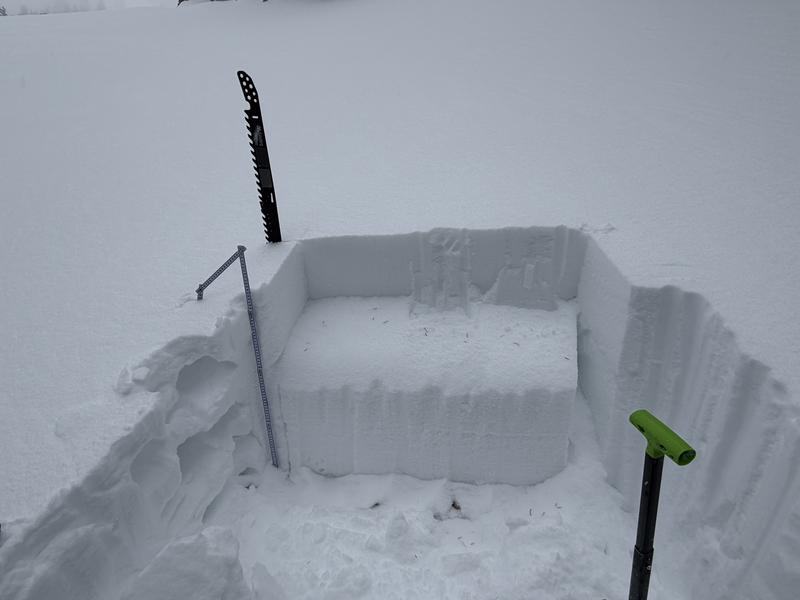
The photo below is my north-facing pit, near Coyote Chute. It is easy to see the weak layer at the new snow/old snow interface on the left pit wall.
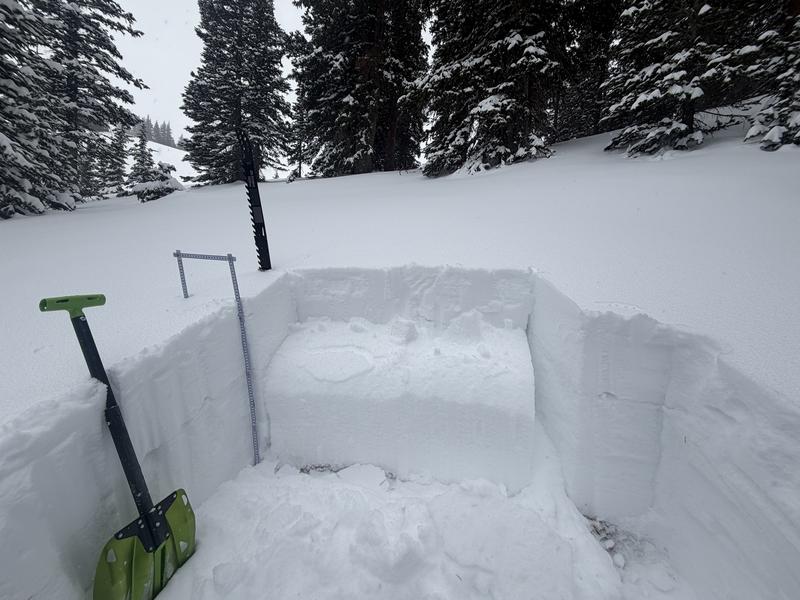
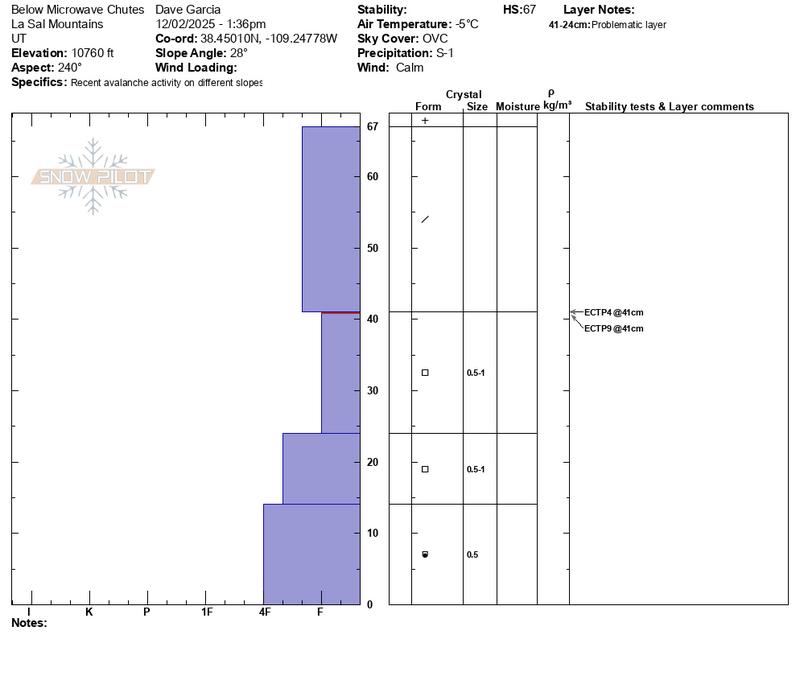
Unfortunately, this problem exists on slopes that face southwest and west. Many slopes near or above treeline with a west or southwest aspect were subjected to strong sun and/or strong winds and do not have much of a snowpack at all. The PWL problem does not exist on these slopes. I got on a sheltered SW aspect near treeline today with a relatively deep snowpack (67cm, deep for right now). This snowpack had a very similar structure to what we have been seeing on the northerlies. This SW-facing pit produced ECTP 4 and ECTP 9 on the same weak layer that has been failing in our other pits. Not great news. If you find yourself on southwest or west-facing slopes, and the snowpack is deep, dig down and look for the weak layer; it is easy to find.