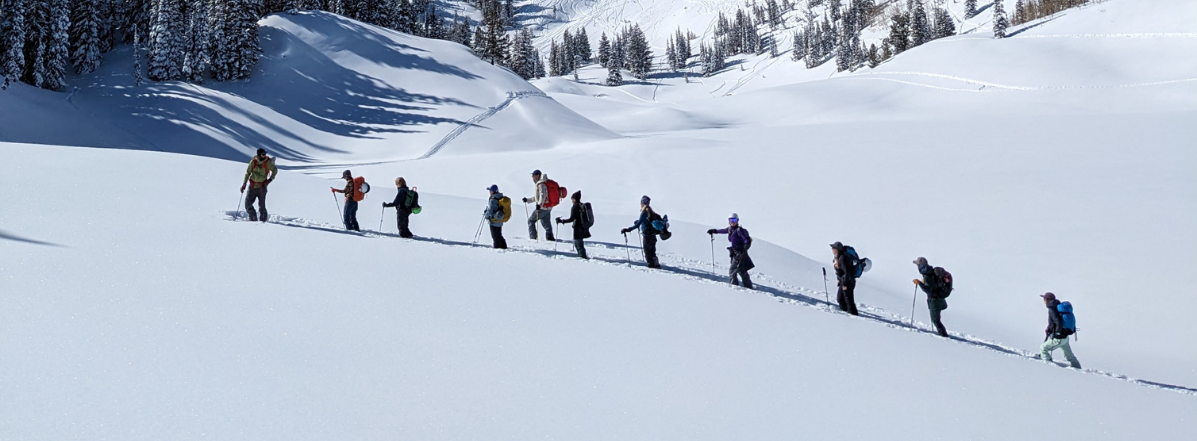
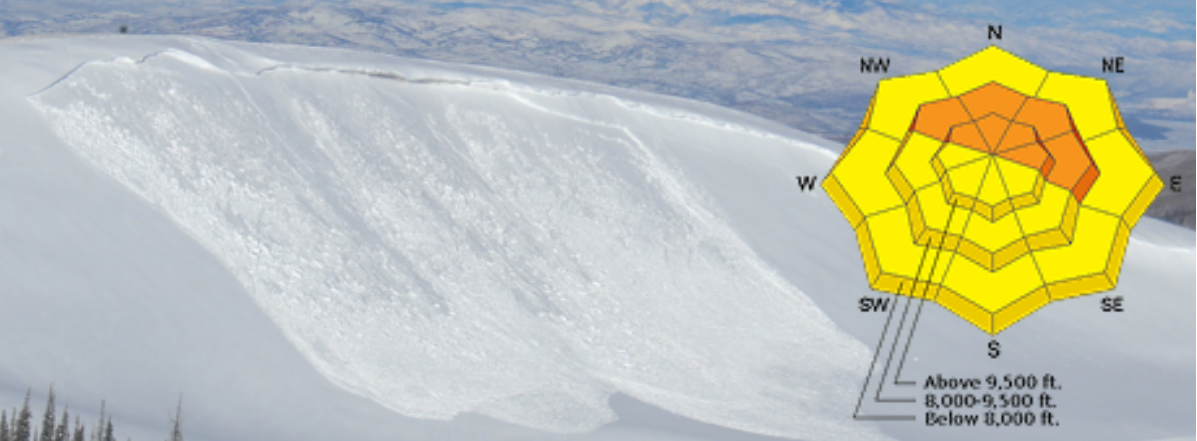
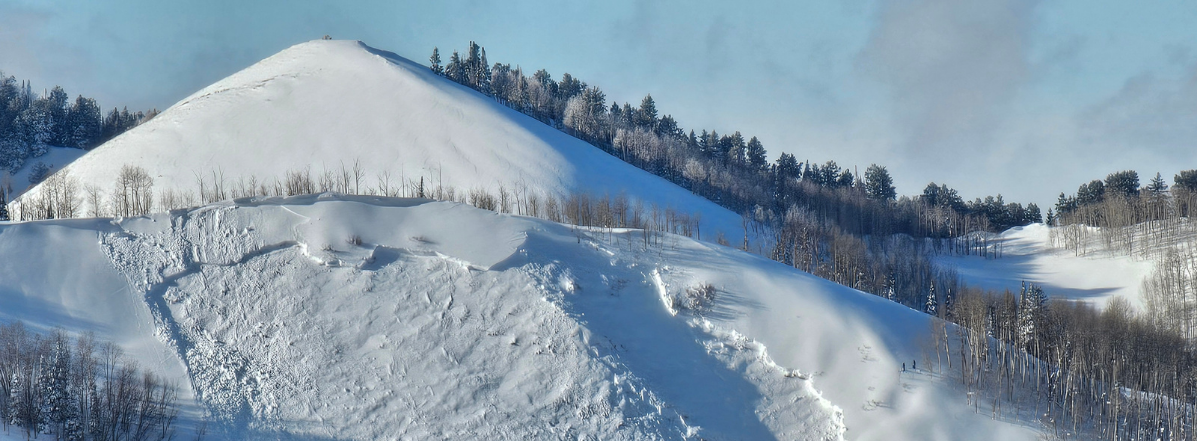
We made a few laps in an area 2-3 miles North of Willard Peak. We found decent settled powder on slopes facing the northern half of the compass and well away from ridgetops where the winds have scoured anything that resembled powder.
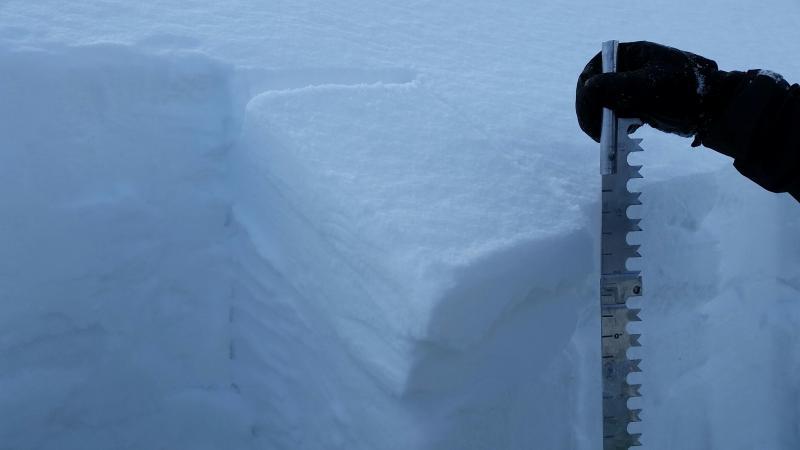
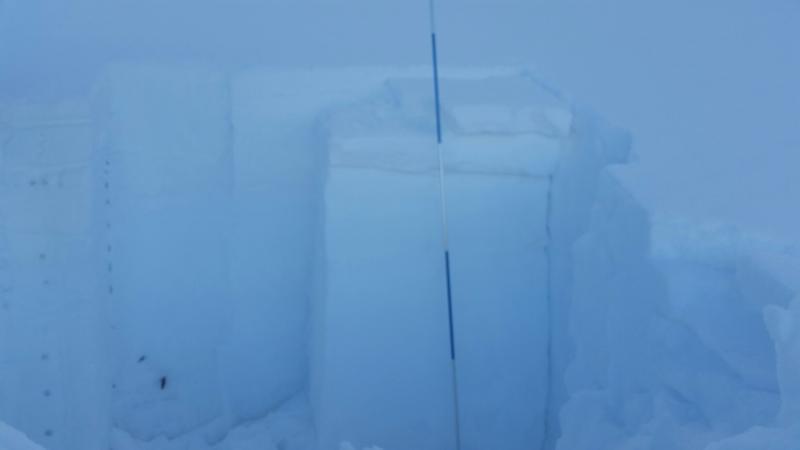
We dug several pits. The first pit was dug about 50 feet down from a ridgeline on a Northeast facing 32 degree slope at 8700 feet. Because it was so close to the ridge we got very different results than we got in other areas. We had the column fail upon isolation down 8 inches (pic 1 below). That same layer failed on an ECT at 13 taps (ECTP13) (Pic 2 below). Multiple Q1 failures at 2, 8, and 20 inches down occurred throughout the snowpack and made us reconsider our line.
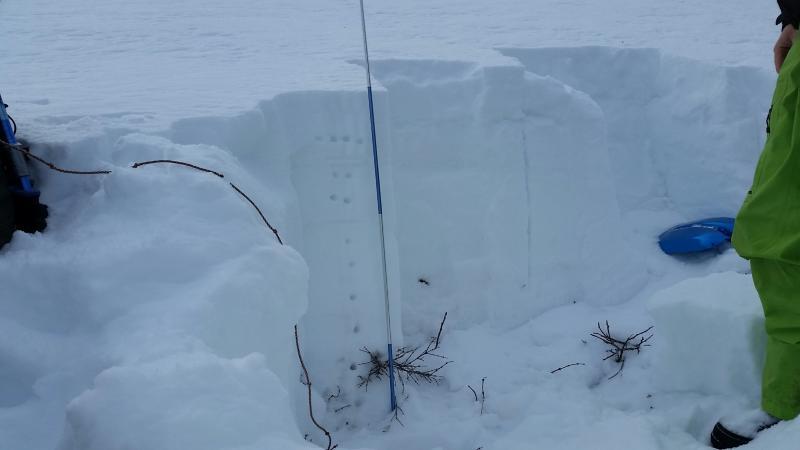
We moved to a sheltered area where the wind had not affected the snow as much and we got favorable results. Tests were done on an East facing 28 degree slope at around 8400 feet. There were no clean shears during the shovel shear test and a CT16 failure down 8 inches. However the failure would not propagate during an ECT. The snowpack is pretty thin around Willard Peak. I probed around a bunch and it was consistently 30-36 inches of dense snow. Although we did not identify much faceting in the snowpack, the surface felt loose like it is faceted. We did not notice any surface hoar in the areas we rode.
FORECASTER NOTE: Many people have noted the surface becoming loose. This is the near surface faceting process which causes this loose snow to form. Weather over the last 5 days has been perfect for near surface faceting. Cold temperatures and clear nights are ideal for this process.