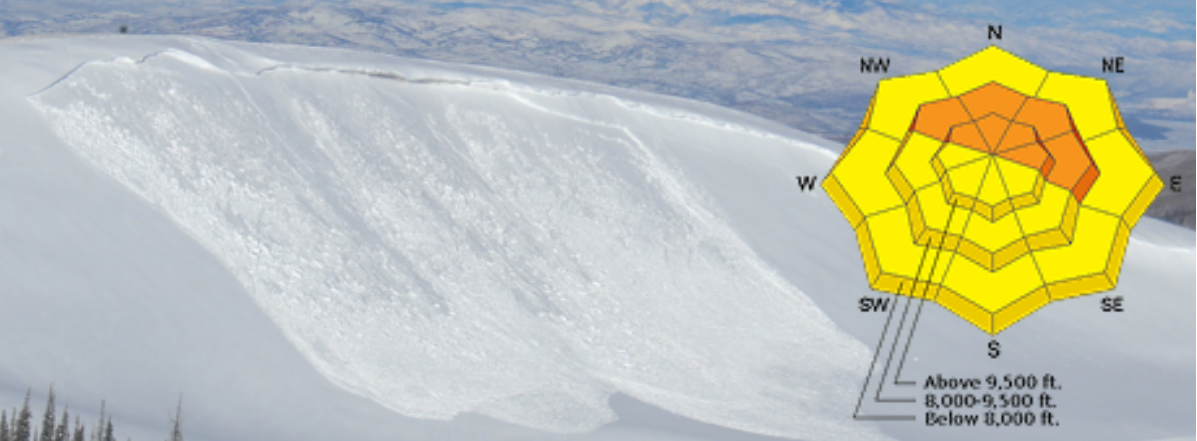
Was surprised to stumble upon still very intact evidence of the substantial avalanche cycle, with generally widespread but small avalanches throughout the Snake Creek–Pole Line Pass area that likely occurred during the initial large loading event from 2/18 to 2/21.
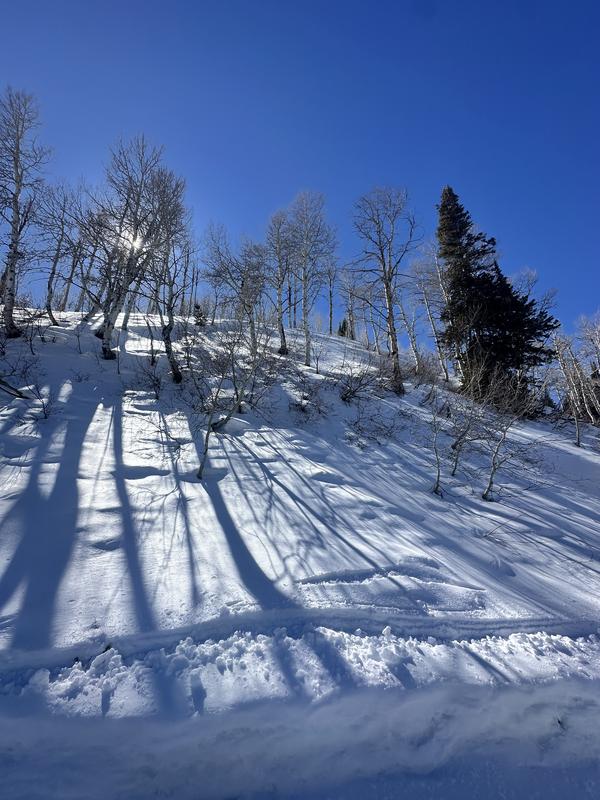
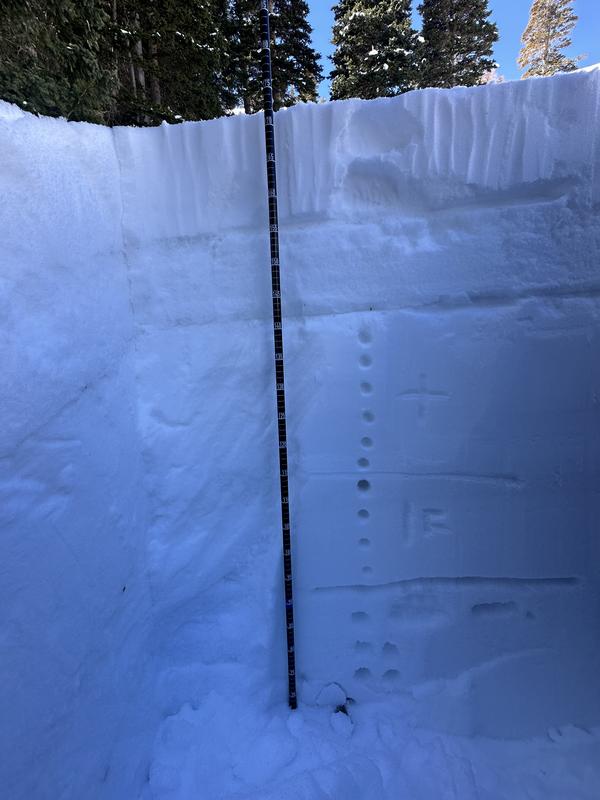
Initially, we dug very close to Ant Knolls. We noted the avalanche in Lunch Time (see below) on an east northeast aspect at 9,150'. There we found a snowpack similar to the central Wasatch, approximately 173 cm deep, with 7 inches of fist hard settled powder on top of a stout rain crust, above a 1F+ to 1F slab sitting on 1F to hard facets. The facets were sintering and trending toward rounding, with very few remaining edges. We could get no propagation within our pit, even with additional taps.
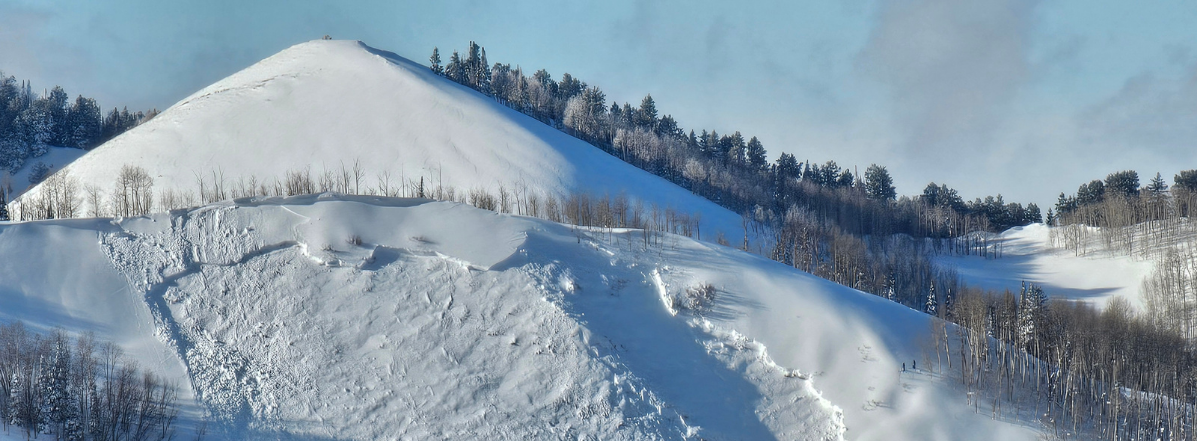
As we continued along toward Pole Line Pass, we noted a significant avalanche on Aspen Run that ran in old snow. It likely occurred during the same cycle from 2/18 to 2/21, though there was no previous report of it. It could also have run during the early March rain event.
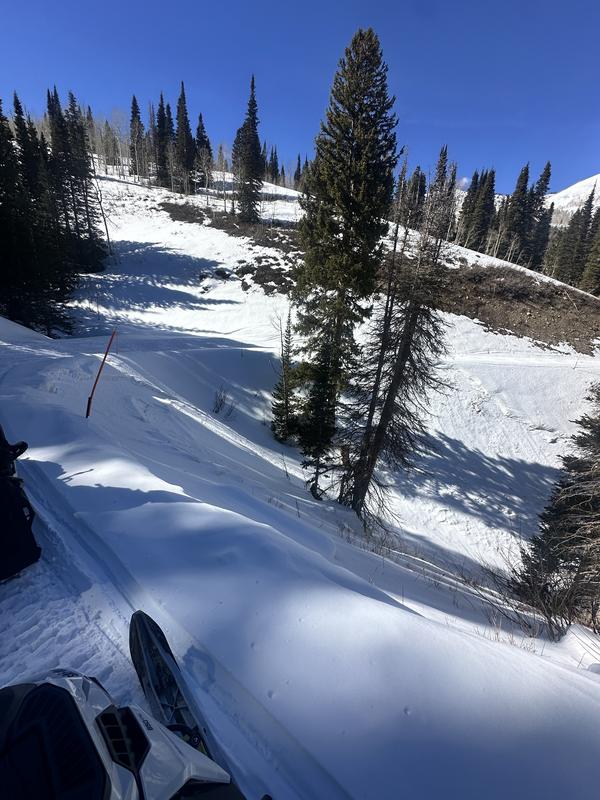
Along the road, there was still evidence of the widespread cycle, with almost every steep northeast facing cut bank, between 8900' down to 8200', still possessing an obvious crown. The bed surface now had a slightly slick crust with a few inches of new snow on top of the crown. In the bed surface and below the slab, the weak facets were still very intact, though damp. We also poked into a similar slope that had not avalanched and found the same snowpack structure.
What does it mean? Well, it highlights how little snow we have received this season, as the entire cycle is still so present, and that spatial variability exists. In parts of Provo that are more closely aligned with the central Wasatch, the snowpack was deep, with a supportable crust, a strong slab, and facets trending in the right direction. In shallower areas representing true Provo, the snowpack structure was still weak and large facets still exist.
That said, I do not see much change occurring without a loading event. The structure is still there, but overall the snowpack appears to be trending toward dormancy, and in deeper, more insulated areas of the snowpack perhaps even toward extinction.
Initial pit profile near Ant Knolls - ECTX - 9150' - ENE Aspect - similar to Central Wasacth
Avalanche in Lunch Time
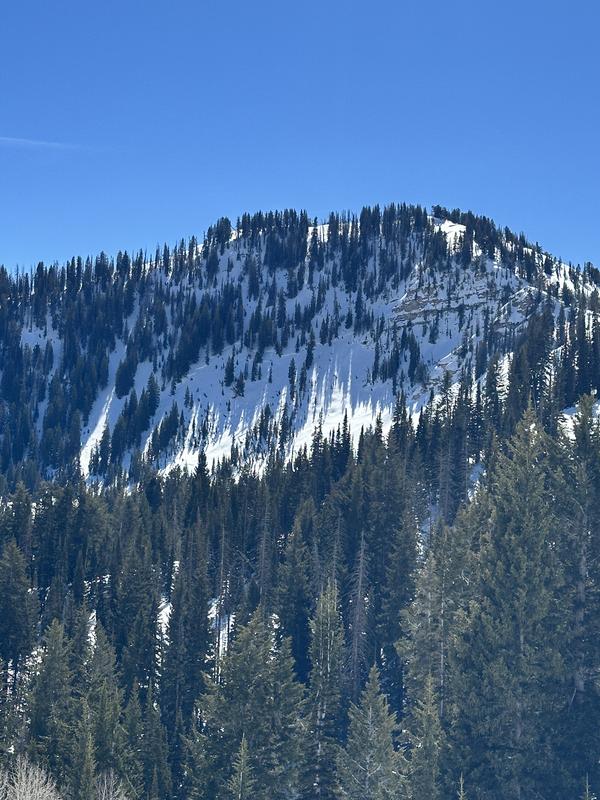
Avalanche in Aspen Run - likely ran 2/18-2/21 - North Aspect - 9400'
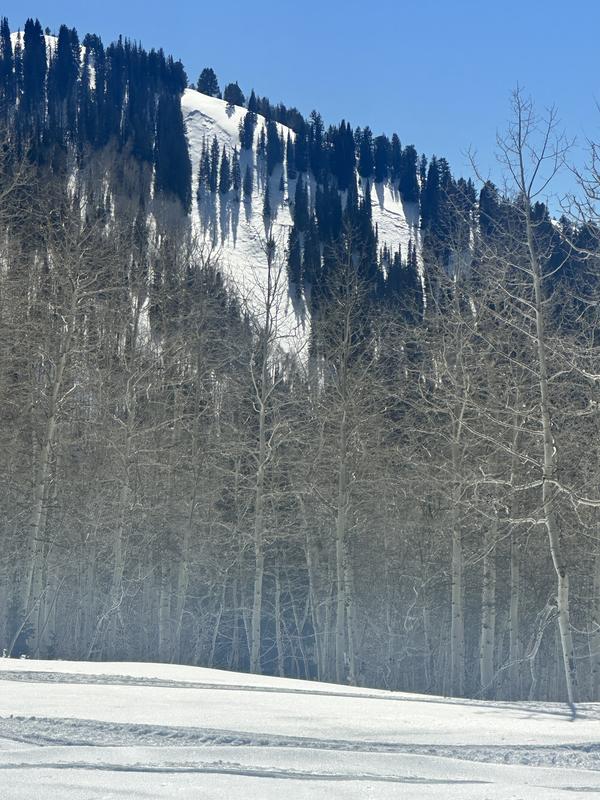
Evidence of old avalanche cycle - crown with 3-7" of new snow
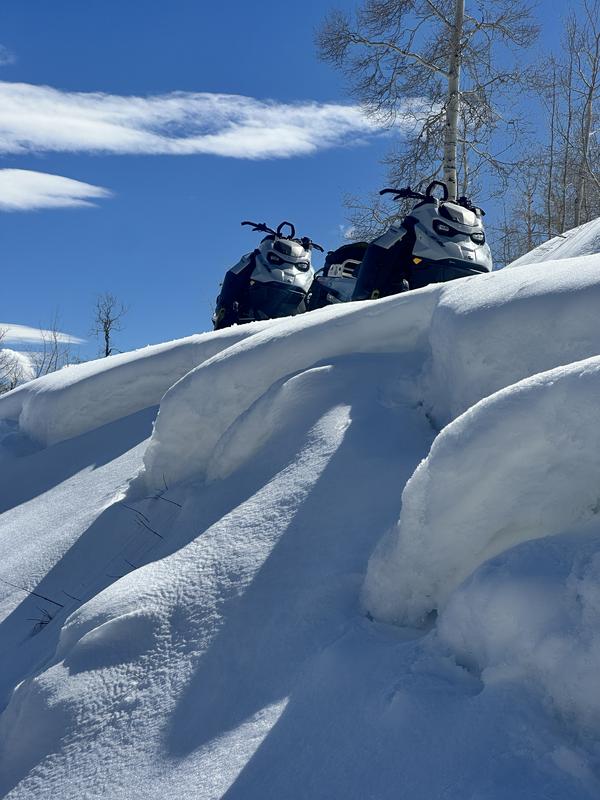
Snowpack structure in old repeater slopes and mid-elevation NE shallow terrain
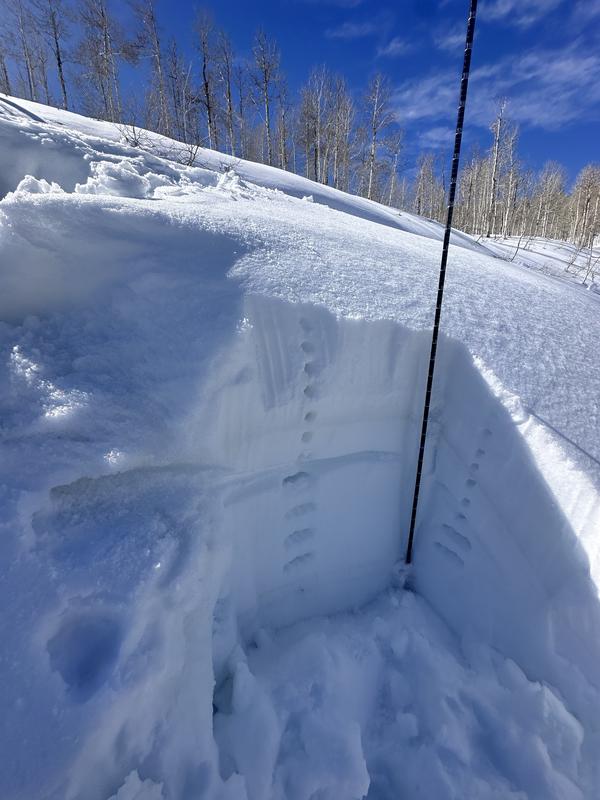
Still intact, moist facets - 8950' - NE
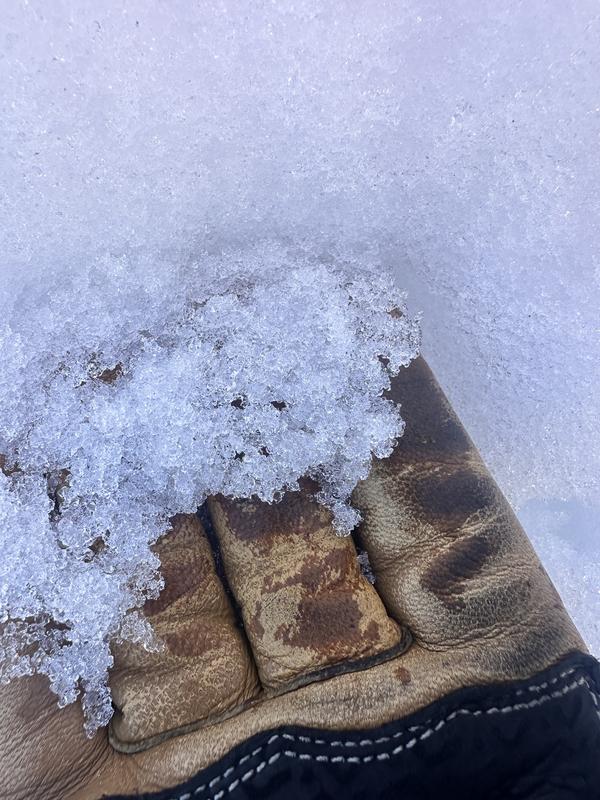
Additional evidence of old cycle