UDOT PLANNED AVALANCHE CLOSURES!!

Forecast for the Uintas Area Mountains

Andrew Nassetta
Issued by Andrew Nassetta on
Monday morning, December 22, 2025

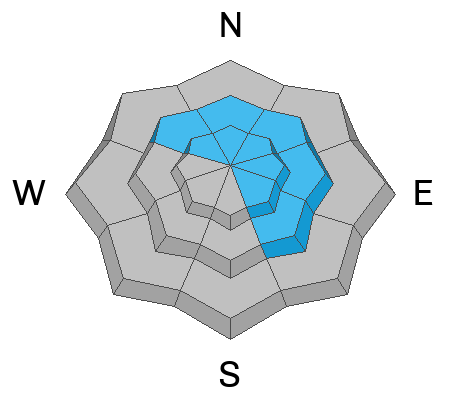
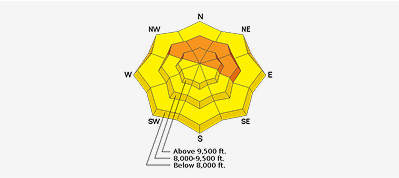
Today, CONSIDERABLE avalanche danger exists, and human triggered avalanches are LIKELY breaking 1 to 4 feet deep near the ground where a dense slab sits above multiple persistent weak layers. Elsewhere, slopes with enough coverage to ride offer MODERATE avalanche danger where it's POSSIBLE to trigger a stiff wind-drift on the leeward side of ridges and on specific terrain features like gully walls, chutes, and cut banks.

Avoidance is key today as any slide triggered, even a small wind drift, could break into old snow deeper and wider than you might expect.

Low
Moderate
Considerable
High
Extreme
Learn how to read the forecast here
Weather and Snow

Nowcast - 0500 AM brings us mostly cloudy skies accompanied by trailhead temperatures registering tropically in the 40's, dropping down to the low 30's°F at 10,000'. Sustained, strong winds from the southwest average 30 MPH while cranking out 50 MPH gusts along the high ridges and peaks.

Forecast - For today, expect clearing skies and mild temps with a high around 35°F. Winds will continue to blow from the west southwest and average 20 MPH with gusts into the 30's and 40's at higher elevations.

Futurecast - Sunshine will carry us through Tuesday, followed by a mid-week pulse sliding in on Wednesday morning that looks to bring additional mountain snowfall into Christmas.

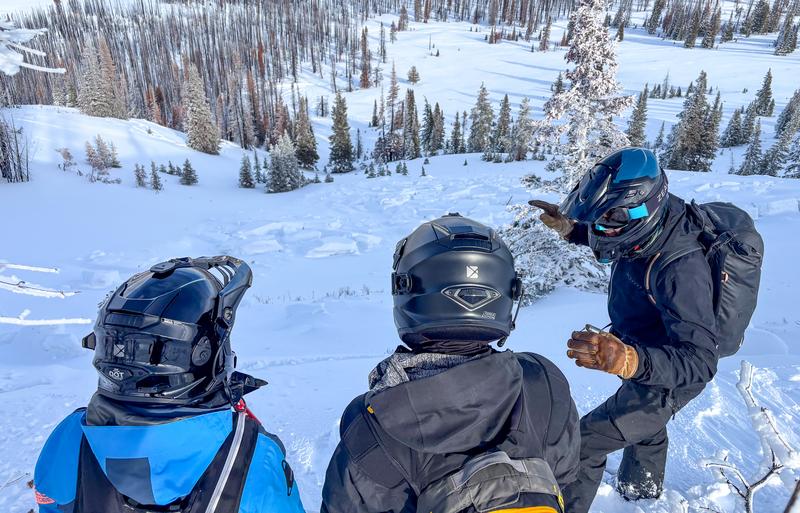
Travel Conditions - What a change across the range! Below 8,000', most terrain is dry. Above that, overall snow depths range from about 1-4', with deeper totals as you head towards the North Slope. Riding conditions have significantly improved, and although thin, the pack is supportable in many places, and travel off-trail has become possible. Turning conditions continue to be best in protected terrain at upper elevations on slopes that are out of the wind zone and have a grassy past. Vehicle access to Mirror Lake Highway (HW150) and the Corridor has been shut down, while SR-35 (Wolf Creek Pass) remains open.

Upper elevation meadows are the ticket right now. Yesterday, our math was simple... Mellow slope angles + grassy terrain underneath = All four A-arms making it back to the rigs in one piece.

In the windzone, the pack is shallow and weak. Steep, thin, and rocky... three characteristics I am always looking to avoid when traveling above treeline.

Recent Avalanches

Huge thanks to Ted, who was on the North Slope yesterday and noted natural activity from this weekend's avalanche cycle. You can check out more on this slide and from Ted's awesome write-up, here.

A northeast slope at 10,500' in the Gold Hill area, where a persistent slab avalanche failed naturally 1-2' deep, breaking and wrapping around terrain features a couple of hundred feet along the ridge (via Ted Scroggin).

Avalanche Problem #1
Persistent Weak Layer
Type
Location
Likelihood
Size
Description

Above, is a northeast facing slope around 10,500'. This is an excellent photo displaying the nature of persistent slab avalanches -- If you trigger or see one on a north facing slope at 10,500', there is a good chance you will trigger or see another one on a north facing slope at 10,500' (via Ted S.).

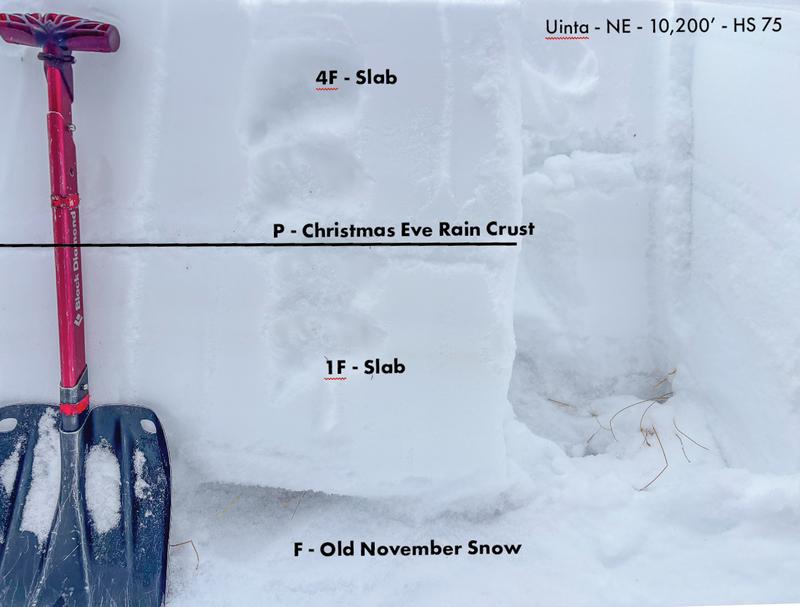
It is a tricky game right now as rotten November snow turned persistent weak layer sits beneath a strong, cohesive slab that has developed from storms and strong winds. Recent avalanches failing 1-3 feet deep are specific to mid and upper elevation terrain on the north half of the compass. Here's the challenge.... In protected, mid-elevation terrain, the slab is soft, nearing 4F hand hardness, and we are seeing fewer red flags. But at upper elevations in the wind zone, the slab is denser and closer to 1F hand hardness, and you will notice a significant increase in the amount of shooting cracks and audible collapses you observe. With that in mind, we can't let our guard down, and avalanches are still occurring in protected terrain where the slab is not as evident.

Remember, we can trigger persistent slab avalanches remotely or from a distance. Once initiated, today's persistent slab avalanches may break wider than you think, taking you for a ride and stringing you through rocks, trees, stumps, and anything else that is in your way on the slide down.

Red flags kept us on our toes on the north half of the compass and are not to be ignored. We observed tons of audible collapses and cracks that were shooting out hundreds of feet up and down slopes as we rode throughout our day.

Avalanche Problem #2
Wind Drifted Snow
Type
Location
Likelihood
Size
Description

A steep, thin, and rocky ridge on a north facing slope around 10,300' that has a dense wind-drift in the starting zone.

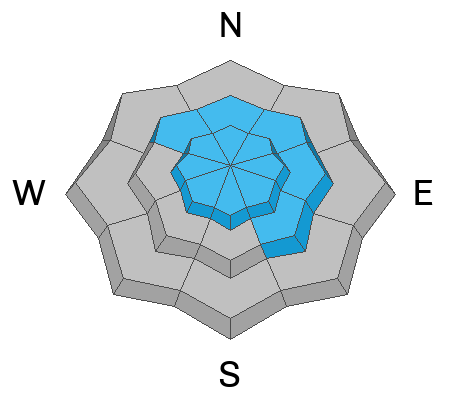
Moderate to strong winds over the past 48 hours, gusting into the 40's and 50's, continue to add to the depth of our wind slab problem that is currently failing 6-24" deep on a variety of snow surfaces. On mid and upper elevation slopes facing northwest through southeast, look for and avoid dense, textured, rounded pillows of snow, especially if they sound hollow like a drum. I'd also steer clear of cross-loaded terrain features like chutes, gully walls, and cut banks that may look wind-loaded.

Remember, stiff, hard slabs can feel supportable and solid under our rig and allow us to get far out onto the slope before they are triggered. Loose some elevation and seek out wind-sheltered terrain where you'll find supportable snow and better riding conditions with less avalanche hazard.

Additional Information

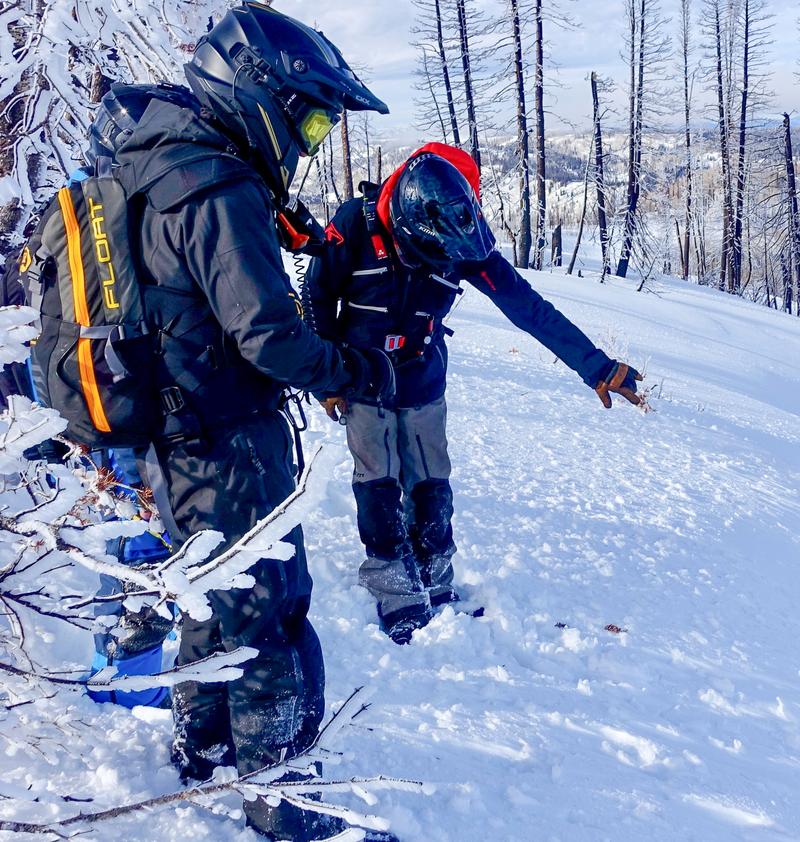
This fleet can't be beat! Huge thanks to Ski-Doo in partnership with Karl Malone's Plaza Cycle, for arranging our sled, loaner program. This vital state-wide partnership gets sleds into the hands of UAC forecasters, allowing us to see more terrain, gather more snowpack information, and issue more accurate avalanche forecasts. Ultimately, this program helps us save lives!

General Announcements

We have some upcoming classes and events that we would be stoked to see you at -- Please reach out with any questions and check out below for more details!

We are always looking for snow and avalanche observations or just general riding conditions. Reach out to us with questions, concerns, or if you see anything in your travels! Contact us directly through the info below:

This forecast is from the U.S.D.A. Forest Service, which is solely responsible for its content. This forecast describes general avalanche conditions, and local variations always occur. This forecast was issued on Monday, December 22nd at 0500 AM and expires 24 hours after it was issued. We'll update this information by 07:00 AM tomorrow.