Forecast for the Salt Lake Area Mountains

Trent Meisenheimer
Issued by Trent Meisenheimer on
Sunday morning, April 12, 2026

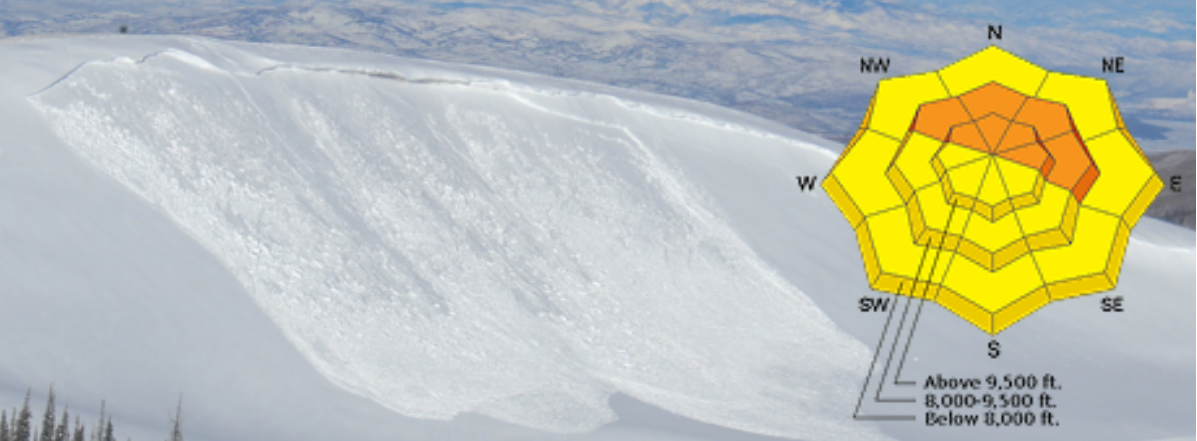
The avalanche danger is generally LOW, but don’t let that fool you. This falls into the “Normal Caution” category, where no single avalanche problem stands out, but small avalanches remain possible.

With colder temperatures, the snow surface has refrozen, creating slick, slide-for-life conditions. A fall in steep terrain could result in a long, uncontrollable slide. Consider carrying and using whippets, crampons, or other traction tools to help manage exposure.

Low
Moderate
Considerable
High
Extreme
Learn how to read the forecast here
Special Announcements

Human Factor Research: Researchers Ian McCammon and Sara Boilen are developing new tools for managing human factors for backcountry skiers and boarders. This survey asks about personal experiences with human factors and will take 7-8 minutes to complete. Link is HERE.

Weather and Snow

Yesterday’s storm delivered a trace to a couple of inches of new snow—mostly graupel—to the mountains. It also ushered in strong southerly winds and a shot of colder air, with almost all weather stations dipping below 32 °F overnight.

This morning, mountain temperatures range from 26 to 35 °F. Anemometers continue to hum along the ridgelines as southerly winds remain active, blowing 15–25 mph with gusts into the 30s and 40s.

Today, another cut-off low spins to our west, sending increasing clouds and moisture into the region. Southerly winds will ramp up through the day, blowing 20–30 mph with gusts into the 50s and 60s along the ridgelines, while mountain temperatures climb into the mid-40s °F. We may see a few scattered snow showers during the day, but the main event arrives overnight into Monday, when a more organized push of moisture could bring 3–6 inches of new snow above about 8,000 feet.

Recent Avalanches

No new avalanches were reported in the backcountry. A couple of folks did get out and about and submitted an observation HERE.

Avalanche Problem #1
Normal Caution
Type
Location
Likelihood
Size
Description

This is not a specific avalanche problem. It’s what we use when conditions are generally manageable, and no single problem stands out. Any avalanche type is still possible, but the most common would be:

  • Wind slab
  • Loose wet
  • Loose dry

These are expected to be small, but even a small slide can have consequences depending on where you are. Don’t treat a Normal Caution as “anything goes.” It’s the mountains—there’s always inherent risk. Keep your guard up, look for signs of instability, and continue to evaluate the snow and weather as you travel.

Additional Information

We have published February 2026: Four Avalanche Fatalities in Five Days: a community review with most of the UAC Salt Lake office. This 38-minute video is worth sitting down and digesting. A huge thanks to UAC Education Manager & Forecaster McKinley Talty for his hard work putting this together behind the scenes.

General Announcements

This information does not apply to developed ski areas or highways where avalanche control is normally done. This forecast is from the U.S.D.A. Forest Service, which is solely responsible for its content. This forecast describes general avalanche conditions and local variations always occur.