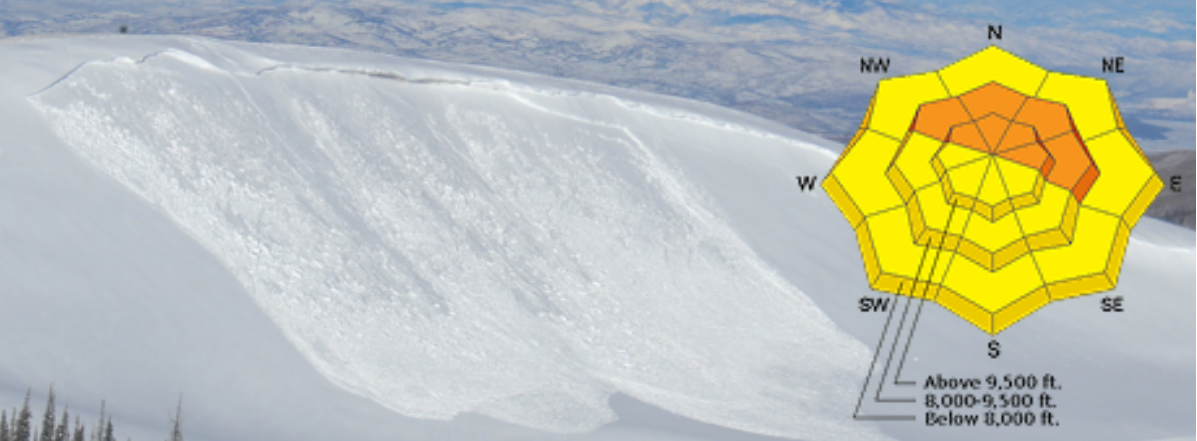
While temperatures will begin to cool later today, daytime highs still reach into the 50s, and meltwater will continue to move through the snowpack, maintaining conditions for wet slab avalanches to fail. Even after colder temperatures arrive, it will take some time for meltwater to stop and the snowpack to stabilize.
Wet Loose - This will be the most common concern and the easiest to trigger. As the snow surface becomes soft and slushy, you can trigger wet loose avalanches that start in the surface snow and gouge down into the saturated snowpack. These avalanches start small and can quickly gain volume and speed as they entrain snow.
Wet Slabs - As meltwater moves deeper into the snowpack, it can pool on buried crusts or weak layers, weakening the structure and allowing avalanches to break deeper and wider. These are larger and more destructive avalanches and may occur naturally, possibly failing down around crusts that formed over the holidays in late December.
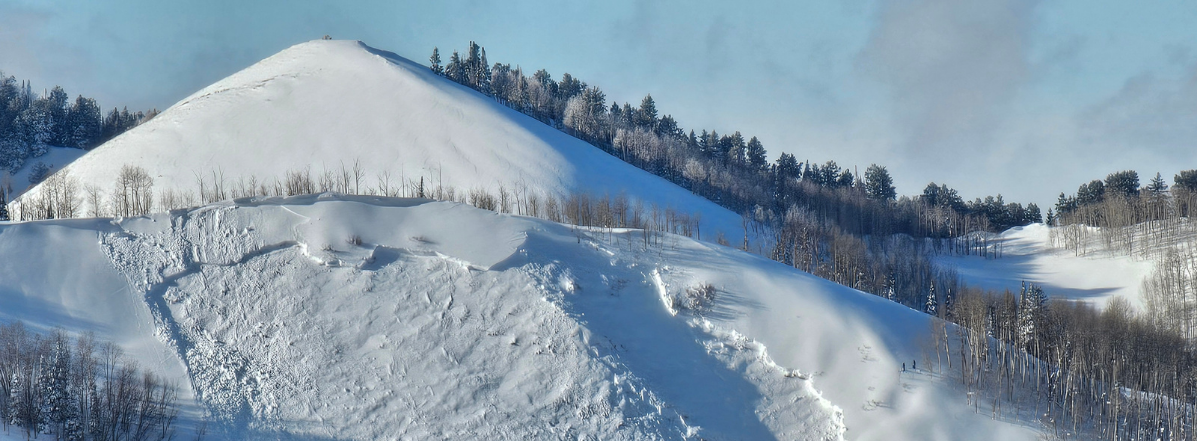
Glide Avalanches - These avalanches occur when the entire snowpack slowly slides on the ground, typically over smooth rock slabs or grassy slopes. They are nearly impossible to predict and are almost always natural, such as the avalanche on High Ivory over the weekend. Avoid traveling on or beneath slopes with visible glide cracks or known glide activity, such as Broads Fork, Stairs Gulch, and Mill B South.

Glide Avalanche on High Ivory (Photo: Hamlin)