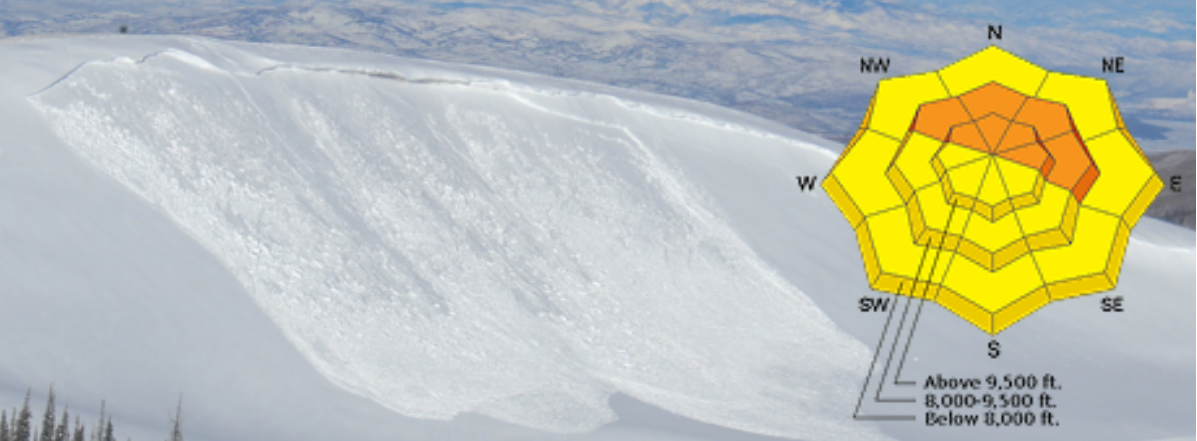
You may still be able to trigger a large avalanche to the ground in steep, rocky terrain in the highest elevations on the north side of the compass.
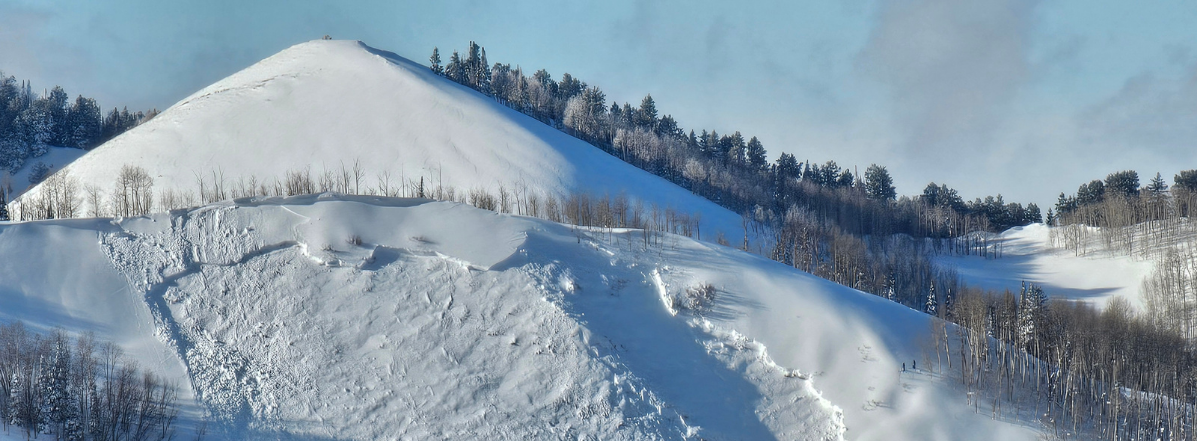
I wish I could sweep the Stairs Gulch avalanche from last weekend under the rug, but I can't. Our team and other avalanche pros have been scratching our heads about it and the best we can come up with is the following: °°° We suspect that the starting zone was particularly thin, rocky and weak owing to being eroded and stripped from stronger northwest wind in Nov/Dec....then we received 5" of snow-water-equivalent since Jan 4th, and 7" of snow-water-equivalent since Jan 1st (in upper LCC)...and then some moderate to strong winds out of the northeast loaded the starting zone prior to release. Makes sense, huh? But it makes my head hurt thinking about it.
And so, we linger at MODERATE (isolated pockets of MODERATE). It would be a different thing if we were talking about garden variety wind slabs; but we're talking about the caliber of avalanche that will break you.
What it means is that you should exercise caution in (or avoid altogether) similar terrain; ie - the Coalpit Headwall, Airplane Peak. Lone Peak, areas of Box Elder and Timpanogos. To name a few. You should also know that there will be no signs of instability such as cracking and collapsing. It's only knowing that poor structure and areas of unstable snow exist in isolated terrain, waiting.
A list of hard slab avalanches failing on facets or depth hoar since late December, below. You can find all sorts of things in our Explorer.

Trend: Decreasing Danger