Forecast for the Provo Area Mountains

Nikki Champion
Issued by Nikki Champion on
Friday morning, January 2, 2026

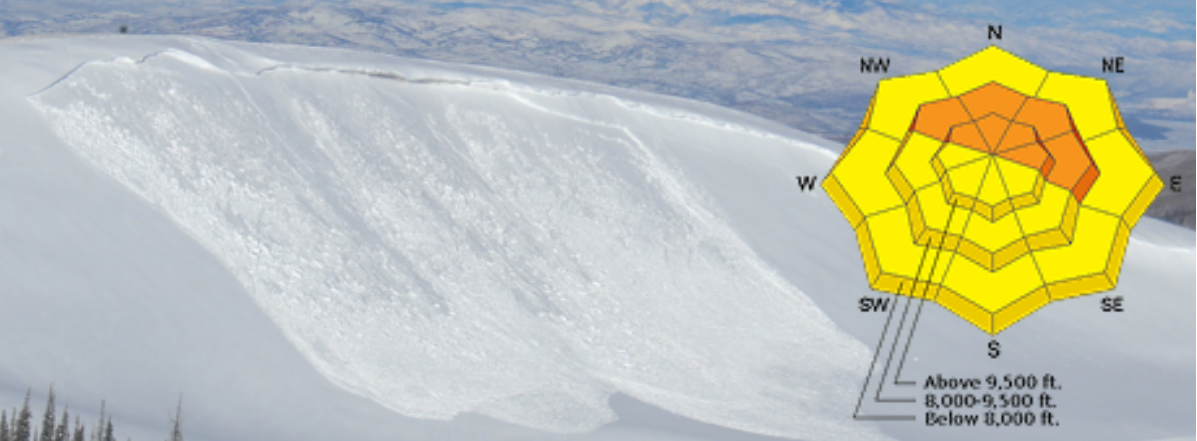
With heavy new snow and moderate winds, avalanche danger is CONSIDERABLE on W-N-E facing slopes above 9,500 feet. Hard slab avalanches could break 1–3+ feet deep and up to 100 feet wide on persistent weak layers, especially on steep, rocky, wind-loaded terrain. Remaining upper elevation and mid-elevation W-N-E slopes are MODERATE.

Watch for blowing and drifting snow. Avalanches triggered in wind-drifted snow could step down to deeper weak layers. Evaluate snow and terrain carefully, make conservative choices, and avoid slopes steeper than 30 degrees with poor snow structure.

A slick rain crust is creating hazardous slide-for-life conditions. Exercise extra caution on steep, exposed terrain where self-arrest would be difficult.

Low
Moderate
Considerable
High
Extreme
Learn how to read the forecast here
Special Announcements

Happy New Year from all of us at the UAC. Thanks for another year of continued support.

Weather and Snow

This morning, it continues to snow at the upper most elevation of the Provo area mountains, and rain at lower and mid-elevations. Mid Mtn at Sundance has had 4.27" water in the 25 hours since 6AM yesterday. That's a ton of water with only about 4" of snow at Bunnels at 8,800'. Skies remain obscured, and mountain temperatures are sitting in the upper 20s to the low 30s °F. Winds are blowing from the west at 10 to 20 mph, with gusts in the 30s along the highest peaks. Overnight gusts on the upper ridgelines reached close to 50 mph.

Today, the storm is expected to taper through the late morning into the early afternoon. Additional snowfall accumulation will be on the lighter side as conditions begin to dry out, with an expected 1 to 1.5 more inches of snow containing 0.1 to 0.2 inches of water. Winds will remain out of the west to northwest at 5 to 10 mph, with gusts in the 20s to 30s along upper elevation ridgelines.

Looking ahead, the weather stays active through the weekend and into early next week. While we may see some snowfall ahead of the next system, the bulk of the moisture arrives Sunday into Monday as an upper-level jet with Pacific Northwest-style moisture moves overhead. Some good news - the next storm looks cooler than the current one, with freezing levels expected closer to 6500 to 7000 feet. Current projections show 0.5 to 1.30 inches of water with 6 to 14 inches of snow.

Recent Avalanches

Yesterday, there were no new avalanche reports from the backcountry. Provo has been generally quiet the last few days.

In the Central Cottonwoods, Ski patrol teams reported a wet snow surface at the lower elevations of their mountains, allowing for easy push avalanches, or snow pushing on the supportable crust, along with one report of an explosive-triggered soft slab. Observations also noted sensitive wind-drifted snow at upper elevation ridgelines.

Find all the Provo observations HERE.

Avalanche Problem #1
Persistent Weak Layer
Type
Location
Likelihood
Size
Description

The Christmas Eve rain crust is creating a tricky, low probability but high consequence scenario, and crust thickness remains the most critical variable.

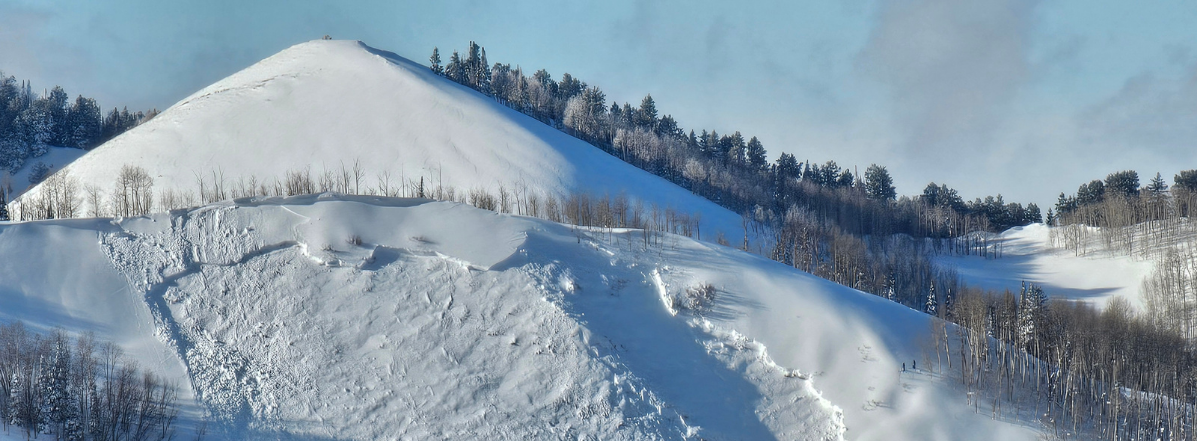
Our biggest concern is on slopes above 9500 feet, where less rain fell and the crust is thinner and less supportable. While we don’t have an exact pattern for where those thin crust areas exist, recent avalanche activity offers clues. It’s a good idea to build in a margin and avoid terrain similar to the recent avalanches: steep, rocky, and wind-exposed slopes. On most mid-elevation terrain, the crust is several inches thick, making triggering unlikely, but not impossible.

As we move into a more active pattern and add new load from snow, water, and wind, the likelihood of triggering this layer could increase again. Use this time to step back, watch how the interface responds, and re-evaluate terrain choices.

Avalanche Problem #2
Wind Drifted Snow
Type
Location
Likelihood
Size
Description

The moderate westerly winds will continue to build shallow, soft slabs up to 2 feet thick near exposed ridges. These smooth, rounded pillows of wind drifted snow are forming on a variety of old snow surfaces. While initial wind-drifted avalanches will likely be shallow, there’s potential for them to step down into the deeper, more dangerous hard slab problem, 1 to 3 feet deep, on upper elevation W-N-E facing slopes.

Outside of the wind zone, sensitive new snow instabilities may exist on all aspects. Even a small loose or soft slab avalanche could run long and far on the supportable crust, especially in steep terrain where the snow surface is smooth and continuous.

General Announcements

This information does not apply to developed ski areas or highways where avalanche control is normally done. This forecast is from the U.S.D.A. Forest Service, which is solely responsible for its content. This forecast describes general avalanche conditions and local variations always occur.