Check Out Our Holiday Auction!

Forecast for the Provo Area Mountains

Nikki Champion
Issued by Nikki Champion on
Tuesday morning, December 2, 2025

Welcome to Winter 2025-2026. Today, we begin issuing daily danger ratings.

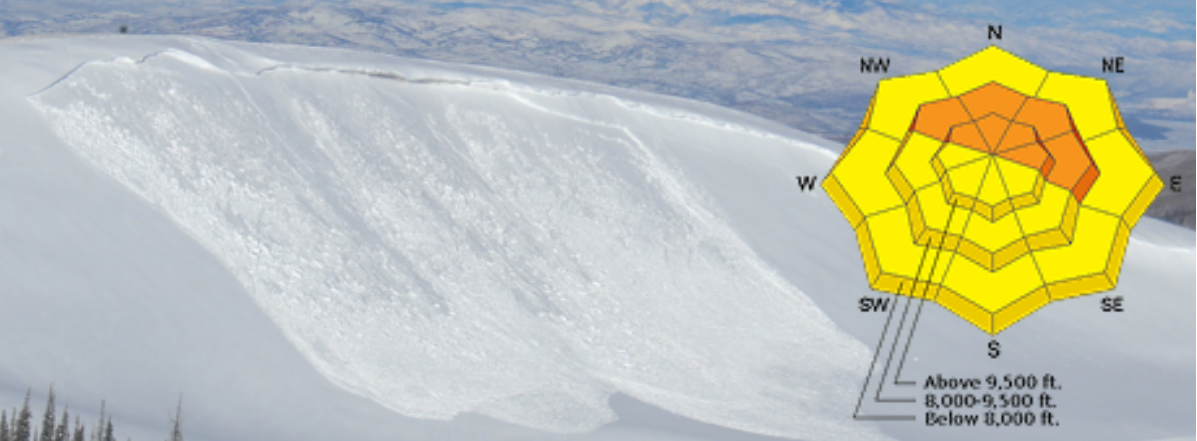
If you’re heading out, stay alert on mid- and upper-elevation slopes facing northwest through north and east, and on mid-elevation terrain above 8,500 feet, especially ridgetops and features that have seen additional wind. These areas have a MODERATE danger for small avalanches on slopes holding old, weak faceted snow. The snowpack is thin, faceted, and just starting to wake up for the season.

The catch is that north-facing slopes hold the most snow and will look the best to ride, but they’re also the most suspect. Southerly-facing slopes were mostly bare before this storm.

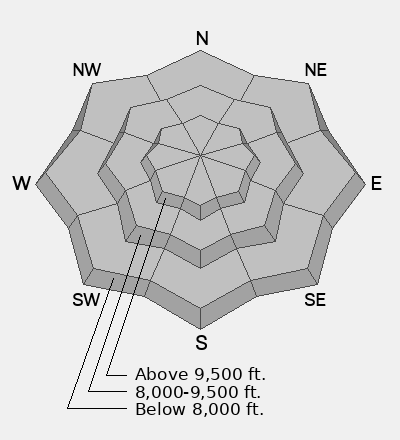
Beyond the weak snowpack, the main risk comes from shallow terrain with rocks, stumps, or any fall that could be serious. Coverage is low to non-existent on aspects shown in grey on the danger rose, so keep that in mind and use safe travel practices.

Low
Moderate
Considerable
High
Extreme
Learn how to read the forecast here
Special Announcements

Avalanche Awareness Week starts December 1! Events are happening daily across the state to prepare you for winter and get you thinking about avalanche safety.

Find out about all our events HERE. And don't forget the Utah Snow and Avalanche Workshop is Saturday, December 6, with in-person and virtual options!

Weather and Snow

This morning, under broken skies, mountain temperatures range from the low to mid 20s F. Winds have stayed out of the northwest for more than two days and picked up overnight, blowing 15 to 25 mph with gusts up to 30 mph at the ridgetops and up to 50 mph along the highest ridgelines.

Today, we can expect spotty light snowfall starting around midday, with the bulk of the cold front pushing through this evening. Snow totals have come down and are now between 0-3 inches with up to 0.30 inches of water. Temperatures climb into the mid-30s F. Winds stay elevated out of the west and northwest, blowing 5 to 10 mph with gusts up to 15 mph on mid-elevation ridges and up to 45 mph on the highest ridgetops.

By late Thursday night into Friday, a warmer and wetter pattern starts moving in. Snow levels stay low at first, then rise above about 5000 feet during the day on Friday. Above that, the northern mountains look lined up for steady snowfall through Friday and into Saturday, while the valleys trend more toward rain.

Recent Avalanches

No new avalanches reported from the Provo area mountains.

Be sure to check out all observations HERE.

Avalanche Problem #1
Persistent Weak Layer
Type
Location
Likelihood
Size
Description

After a few small storms of incremental loading this October and November, upper-elevation north-facing slopes now hold an interface of weak facets and crusts, forming the base of the snowpack. While most pronounced at higher elevations, this weak layer also extends down to around 8500 feet into the mid-elevation band.

Currently, this issue is not widespread. The main concern today is in areas that held old snow and received some wind. Overnight, westerly winds ramped up to nearly 60 mph. With strong winds, small wind drifts can form on upper-elevation slopes and mid-elevation terrain features prone to drifting.

The catch is that these are exactly the slopes that will look the best to ride, and sadly, they’ll be the most suspect. The other side of it is that southerly-facing slopes, which don’t hold the weak faceted snow, were mostly bare before this storm and aren’t really worth riding right now either.

As additional snow or wind adds load to this weak faceted snowpack, avalanche danger will increase, so continue to pay attention to which slopes held snow prior to the incoming storms.

Below, the dark grey line in the snowpack represents the weak faceted snow that makes up the base in the Provo area mountains. Big Springs- Big Bowl 7- North aspect - 9300'

General Announcements

This information does not apply to developed ski areas or highways where avalanche control is normally done. This forecast is from the U.S.D.A. Forest Service, which is solely responsible for its content. This forecast describes general avalanche conditions and local variations always occur.