Donate Now to Our Year End Campaign!

Forecast for the Provo Area Mountains

Trent Meisenheimer
Issued by Trent Meisenheimer on
Sunday morning, December 21, 2025

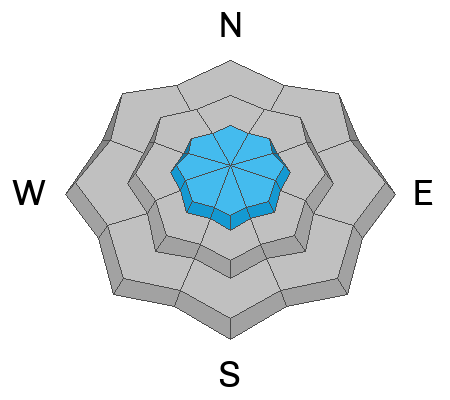
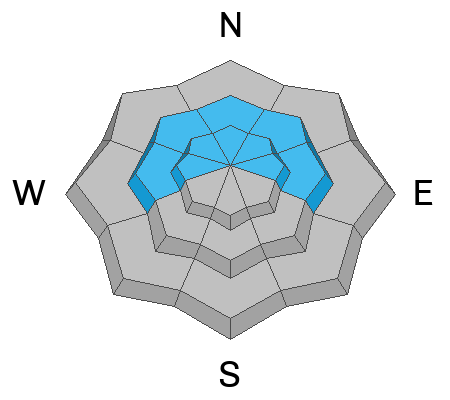
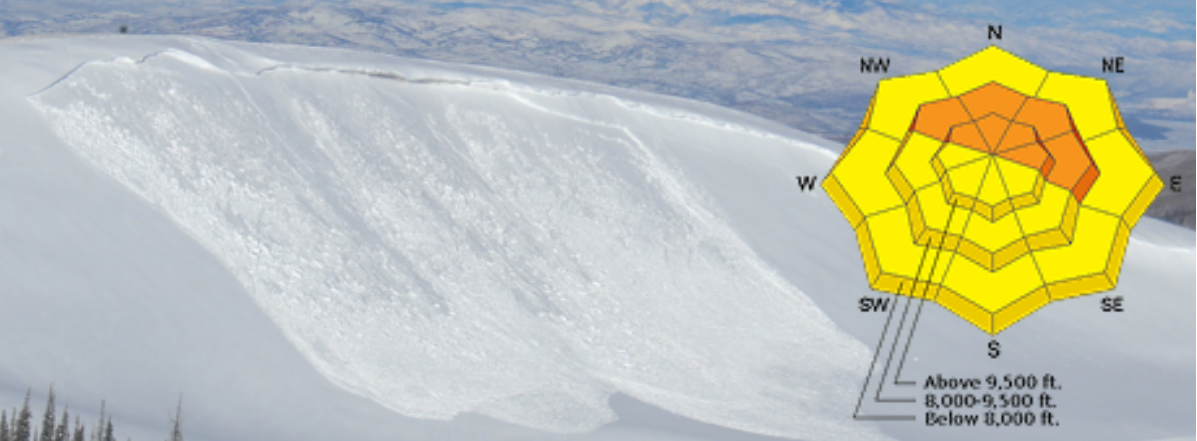
Today, a MODERATE avalanche danger exists on steep slopes facing west through north through east at upper elevations for triggering a slab avalanche 1–2 feet deep that fails on a buried persistent weak layer. There is also a MODERATE danger for wind-drifted snow across all upper elevations, where it will be possible to trigger fresh drifts of wind-blown snow.

Evaluate snow and terrain carefully, identify features of concern, and remember that human-triggered avalanches are possible.

Low
Moderate
Considerable
High
Extreme
Learn how to read the forecast here
Weather and Snow

Overnight, southwest wind increased around 10:00 PM and continues this morning. Ridgetop winds are blowing 10–25 mph with gusts into the 30s. Wind in the free air around 11,000 feet is much stronger, with sustained speeds of 50–60 mph and gusts reaching the 70s. Current mountain temperatures range from 49 °F at Aspen Grove(6,900') to 26 °F at the top of Cascade Peak (10,800').

For today, we can expect mostly cloudy skies with some light snowfall and strong winds from the southwest as a closed low builds to our west. Unfortunately, most of the moisture will stay north of us. Mountain temperatures will climb today into the upper 30s to low 40s °F, and the rain/snow line is expected to rise above 9,000 feet.

The next storm is expected on the 24th. It's a massive closed low (cyclone) that spins counterclockwise off the west coast of California. Weather models are excited, showing statewide precipitation. That said, I am not holding my breath. We will see.

Recent Avalanches

There were no reported avalanches yesterday. Cracking, collapsing, and propagating extended column tests continue to be reported. Find all recent observations HERE.

Avalanche Problem #1
Wind Drifted Snow
Type
Location
Likelihood
Size
Description

Strong southwest wind increased last night and is still blowing this morning. Strong winds over the past few days have been efficient at moving any available snow and building fresh drifts along ridgelines and in exposed terrain. You’ll find the most suspect soft slabs of wind-drifted snow on leeward north through east-facing slopes, especially in the upper elevations, but watch for cross-loaded features on a variety of aspects—gullies, sub-ridges, rock bands, and on mid-slope breakovers.

On slopes facing west through north through east at the mid and upper elevations, any wind slab you trigger will likely fail on a buried persistent weak layer of faceted snow (see PWL below)

Avalanche Problem #2
Persistent Weak Layer
Type
Location
Likelihood
Size
Description

We now have two very distinct layers of faceted snow in the snowpack. The first is old October/November snow near the ground. The second is a newer layer of facets found 2–6 inches below the snow surface, sitting beneath a crust (see video).

Since last Wednesday (the 17th), we’ve picked up roughly 2–6 inches of new snow containing 0.30–1.43 inches of snow water equivalent. Snowpit tests continue to show full propagation, and backcountry riders are experiencing loud, audible collapsing. Yesterday, Brooke and I traveled with a conservative mindset, and I’d strongly encourage the same approach today, as the snowpack is ripe for triggering slab avalanches 1–2 feet deep and large enough to bury a person.

Avalanche Problem #3
Wet Snow
Type
Location
Likelihood
Size
Description

Yesterday, we found wet snow to be generally unreactive and eventually transitioning to cold, dry snow around 8,500 feet, with no concerns for wet-snow avalanches. Today, however, even warmer temperatures are expected, with the rain–snow line rising to around 9,000 feet. Anytime rain falls on dry, cold snow, expect rapid formation of roller balls followed by wet-loose sluffs. Stay on guard if a rain-on-snow event develops.

General Announcements

This information does not apply to developed ski areas or highways where avalanche control is normally done. This forecast is from the U.S.D.A. Forest Service, which is solely responsible for its content. This forecast describes general avalanche conditions and local variations always occur.