Forecast for the Ogden Area Mountains

Greg Gagne
Issued by Greg Gagne on
Monday morning, January 5, 2026

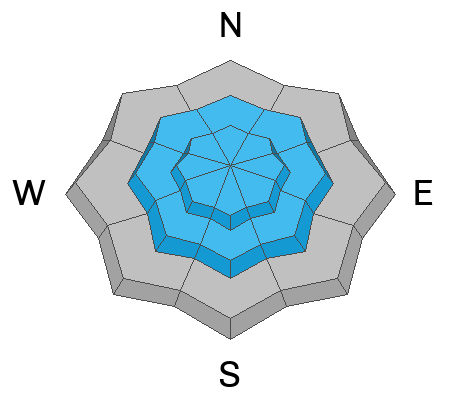
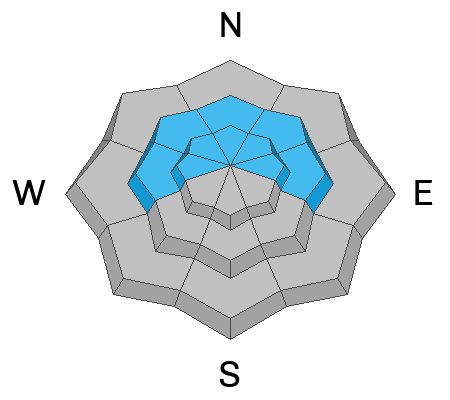
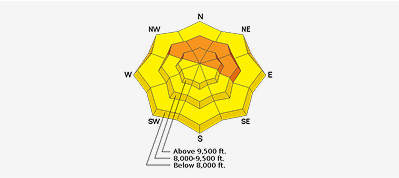
The avalanche danger is CONSIDERABLE at the upper elevations and on northerly-facing slopes at the mid elevations where human-triggered avalanches are likely. Avalanches may fail one to two feet deep within the storm slab of new and wind-drifted snow, but also may step down to deeper weak layers buried over three feet deep on northerly-facing slopes at the upper elevations.

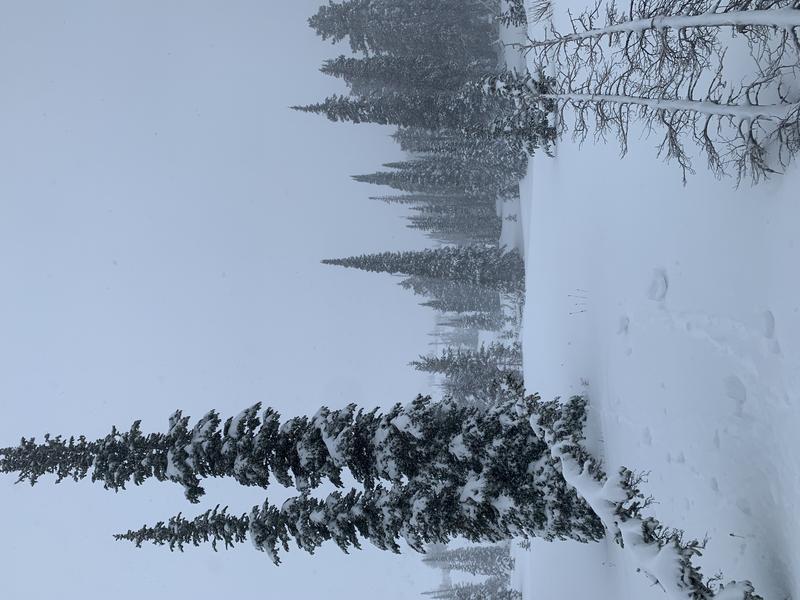
Fortunately, this dense snow is supportable and provides excellent travel and riding conditions on lower-angled (less than 30° in steepness) slopes.

Remember: If you are ducking ropes or stepping out of bounds at a ski area, you are stepping into potentially dangerous avalanche conditions. It’s worth noting that Utah leads the nation in avalanche fatalities where riders have exited the ski area boundaries and never made it home.

Low
Moderate
Considerable
High
Extreme
Learn how to read the forecast here
Weather and Snow

As of 5 am, 24-hour totals (in inches) are roughly 12" snow containing 2" water.

Winds are from the west/southwest and sustained, averaging in the teens and 20's mph (perfect wind speeds for creating fresh wind drifts) with overnight gusts of 30-45 mph along exposed mid and upper-elevation ridgelines Temperatures range through the 20's °F.

For today, expect periods of heavy snowfall this morning and moderate to strong winds, with another 2-4 inches of snow expected. Snowfall rates will be the highest this morning, before tapering to snow showers this afternoon. Temperatures will rise into the upper 20's °F.

After a short break, another storm is expected later Wednesday. This will be a more traditional storm featuring colder temperatures and lower-density snowfall.

Recent Avalanches

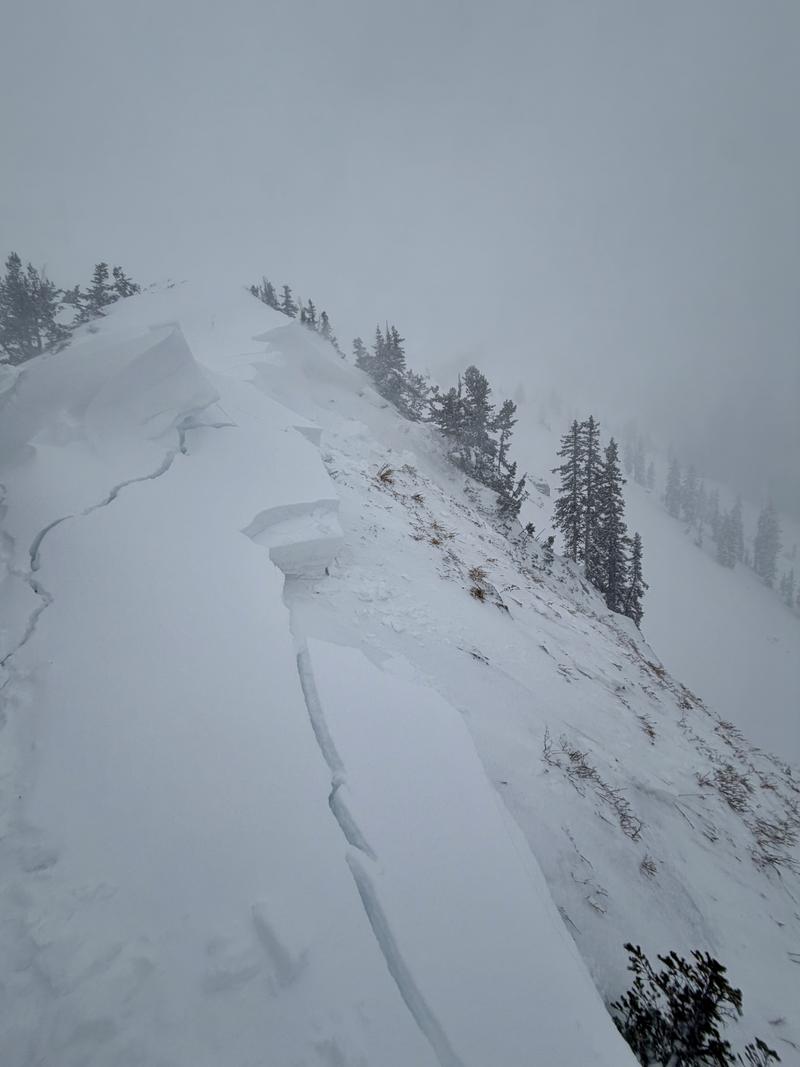
We received an excellent observation from Logan Jamison who braved the poor low-elevation conditions to be rewarded by decent travel and riding conditions above 8,000 feet on Cutler Ridge.

Logan Jamison from Cutler Ridge on Sunday

To our south on Sunday in the Salt Lake mountains, a party on the ridgeline above Two Dogs in Days Fork unintentionally released a cornice onto the slope below which triggered an avalanche that initially failed above the Christmas rain crust (CERC) layer, but stepped down to facets and depth hoar at the ground. The slide was on a northeast-facing slope at 10,100 feet and was 4.5 feet deep, 250 feet wide, and ran 700 feet, snapping trees along the way.

Read all backcountry observations here.

Avalanche Problem #1
New Snow
Type
Location
Likelihood
Size
Description

Heavy snowfall overnight and into today may create a sensitive storm slab one to two feet deep. Natural avalanches can be expected during any period of high snowfall rates. Given this new snow is somewhat dense, the slab of storm snow may allow you to get further onto a slope before avalanching. If snowfall diminishes, the storm snow may become less sensitive by this afternoon.

Avalanches involving fresh storm snow may step down 1-2 feet deep to the Christmas rain crust (CERC layer) or to the more deeply-buried faceted snow down near the ground, with avalanches over three feet deep possible.

Avalanche Problem #2
Wind Drifted Snow
Type
Location
Likelihood
Size
Description

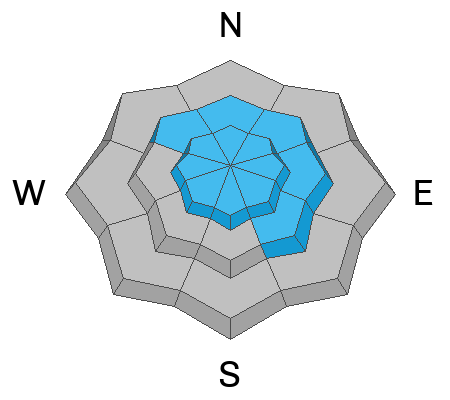
Moderate to strong winds from the west/southwest will continue to drift snow onto leeward north and east aspects, although cross-loading (which will drift snow onto south and west-facing slopes) is also possible. Watch for cracking as an indication of sensitive fresh wind drifts.

Avalanches involving recent slabs of wind-drifted snow may step down 1-2 feet deep to the Christmas rain crust (CERC layer) or to the more deeply-buried faceted snow down near the ground, with avalanches over three feet deep possible.

Avalanche Problem #3
Persistent Weak Layer
Type
Location
Likelihood
Size
Description

(Although these avalanches occurred in the Salt Lake mountains, a similar snowpack exists in the upper elevations of the Ogden mountains.)

Sunday's avalanche in Two Dogs, plus three avalanches in Hidden Canyon this past week all failed in weak snow down near the ground. Sunday's Two Dogs avalanche may be the sign that on many slopes where the persistent weak layer (PWL) exists, the weight of new and wind-driven snow may finally be enough to affect this deeply-buried weak layer, creating large and destructive avalanches.

Two Dogs Avalanche on Sunday in the Salt Lake Mountains.

Additional Information

We're all excited about the fresh new snow and improved riding conditions, especially with the slow start to the season. Everyone (us included) is antsy to get some fresh turns. Longtime local professionals noted some less-than-safe travel practices in the backcountry yesterday. We have a responsibility to one another to cross slopes one at a time, be aware of who’s above and below us, and to pick uptracks with the least exposure. We tell you these things not to wag fingers, but to have you come home to and with all of your friends and family tonight. It’s what we all want for each other.

General Announcements

This information does not apply to developed ski areas or highways where avalanche control is normally done. This forecast is from the U.S.D.A. Forest Service, which is solely responsible for its content. This forecast describes general avalanche conditions and local variations always occur.