UDOT PLANNED AVALANCHE CLOSURES!!

Forecast for the Salt Lake Area Mountains

Brooke Maushund
Issued by Brooke Maushund on
Monday morning, December 22, 2025

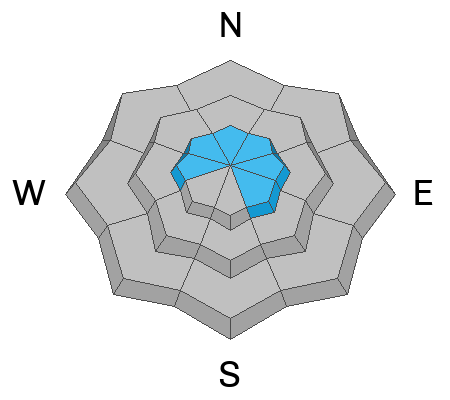
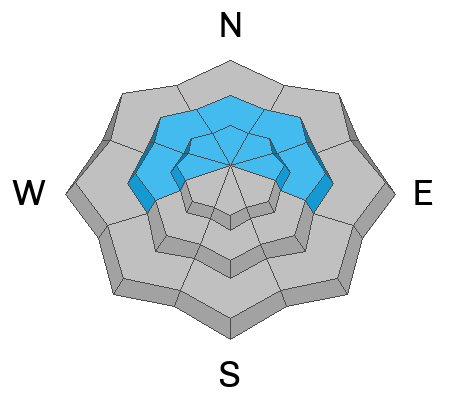
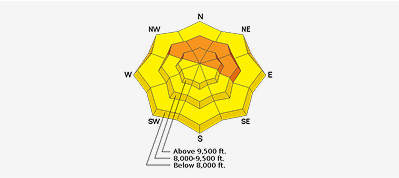
A MODERATE avalanche danger exists on higher W-N-E facing slopes, where you can trigger a shallow slab of wind-drifted snow, or a larger avalanche 1-2 feet deep on a persistent weak layer. These are most likely in upper elevation areas where the wind has drifted snow into denser slabs. You are unlikely to receive any warning signs—like cracking or collapsing—before triggering a slide.

If cloud cover and temperatures pan out as forecast, be aware of how wet the snow surface is becoming under your feet, as there is a potential for wet, loose avalanches.
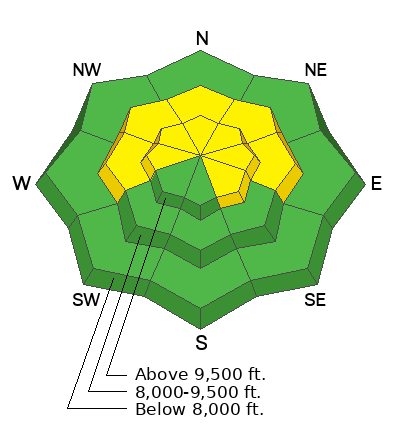
Low
Moderate
Considerable
High
Extreme
Learn how to read the forecast here
Weather and Snow

This morning, mountain temperatures hover around freezing under broken skies. Moderate to strong winds continue to blow from the south as they did overnight, with gusts as high as 70 mph recorded at Baldy.

Today, expect moderate to strong southwest winds to continue into the evening. High cloud cover and temperatures into the high 30s to low 40s F have the potential for some more greenhousing of the snowpack. There's a chance of a trace amount of precip today, but you won't find me in Gore-tex.

Looking ahead, there's a closed low (cyclone) that is heading for us off the Pacific, though it won't be arriving until closer to Christmas. Models have trended towards downgrading the precipitation and increasing the temperatures as the system makes its way towards us, but 'tis the season for a miracle. Jim Steenburgh offers better speculation than I ever could in his "What are the Prospects for a Christmas Miracle?" blog post.

Recent Avalanches

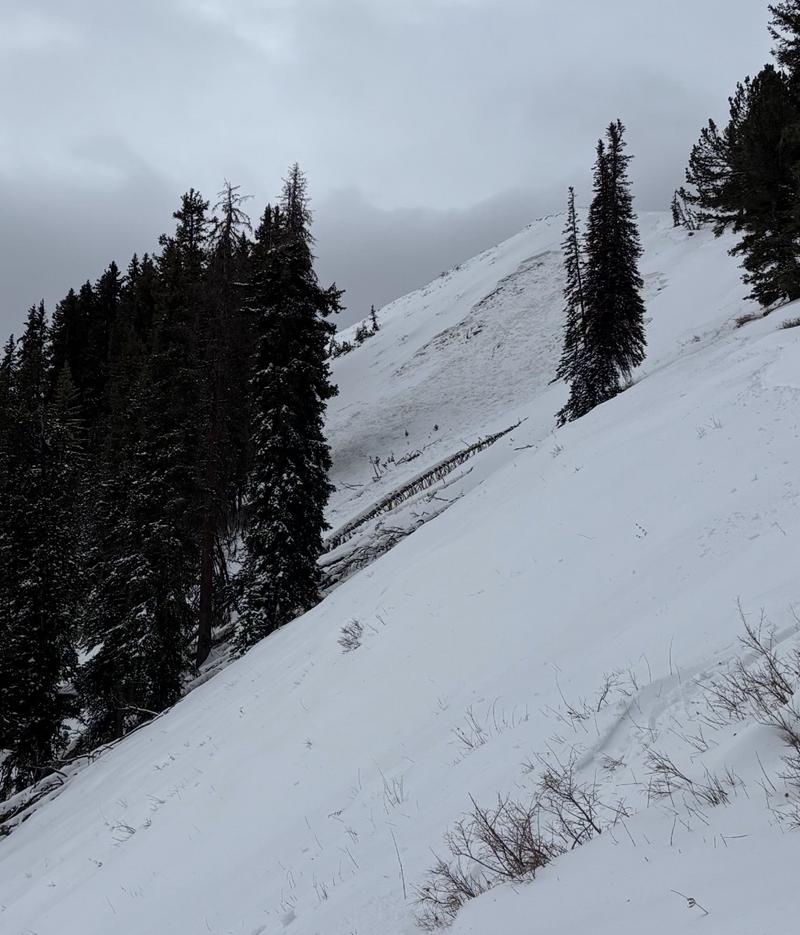
Two snowboarders remotely triggered an avalanche on a NE aspect near 9400 feet on Murdock Peak in a wind-loaded area along the Park City Ridgeline yesterday. The slab avalanche ran on weak snow near the ground, was roughly 12 inches deep, 50 feet wide, and ran over cliffs and into trees. This is bullseye info of where you’re most likely to run into problems: higher, northerly slopes where the wind has put a denser slab of snow on top of weak, old snow. You can see their full observation HERE.

Propagating test results, concerning structure, damp snow, and wind transport were all noted yesterday. Read all recent observations HERE.

Avalanche Problem #1
Wind Drifted Snow
Type
Location
Likelihood
Size
Description

Moderate to strong southwest winds have been blowing for several days. Observers noted wind transport along high ridgelines in the Central Wasatch yesterday, even with warmer temperatures and rain in some areas.

These winds have been effective at building drifts of snow adjacent to ridgelines, as well as on wind-exposed mid-slope features such as gullies, rolls, and rock bands. Be on the lookout for a change in density of the snow you're traveling through: if the surface snow is suddenly deeper or stiffer, you've likely found a wind-loaded area. This will be most common on upper W-N-SE aspects, but wind-exposed mid-elevation terrain isn't out of the question.

Wind-drifted snow avalanches will be effective triggers for releasing a deeper, larger avalanche on our persistent weak layer (see below).

Avalanche Problem #2
Persistent Weak Layer
Type
Location
Likelihood
Size
Description

Two distinct weak layers of snow exist. The first is old October/November snow near the ground. The second is a layer of facets found 2–6 inches below the snow surface, sitting beneath a crust (see video). In select areas, different, specific layers of weak snow can be identified, but the structure is the same: strong, over weak.

The snowpack has handled the modest load of 2-6 inches of snow (0.3-1.43 inches of H2O) since the 17th, with very few avalanches running. Still, the structure persists. The remote-triggered avalanche on Murdock yesterday reminds us that a quiet snowpack isn't always a stable one. While you'd have to head to specific, high, northerly, wind-loaded terrain find these, it's important to give this problem a decent margin in your travels. Trent and I traveled conservatively Saturday, as Nikki and I did yesterday—keeping in mind that we likely wouldn't get any warning signs before an avalanche 1-2 feet deep could be on the menu.

Jenna Malone and Allison Conover found full propagation yesterday in upper Little Cottonwood Canyon.

General Announcements

This information does not apply to developed ski areas or highways where avalanche control is normally done. This forecast is from the U.S.D.A. Forest Service, which is solely responsible for its content. This forecast describes general avalanche conditions and local variations always occur.