Donate Now to Our Year End Campaign!

Forecast for the Salt Lake Area Mountains

Brooke Maushund
Issued by Brooke Maushund on
Tuesday morning, December 23, 2025

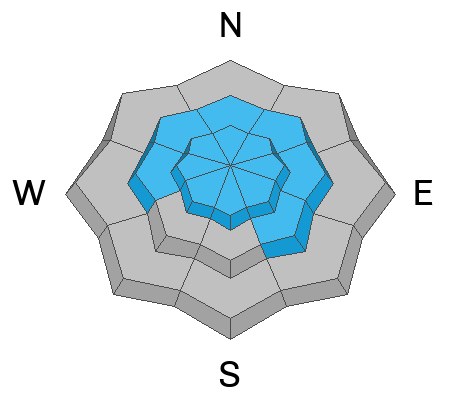
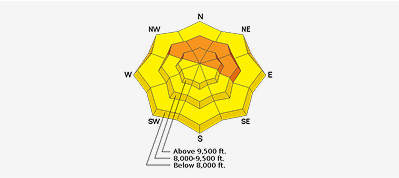
A MODERATE avalanche danger exists on higher W-N-E facing slopes, where it is possible to trigger an avalanche 1-2 feet deep on a persistent weak layer. These are most likely in upper elevation areas where the wind has drifted snow into denser slabs.

After several days without a solid refreeze, wet snow avalanches are possible, especially in steep terrain or near rocks.

Low
Moderate
Considerable
High
Extreme
Learn how to read the forecast here
Weather and Snow

This morning, mountain temperatures hover in the high 30s to low 40s °F under overcast skies here in Big Cottonwood Canyon. Anemometers on the highest ridgelines logged winds in the high 20s to mid 30s mph out of the southwest, with gusts reaching into the 50s mph overnight into this morning.

Today, expect moderate to strong southwest winds. Our same pattern of unseasonably warm temperatures into the 40s °F and overcast skies continues throughout today. No precipitation forecast throughout the day, with spits and spats of rain starting late this evening.

Tomorrow evening into the weekend, an atmospheric river pulse rides in off SW flow from the Pacific—a unique pattern for us this season. Snow levels will start near 10,000 feet until early Thursday, before cooler air slowly makes its way into the Wasatch through Saturday. While the timing's off if you're into Santa, keep your fingers crossed for low snow lines and the higher end of storm totals.

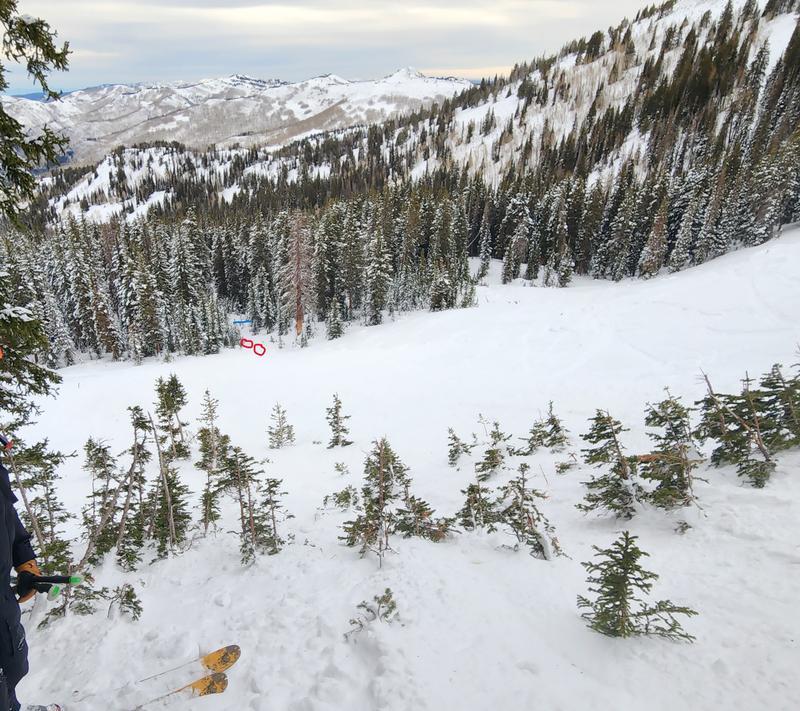
Active weather is exciting, but don't forget about what's already out there—observers noted creamy, supportable turns yesterday, and Trent and I found 8/10 quality graupel pow (after, admittedly, skinning through the rain). Resorts are spinning lifts, there's enough coverage to travel to...a lot..of places, and the dense surface snow is more helpful to keep you afloat over rocks and logs than facets would be. Call me an optimist, but if your perception of the conditions has kept you from getting out yet...maybe try it and see what you find. The hardest part is getting your boots on.

Recent Avalanches

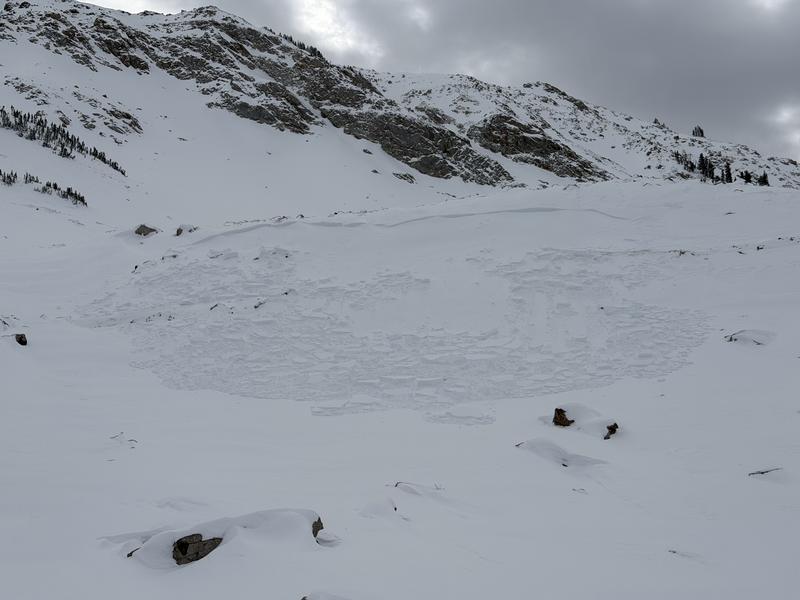
Update: UAC Staff is heading out to Park City today to take a look at the slide that two snowboarders remotely triggered an avalanche on a NE aspect near 9400 feet on Murdock Peak in a wind-loaded area along the Park City Ridgeline on Sunday. The slab avalanche ran on weak snow near the ground, was roughly 12 inches deep, 50 feet wide, and ran over cliffs and into trees. This is bullseye info of where you’re most likely to run into problems: higher, northerly slopes where the wind has put a denser slab of snow on top of weak, old snow. You can see their full observation HERE.

Collapsing near Empire Pass, propagating test results in LCC, damp snow near the base of the snowpack, and poor structure were all noted yesterday. Read all recent observations HERE.

Avalanche Problem #1
Persistent Weak Layer
Type
Location
Likelihood
Size
Description

Two distinct weak layers of snow exist. The first is old October/November snow near the ground. The second is a layer of facets found 2–6 inches below the snow surface, sitting beneath a crust (see video). In different areas, the exact weak layer may differ, but the structure remains the same: strong over weak.

The snowpack has handled the modest load of 0.3-1.43 inches of SWE since the 17th, with very few avalanches running. Still, the structure persists. The remote-triggered avalanche on Murdock in wind-loaded terrain on Saturday reminds us that a quiet snowpack isn't always a stable one. While you'd have to head to specific, high, northerly, wind-loaded terrain to find these, it's important to give this problem a decent margin in your travels, as there's likely to be no warning signs—like cracking and collapsing—before it's possible to trigger a slide 1-2 feet deep. Wind drifts are especially suspect and worth avoiding.

Bo Torrey found full propagation yesterday near Empire Pass.

Avalanche Problem #2
Wet Snow
Type
Location
Likelihood
Size
Description

Mountain temperatures remained above freezing for close to three days. Yesterday, rain was reported up to 9,300 feet in areas of the Central Wasatch, as well as damp snow at the base of the snowpack.

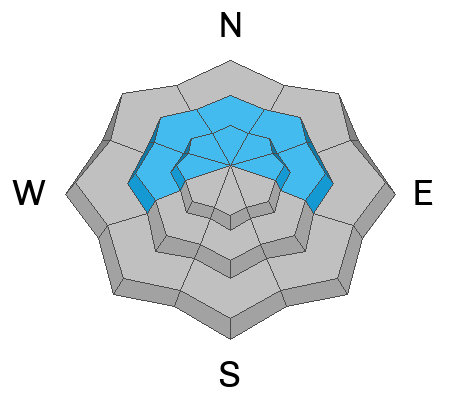
Wet avalanches are possible today on slopes that face the sun, and most likely in steep terrain and near rock bands. Be on the lookout for rollerballs, pinwheels, and how wet the snow surface is becoming throughout the day. If you see any of these or can move consolidated panels of snow with your skis, it’s time to change aspects or head back to the truck.

General Announcements

This information does not apply to developed ski areas or highways where avalanche control is normally done. This forecast is from the U.S.D.A. Forest Service, which is solely responsible for its content. This forecast describes general avalanche conditions and local variations always occur.