Donate Now to Our Year End Campaign!

Forecast for the Ogden Area Mountains

Bo Torrey
Issued by Bo Torrey on
Thursday morning, December 25, 2025

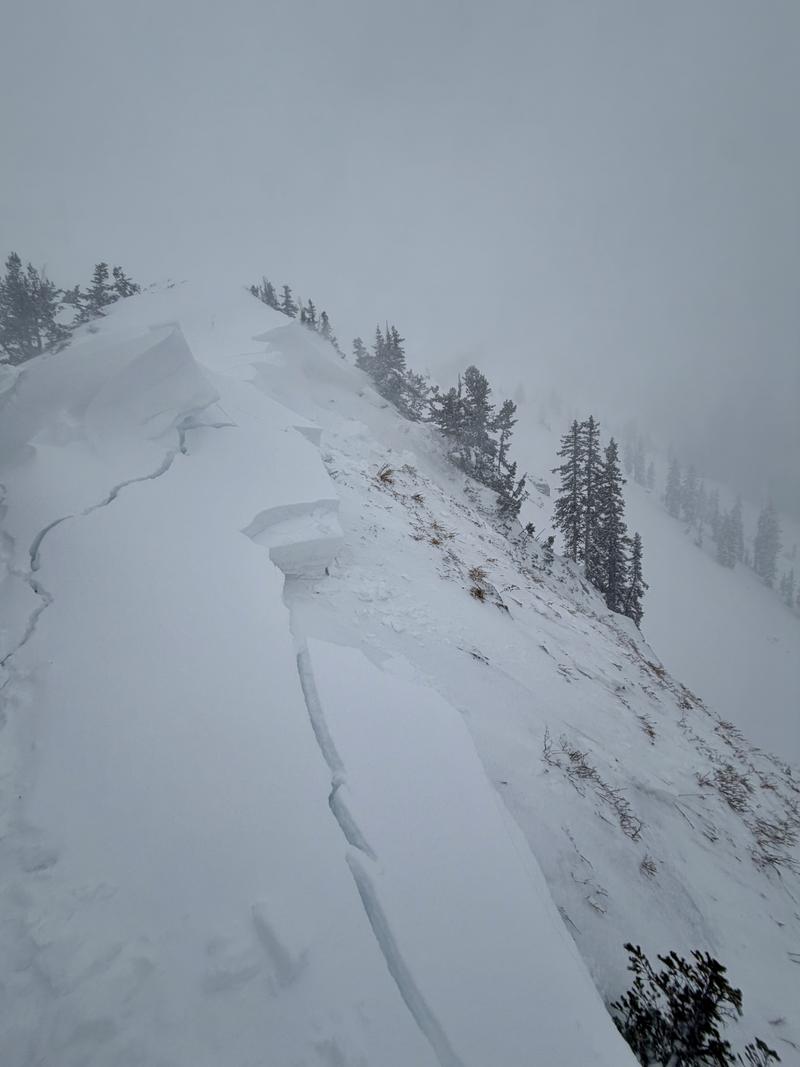
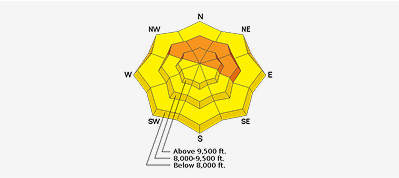
Avalanche danger is MODERATE at all elevations. Rain and warm temperatures have reached the upper slopes, creating unsupportable and saturated snow conditions. Be aware that you could trigger wet loose avalanches that gouge to the ground or wet slabs failing on moist faceted snow near the base of the snowpack. Additionally, the lingering potential to trigger a slab avalanche on a persistent weak layer remains on upper elevation slopes.

(Note that many solar aspects and low elevations have little to no snow)

Low
Moderate
Considerable
High
Extreme
Learn how to read the forecast here
Weather and Snow

Happy Holidays from the UAC Staff!

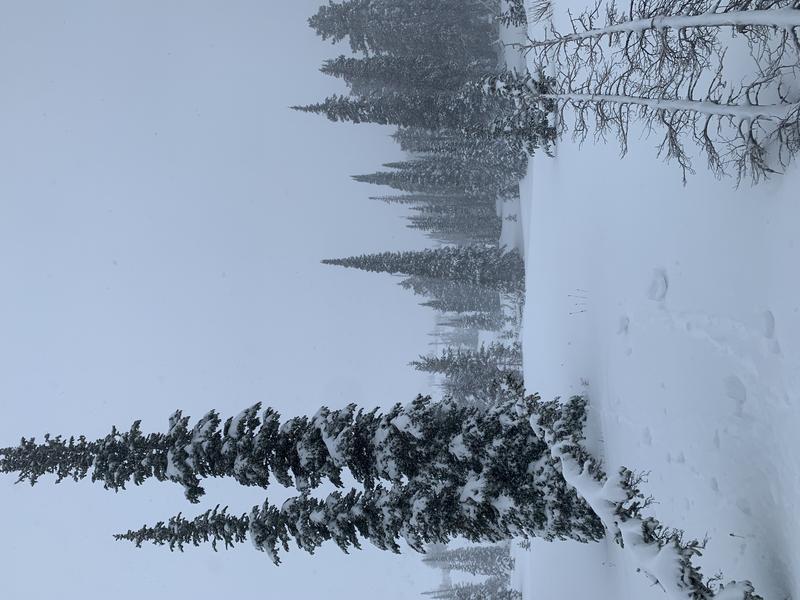
Overnight, low temperatures did not reach freezing at the highest elevations. Precipitation moved in during the early evening hours, with a rain-snow mixture only at the highest elevations. Most places lost snow coverage as the warm temperatures and rain settled and melted the snowpack. Measurable precipitation amounts range from 0.2 to 0.6, favoring the Monte Cristo area. The wind continued to blow from the south 15-30 mph with gusts into the well into 50s, and Mount Ogden reached near 70mph in the early morning hours.

Today, the wind continues to blow from the southwest at 15-35 mph with gusts into the 60s along high, exposed peaks. Temperatures gradually cool into the 20s ˚F as colder air moves in. Freezing level falls to near the valley bottom by early evening. Mostly cloudy skies with a chance of light snow showers through the day.

Friday, another pulse of moisture moves through with colder temperatures and higher snow ratios. We could see 4 to 10 inches of snowfall by Saturday morning.

Recent Avalanches

There were no reported avalanches yesterday in the Ogden zone. Find all recent observations HERE.

Avalanche Problem #1
Persistent Weak Layer
Type
Location
Likelihood
Size
Description

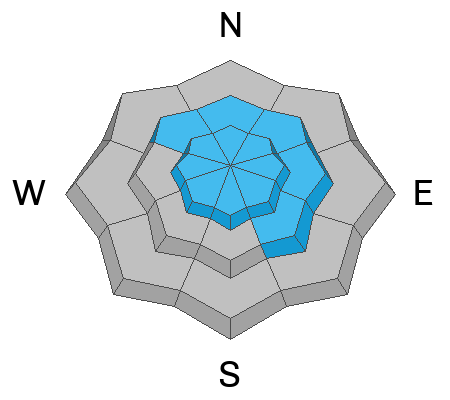
A dangerous "strong-over-weak" structure persists, with old, weak snow buried near the ground. Rain reaching the highest elevations is adding significant stress to the snowpack, creating stubborn slabs over moist, faceted snow.

These avalanches will be the largest on upper-elevation slopes where recent southerly winds previously drifted additional snow onto the terrain. However, the snowpack may be more sensitive further down, where the slabs are thinner and the underlying facets are moist.

Avalanche Problem #2
Wet Snow
Type
Location
Likelihood
Size
Description

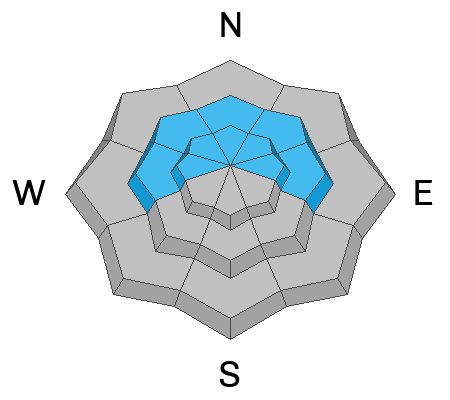
Continued warm temperatures and rain falling on snow can create loose wet avalanches that gouge down to the ground or fail as wet slabs where overlaying a persistent weak layer. Heavy, wet debris can be destructive and dangerous in tight spots. Avoid terrain traps like road banks, creek beds, and gully walls where this heavy snow can pile up deeply and bury a person.

General Announcements

This information does not apply to developed ski areas or highways where avalanche control is normally done. This forecast is from the U.S.D.A. Forest Service, which is solely responsible for its content. This forecast describes general avalanche conditions and local variations always occur.