Donate Now to Our Year End Campaign!

Forecast for the Uintas Area Mountains

Andrew Nassetta
Issued by Andrew Nassetta on
Sunday morning, December 21, 2025

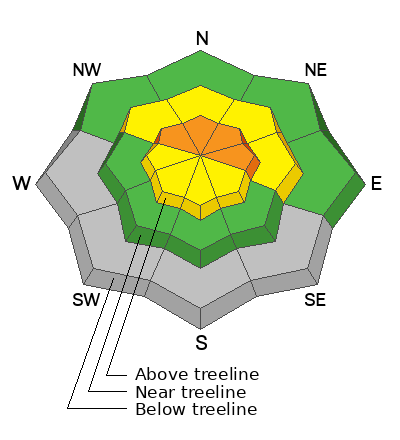
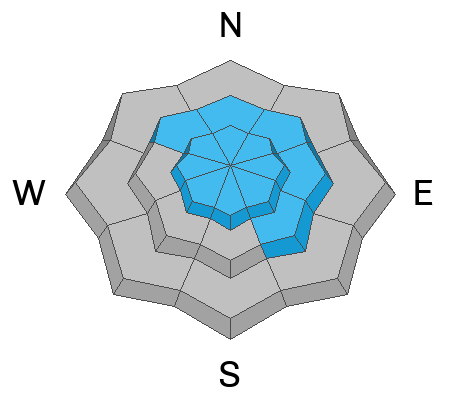
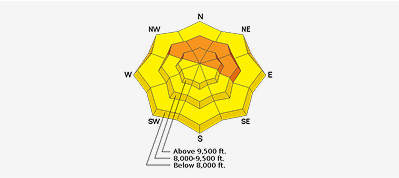
Today, CONSIDERABLE avalanche danger exists and human triggered avalanches are LIKELY breaking 1 to 3 feet deep near the ground where a cohesive slab sits atop a sugary, faceted, persistent weak layer. Other terrain with enough coverage to ride offers MODERATE avalanche danger where it is POSSIBLE to trigger a fresh wind drift on specific terrain features like the leeward sides of ridges, road cuts, gullies, and rollovers.

Avoidance is key today, any slide triggered could break deeper and wider than you might expect taking you for a nasty ride through trees, rocks, and other consequences of terrain.

Low
Moderate
Considerable
High
Extreme
Learn how to read the forecast here
Weather and Snow

Nowcast - Since yesterday morning, we picked up an additional 1-2" of snow, bringing totals up to 12" across the range in some areas, and capping off a fantastic storm for the Uintas. Right now, trailhead temperatures register in the 40's (°F) and upper elevations hover in the mid-20's (°F). Winds blow from the southwest between 20-30 MPH gusting into the 40's, creating a frigid wind chill factor that is currently in the single digits above 9,000'.

Forecast - For today, expect mostly cloudy skies with the chance for a few flurries, maybe producing a trace to an inch of snow or so up high. Temperatures will remain in the 20's (°F) but feel much cooler wherever you find a breeze. Winds blowing from the southwest will continue throughout the day, averaging 15-25 MPH with gusts continuing into the 30's and 40's.

Futurecast - A quick break in the action at the start of the working week is followed by a mid-week pulse sliding in Tuesday night that could bring additional mountain snowfall into Christmas.

Travel Conditions - Winter has returned with 6-12" of snow received across the range. Overall snow depths range from about 1-4' across the range, with season totals stacking deeper on the North Slope and near the Humpy Basin. Skiing and riding proved to be the best out of the windzone on protected slopes, with lower slope angles where you are not punching through the slab into the trap-door feeling weak snow below.

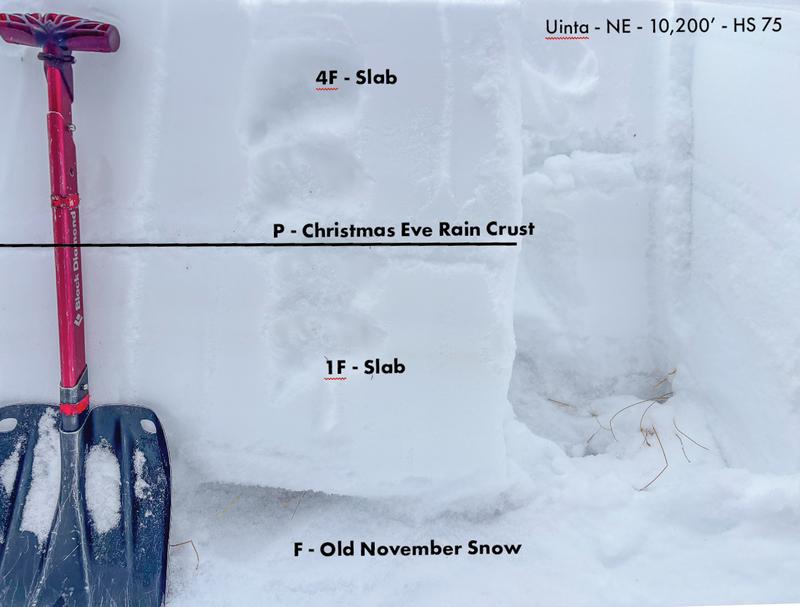
A crack shot out a hundred feet or so in front of my rig, so I trenched over and dug down right next to where I experienced the collapse. To no surprise, was a cohesive slab sitting on top of a rotten, faceted base.

Recent Avalanches

Yesterday, a backcountry party was in mid-Weber Canyon and remotely triggered a persistent slab avalanche failing 1-2 feet deep running a couple hundred vertical feet. Thanks for the great observation Nick B and company -- You can check out more on this slide, here

A northeast slope at 9,200' near Weber Canyon, where a party remotely triggered a persistent slab avalanche (via Nick B.)

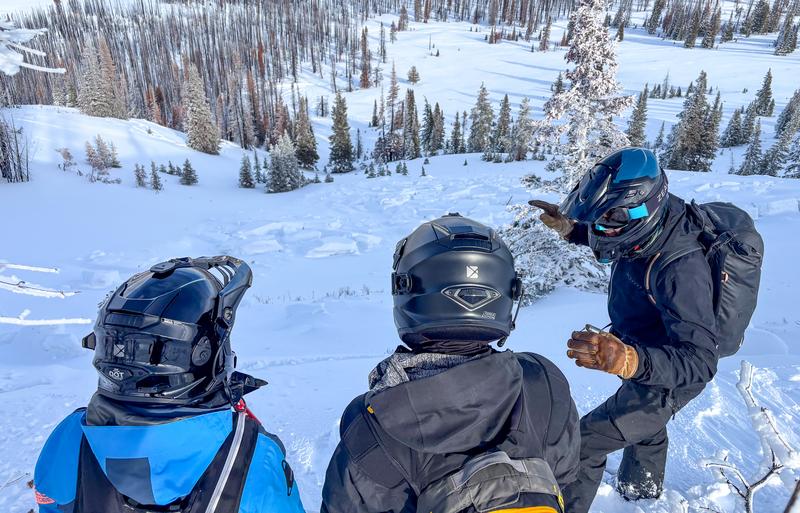
Another look at the avalanche from Shingle Mill, and Nick B explaining the set-up (via Nick B.).

Avalanche Problem #1
Persistent Weak Layer
Type
Location
Likelihood
Size
Description

Looking down slope at a remotely triggered avalanche near Weber Canyon that ran into the trees and timber below (via Nick B.)

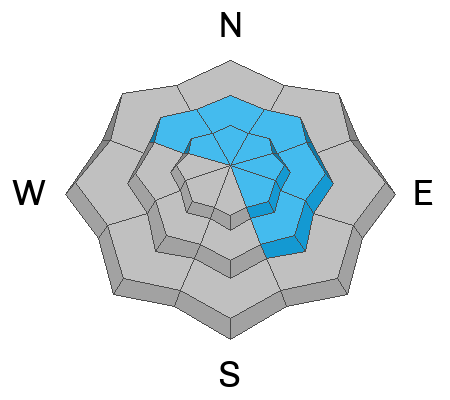
Mid and upper elevation slopes facing the northwest through southeast harbor early-season snow that grew weak during the November dryspell. Recent storms and strong winds created a dense, cohesive slab on top of the weak layer that is now reactive to our additional weight as a rider. In protected areas out of the wind zone, the slab is less cohesive (4F hand hardness), and we are observing fewer red flags or obvious clues, like cracking and collapsing. But up in the wind zone, the slab is denser and closer to 1F hand hardness -- That's where I am noticing the most sensitivity, and my greatest concern lies.

Remember, we can trigger persistent slab avalanches remotely or from a distance. Once initiated, today's avalanches will break deeper and wider than you might expect, stringing you through rocks, trees, stumps, and anything else that is not deep enough to be buried. Yesterday, Tyler St.Jeor and the Backcountry Institute crew were out riding east of Currant Creek and submitted a stellar ob keying in on the current hazard with our PWL in their crosshairs. You can read more on their travels here.

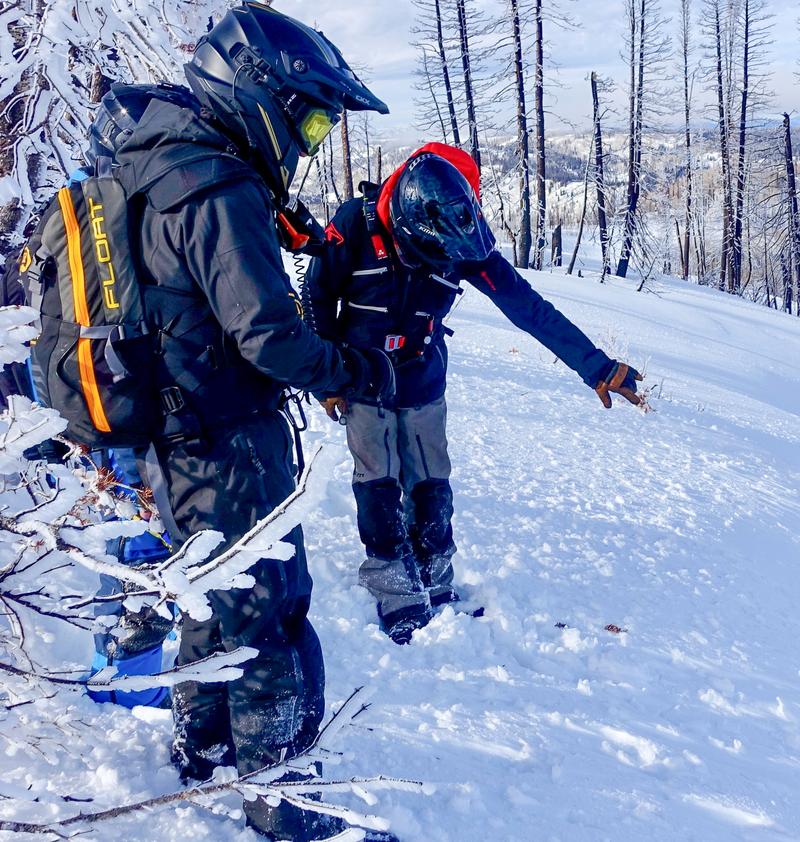
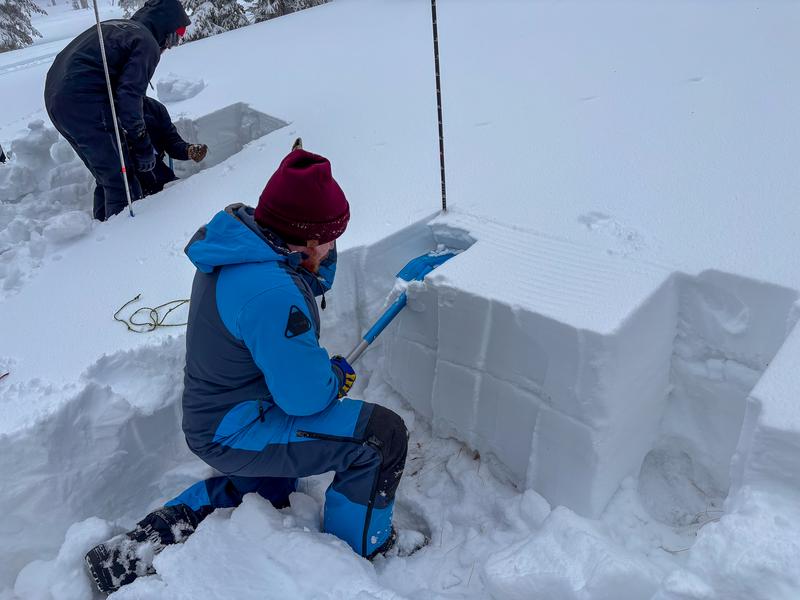
On a north facing slope above 10,000', Mr, Tyler St.Jeor performs an Extended Column Test with propagation results, signifying that our persistent weak layer is alive and beginning to thrive (via Nick B.).

Avalanche Problem #2
Wind Drifted Snow
Type
Location
Likelihood
Size
Description

Sustained, strong winds from the southwest continued overnight, adding additional weight and depth to this hazard. Today's drifts will be 6-24" deep and found mostly on the leeward side of mid and upper elevation ridges. Look for and avoid dense, rounded pillows of snow, especially if they sound hollow like a drum. I'd also steer clear of cross-loaded terrain features like chutes and gullies. Loose some elevation and seek out wind-sheltered terrain where you'll find spongy, reboundable snow and better riding conditions with less avalanche hazard.

Additional Information

This fleet can't be beat! Huge thanks to Ski-Doo in partnership with Karl Malone's Plaza Cycle, for arranging our sled, loaner program. This vital state-wide partnership gets sleds into the hands of UAC forecasters, allowing us to see more terrain, gather more snowpack information, and issue more accurate avalanche forecasts. Ultimately, this program helps us save lives!

General Announcements

We have some upcoming classes and events that we would be stoked to see you at -- Please reach out with any questions and check out below for more details!

We are always looking for snow and avalanche observations or just general riding conditions. Reach out to us with questions, concerns, or if you see anything in your travels! Contact us directly through the info below:

This forecast is from the U.S.D.A. Forest Service, which is solely responsible for its content. This forecast describes general avalanche conditions, and local variations always occur. This forecast was issued on Sunday, December 21st at 0500 AM and expires 24 hours after it was issued. We'll update this information by 07:00 AM tomorrow.