Forecast for the Salt Lake Area Mountains

Brooke Maushund
Issued by Brooke Maushund on
Saturday morning, January 3, 2026

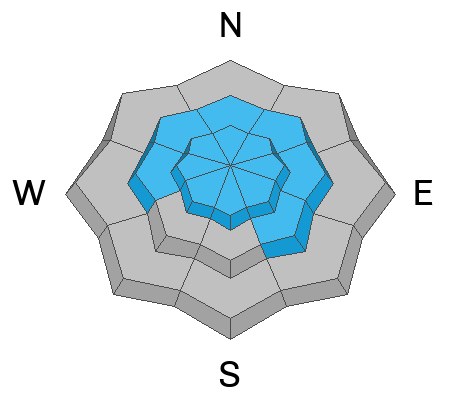
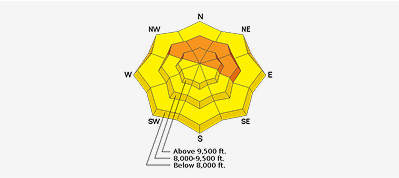
The avalanche danger is MODERATE on W-N-E facing slopes above 9500' where the wind has drifted new, dense snow into slabs. These avalanches have the potential to run far and fast on the slick crust below. Smaller wind slabs may prove effective triggers for deeper, destructive slides on a persistent weak layer up to 100 feet wide. Steep, rocky, wind-exposed northerly slopes are most suspect.

If the sun comes out for long periods or the temperatures rise more than forecast today, expect the possibility of being able to move small panels of wet new snow.

Low
Moderate
Considerable
High
Extreme
Learn how to read the forecast here
Special Announcements

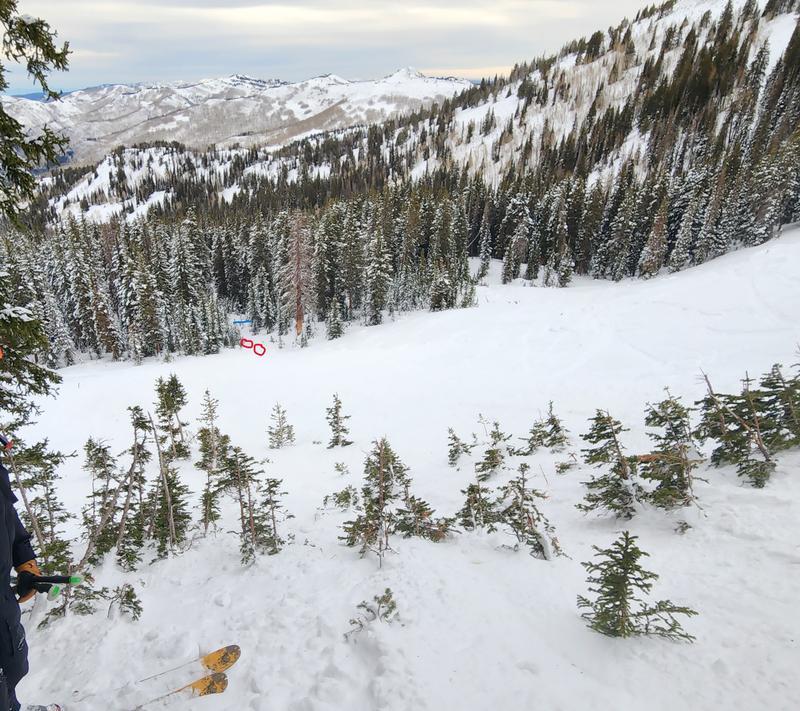
On Wednesday, a backcountry skier slipped while skinning the ridge from Cardiff Pass toward Cardiff Peak. The slip led to an uncontrolled slide-for-life, and he slid to the north over the cliffbands into Cardiff Bowl. With the help of SL County SAR, WBR, DPS, Unified Fire, Life Flight, and Powderbird, the injured man was air-evac'd to the valley. While this accident was not avalanche-related, it is a significant event and telling of the Christmas Eve Rain Crust's impact on conditions in the backcountry.

Weather and Snow

The past two days, a warm storm that rolled in with sustained moderate winds from the SW dropped new snow above the roughly 7800-8000' snow lines. While low elevations got a wash of rain—my driveway at 7300' in BCC is free of snow now—totals this morning after precip tapered off early yesterday afternoon come to:

  • Favored areas (Upper LCC): Upwards of 15" snow // 2" H2O
  • Less favored areas (Snowbird, BCC, PC): 6-7" snow // .67-1.7" H2O

Today, we enjoy a break in the active weather. Under broken skies, most weather stations are in the high 20s F this morning, with forecast highs for the day reaching only into the low 30s. Patchy cloud cover is expected to continue throughout the day, with light to moderate SW winds increasing gradually into the late afternoon.

Late tonight into tomorrow, a decaying atmospheric river makes its way toward us on southwest flow. Snowfall rates will increase Sunday into Monday—check back tomorrow for the ever-evolving forecast snow totals.

The Week in Review is hot off the press. You can find it HERE.

Recent Avalanches

Yesterday, riders in the backcountry in Hidden Canyon, adjacent to Brighton in BCC, triggered another slab avalanche running on the persistent weak layer of snow at the ground on the very same slope (NW, near 10,300' near Brown Spot) that a PWL was reported earlier this week (full ob here). They noted many tracks on the slope before entering the path, which caused them to be surprised when the second skier on the slope triggered the slide down to the ground. This is bullseye info of where you're most likely to trigger a slide on the PWL that is unlikely to cause slides otherwise—most info on that below.

Avalanche Problem #1
Wind Drifted Snow
Type
Location
Likelihood
Size
Description

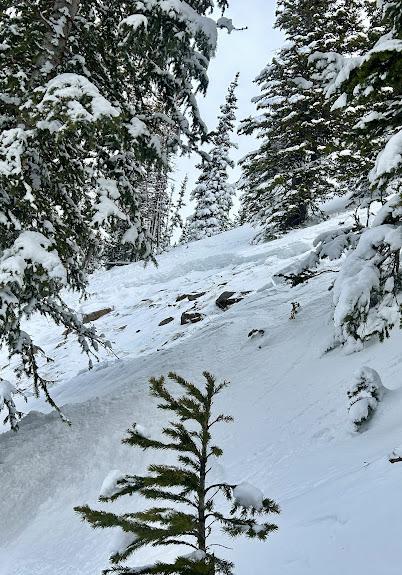
The most recent storm pulse laid down upwards of 15" of new dense, and wet snow in favored areas. Sustained winds out of the SW drifted this snow into fresh slabs and pillows at upper and exposed mid-elevations that face W-N-E. In some areas, you'll be able to find pockets of wind-drifted snow close to 2 feet deep that will be reactive to your body weight, with the potential to run fast and far on the slick Christmas Eve Rain Crust. Cracking along the surface is a sign you've likely found a slab.

However, it's worth noting that the wet nature of the snow bonded better than expected to the old snow surface, without large swaths of new slabs connecting across terrain. These slides will be pockety, found mostly near ridgeline in catchment zones like the entry to tighter terrain as observed in Jaws two days ago (see ob here). This type of terrain is also where these types of smaller slides can be the most consequential. If the sun comes for long periods or the temperatures rise more than forecast today, expect the possibility of being able to move small panels of wet new snow.

There remains an unlikely possibility for one of these shallower slides to step down to a more destructive slab avalanche running on weak snow near the ground—more info on that below.

Avalanche Problem #2
Persistent Weak Layer
Type
Location
Likelihood
Size
Description

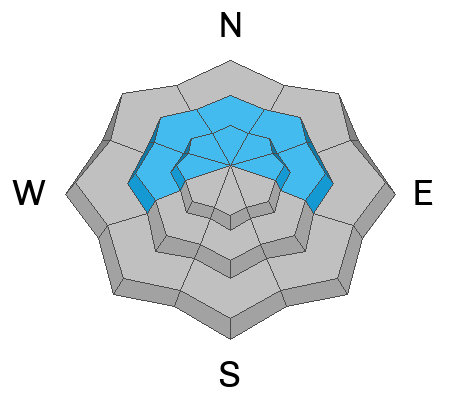
Due to the supportability of the Christmas Eve Rain Crust (CERC) in the majority of terrain, it's unlikely that you can trigger a slab avalanche on the persistent weak layer. However, if you did, it has the potential to be a large, destructive, and potentially fatal avalanche.

Today, we bumped the likelihood of the PWL down to unlikely. This means that slabs running on weak snow below the CERC can range from unreactive to stubborn, however we want to stress that this does NOT mean that these are entirely off the menu if you head to just the wrong spot. The PWL is largely dependent on the supportability of the CERC above it. In higher, wind-exposed, W-N-E terrain where the snowpack may be thinner, the CERC may prove less supportable. These areas are most suspect for triggering a large slide. Some mid-elevation slopes fit this bill as well.

Need some proof? Yesterday, riders in Hidden Canyon triggered a second slab avalanche failing on the PWL at the ground on the exact same slope a slide ran on the PWL on Tuesday. The second skier on the slope triggered the slide.

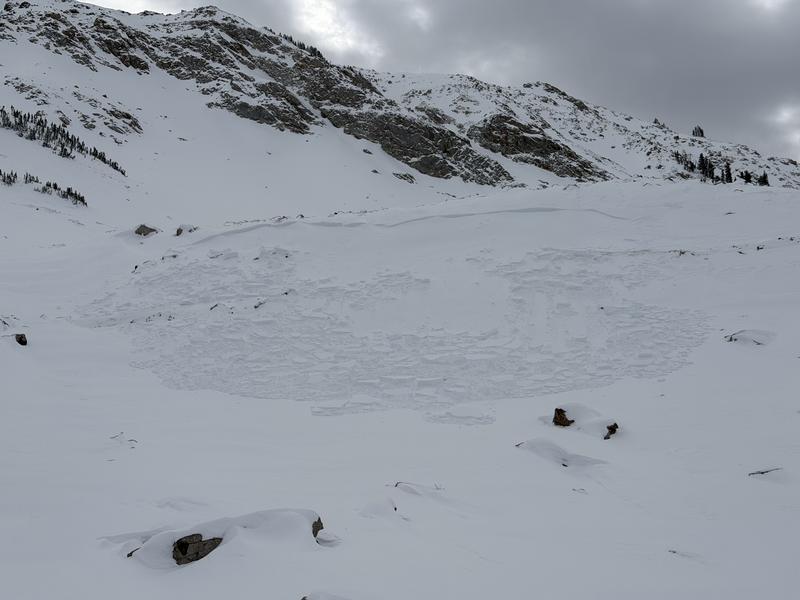
On December 30th, Dave Kelly visited the Sunset Peak avalanche. His observations are a bullseye for understanding this setup right now. The Sunset Peak bed surface is a sober reminder of what’s at stake, where a thin veil of snow masks the rock grinder you’d be dragged through

General Announcements

This information does not apply to developed ski areas or highways where avalanche control is normally done. This forecast is from the U.S.D.A. Forest Service, which is solely responsible for its content. This forecast describes general avalanche conditions and local variations always occur.