Check Out Our Holiday Auction!

Forecast for the Uintas Area Mountains

Andrew Nassetta
Issued by Andrew Nassetta on
Sunday morning, December 7, 2025

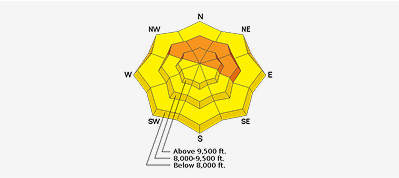
Today's avalanche danger is CONSIDERABLE above treeline on upper elevation slopes facing northwest through east. Human-triggered avalanches are LIKELY and breaking 1-2' deep in steep and rocky areas where new slabs of wind-drifted snow sit atop a faceted, persistent weak layer near the ground. Most other terrain with enough coverage to ride offers MODERATE avalanche danger, and it is POSSIBLE to trigger a wind-drifted pocket reactive to our additional weight.

I am avoiding any chance at taking a nasty ride in even a small slide right now, so I am gunning for sheltered, upper elevation, lower angle terrain on the south half of the compass, where good coverage is met with reduced avalanche hazard.

Low
Moderate
Considerable
High
Extreme
Learn how to read the forecast here
Weather and Snow

Nowcast- Yesterday morning, we received an additional 2-4" of snowfall bringing totals across the range closer to 10". As of 0500 AM, parting clouds play hide and seek with a full moon, while mountain top temperatures register 10with trailheads closer to 20℉. After three days of strong, westerly winds, things have backed and are quite calm this morning.

Forecast- A break in the snow today and a beautiful day is lined up across the range. Things stay cool today with mountain temperatures between 10-20while winds blow between 15-30 MPH near upper elevations. Windchill could bring temperatures down into the single digits at times, but some sunshine should help to bridge the gap.

Futurecast - Hopefully, we can keep this train rolling with the potential for a warm and wet mid-week system to move into the region and bring significant additional snowfall. Although confidence is low that it will deliver, we will keep you in the loop!

Travel Conditions - The pack is thin across the range between 1-3' with the North Slope on the deeper end, and the South Slope near Strawberry on the leaner end. The best riding conditions exist on low-angle, upper elevation, protected terrain where there is enough snow to avoid rocks and terrestrial features beneath the snow surface. That being said, the greatest avalanche hazard exists where there is enough snow to ride. I am paying extra attention to my slope angles and keeping a wide eye open for red flags and obvious clues to instability, such as recent avalanches, cracking, and collapsing.
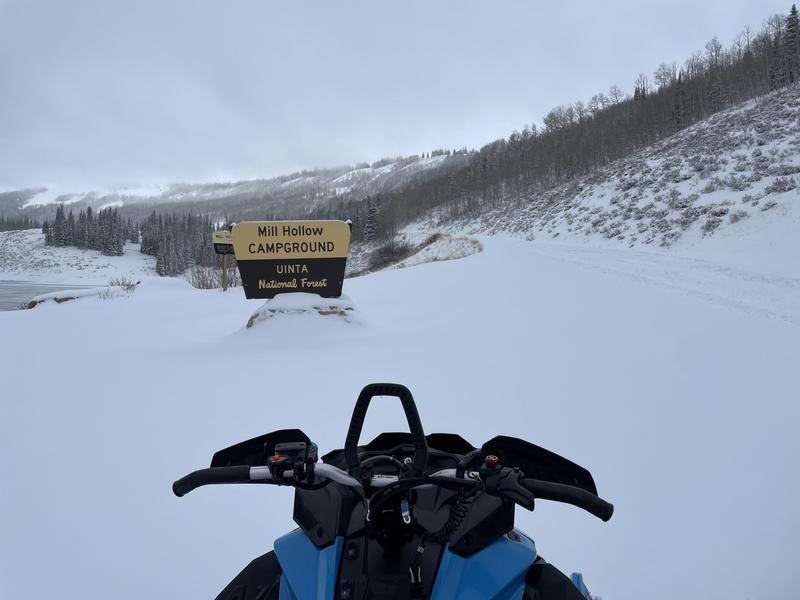
Trevor was out with his crew near Duchesne Ridge and noted that the storm snow significantly improved travel conditions for the motor ponies. He also mentioned the skiing was not half-bad either!

Recent Avalanches

No avalanche activity has been reported in the past 24 hours, but there is no shortage of obvious instabilities and red flags out there -- It's sketchy! For now, click below to check out all reported avalanches and travel obs from across the range and beyond!


Avalanche Problem #1
Persistent Weak Layer
Type
Location
Likelihood
Size
Description

Yesterday, the snowpack was chatty as new snow and wind overloaded our persistent weak layer -- Red flags were everywhere!

The storm snow and wind we received this weekend formed a dense slab that we were missing from our snowpack structure. Above 9,000' on the north half of the compass, old snow grew weak and sugary over the past month and is now buried between 1-3' beneath the slab. Because of this, avalanches are now breaking 1-2' deep and up to a couple of hundred feet wide on the persistent weak layer near the ground. It is a great time to break out the shovel and take a deeper look under the snowpack's hood. Some quick excavation will reveal a dense slab over weak sugary snow. This is what creates the trap-door feeling when trenching our sled or ski track.

I am most suspect of upper elevation terrain on steep and rocky slopes where there was enough snow to ride prior to this storm. Remember, the tricky thing with persistent slab avalanches is that we are able to trigger them remotely, or from a distance away.

Above, you can see and Extended Column Test yield results that suggest increased sensitivity in the snowpack breaking on persistent weak layers in the lower portion of the snowpack.

Avalanche Problem #2
Wind Drifted Snow
Type
Location
Likelihood
Size
Description

The storm has subsided, but strong winds stuck around and created stiff, sensitive drifts at mid and upper elevations in the wind zone on slopes with an easterly component. With the wind blowing in the 60 and 70 MPH range over the past 48 hours, once initiated, a relatively small pocket could break deeper and wider than we might expect into our weak snow near the ground. Remember, we can steer clear of the hazard and avoid wind-textured snow and large, rounded pillows near ridges and rocky start zones.

This avalanche was observed early last week on a north facing slope at 10,700', but shows the characteristics of what you may encounter today when dealing with today's wind-drifted snow.

General Announcements

We have some upcoming classes and events that we would be stoked to see you at -- Please reach out with any questions and check out below for more details!

We are always looking for snow and avalanche observations or just general riding conditions. Reach out to us with questions, concerns, or if you see anything in your travels! Contact us directly through the info below:

This forecast is from the U.S.D.A. Forest Service, which is solely responsible for its content. This forecast describes general avalanche conditions, and local variations always occur. This forecast was issued on Sunday, December 7th at 05:00 AM and expires 24 hours after it was issued. We'll update this information by 07:00 tomorrow.